Quick Answer
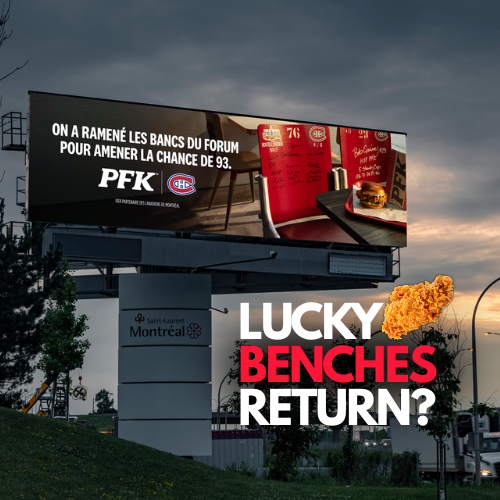
PFK revived the Montreal Forum’s legendary lucky benches during the Canadiens playoffs, using nostalgia, superstition, and integrated media to connect with fans.
Cultural Context: In Sports, Superstition Is Social Glue
Playoff sports culture is built on rituals. Fans wear the same jersey, sit in the same chair, eat the same meal, and repeat habits believed to bring luck.
These behaviors are not irrational in marketing terms—they are expressions of identity and belonging. They transform passive spectatorship into participation.
In Montreal, hockey fandom carries even deeper emotional weight. The Canadiens are not just a team; they are a civic symbol tied to generations of memory, pride, and shared history.
That makes nostalgia and superstition especially potent creative territory.
Insight: Fans Don’t Just Support the Team—They Protect the Outcome
The campaign is grounded in a subtle but powerful truth: during playoffs, fans believe their actions matter.
Whether logical or not, supporters often feel they can influence momentum through ritual. That belief intensifies emotional investment and deepens engagement.
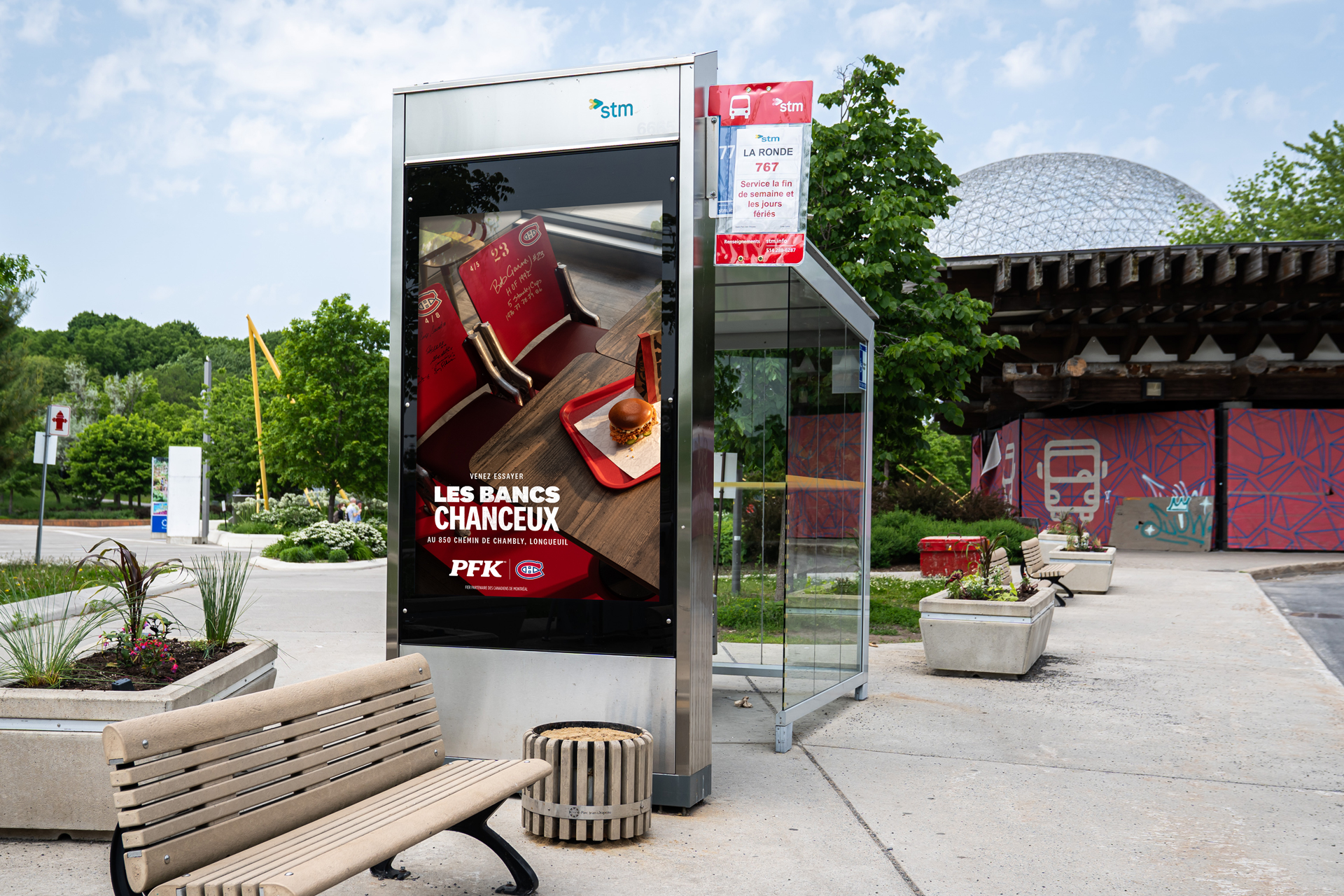
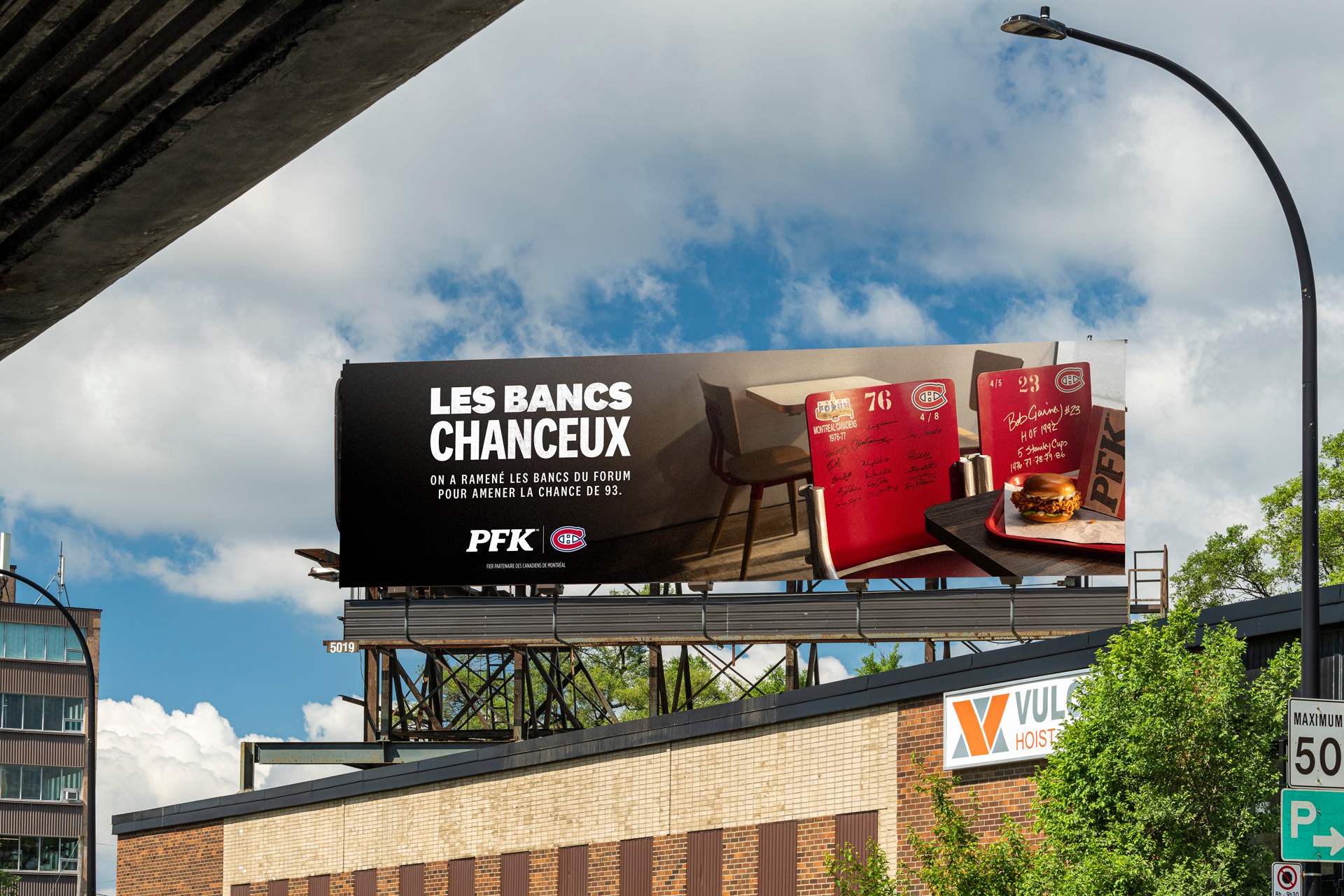
PFK identifies this behavior and gives it a physical form: the return of the Forum’s “lucky benches,” associated with historic Canadiens victories, including the 1993 Stanley Cup run.
Rather than simply sponsoring fandom, the brand gives fans a tool to participate in it.
Media Strategy: Turning Restaurants Into Fan Infrastructure
The strongest aspect of the campaign is channel integration through place.
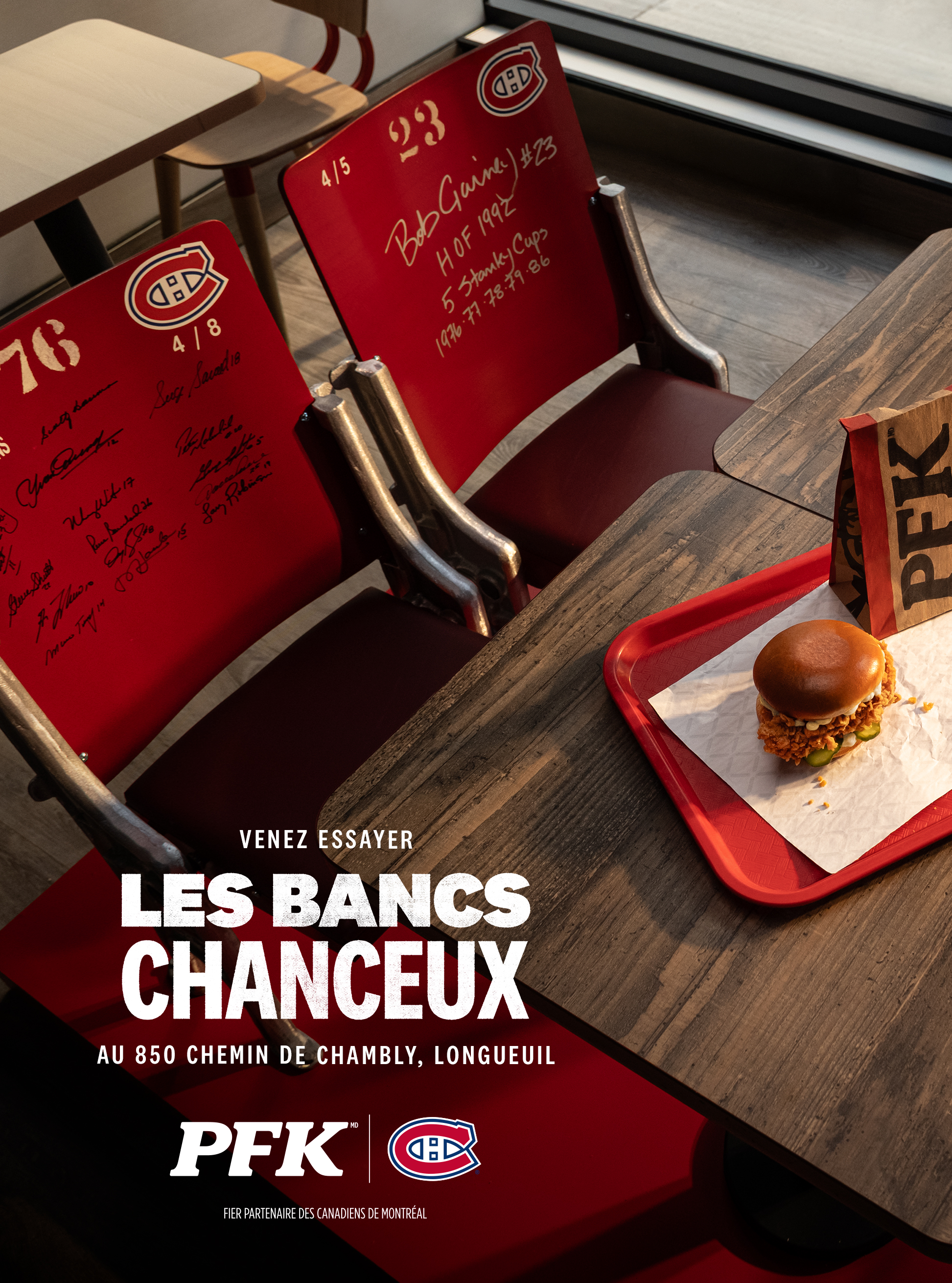
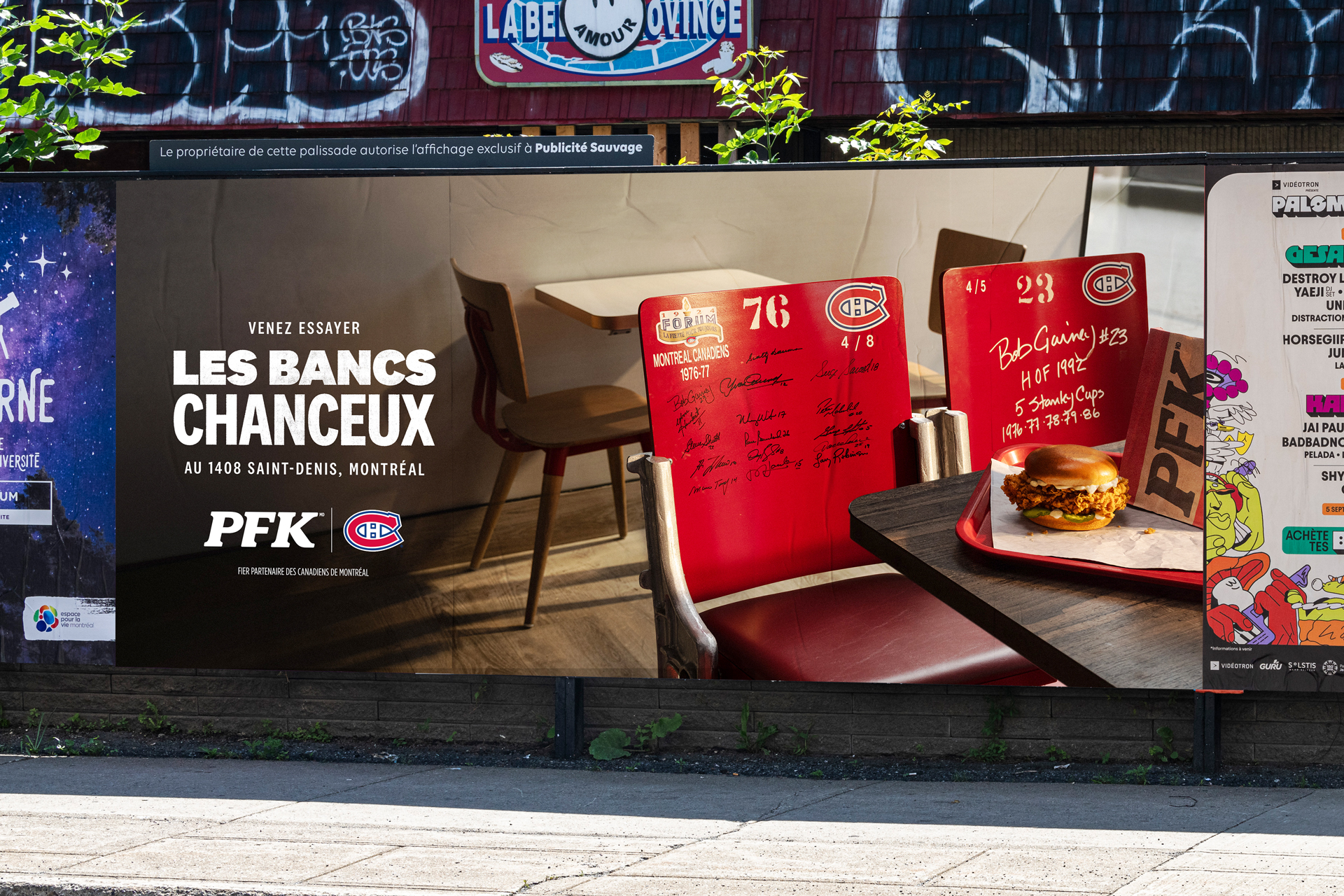
PFK restaurants become experiential media environments by housing the benches. This shifts locations from transactional food spaces into playoff destinations.
The initiative is then amplified through:
- Television
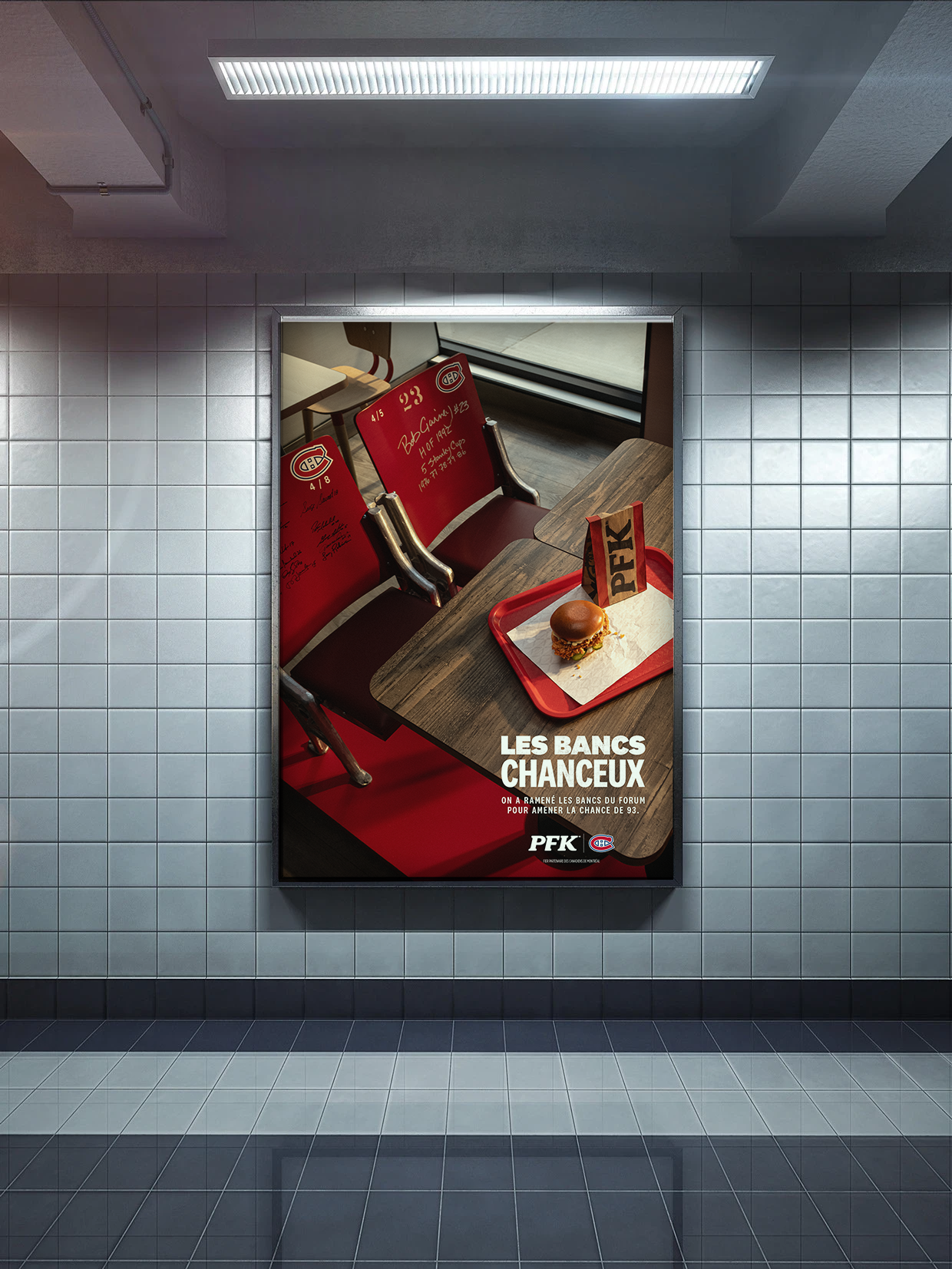
- OOH advertising
- Social media
- Presence at Bell Centre
This layered strategy ensures the experience lives both physically and culturally. Fans can encounter it in-store, in the city, at the arena, and online.
The restaurant becomes the hero medium, while supporting channels scale the story.
Creative Execution: Heritage You Can Sit On
Many nostalgia campaigns reference the past symbolically. This one makes history tangible.
By reinstalling the original lucky benches in restaurants, PFK transforms an iconic sports artifact into an accessible public experience.
That matters because it creates three simultaneous emotional triggers:
- Memory for older fans who remember the Forum era
- Mythology for younger fans who know its legacy
- Participation through direct physical interaction
The benches are not displayed behind glass. They are meant to be used. That decision turns passive nostalgia into active ritual.
Promotional Layer: Value Meets Emotion
The campaign also includes a match-day offer: the Famous Chicken Sandwich for $5.95 during Canadiens games.
This is strategically smart because it pairs emotional engagement with commercial conversion.
Fans come for the story, stay for the ritual, and transact through a timely offer.
Too often, brand campaigns and sales mechanics operate separately. Here, they reinforce each other naturally within the playoff context.
Strategic Impact: Owning the Playoff Occasion
PFK is not competing to own hockey broadly—it is competing to own the playoff moment.
That narrower focus increases relevance and urgency. The benches remain only as long as the Canadiens stay in the postseason, creating built-in scarcity and continued attention.
The campaign likely drives value through:
- Increased foot traffic on game days
- Strong local affinity in Quebec
- Social sharing through photo opportunities
- Distinctiveness versus generic sports sponsorships
Most importantly, it makes the brand feel native to fan culture rather than adjacent to it.
Execution Insight: Local Truth Beats Generic Sponsorship
Many sports campaigns rely on broad slogans about passion or teamwork. PFK instead uses something hyper-local and culturally specific: the magic of the Forum benches.
That specificity creates authenticity.
The lesson is clear: local memory often outperforms generic scale. When brands tap into symbols communities already care about, attention comes with built-in meaning.
Final Reflection: When a Seat Becomes a Story
PFK’s playoff campaign demonstrates how powerful physical artifacts can be in modern marketing.
A bench is normally just furniture. In the right context, it becomes mythology, media, and merchandise-free brand equity.
By turning restaurants into ritual spaces and nostalgia into participation, PFK shows that the smartest sports marketing does not always need bigger budgets—just deeper cultural understanding.
Summary
PFK Canada partnered with Courage Montréal to celebrate the Montreal Canadiens playoff run by reinstalling the historic “lucky benches” from the old Montreal Forum inside restaurants. The campaign blends fandom, memory, and superstition to transform everyday dining spaces into emotional extensions of hockey culture.
Sources
FAQs
What is the campaign about?
It is a playoff campaign bringing the Montreal Forum’s lucky benches into PFK restaurants for Canadiens fans.
Where did it launch?
The initiative launched in Montreal-area PFK locations with support across TV, OOH, social media, and Bell Centre activations.
What makes it innovative?
It turns a historic sports artifact into an interactive fan experience inside restaurants.
What was the strategic insight?
Fans believe rituals and superstitions help their team win, especially during playoffs.
FAQs about this campaign
What is the campaign about?
It is a playoff campaign bringing the Montreal Forum’s lucky benches into PFK restaurants for Canadiens fans.
Where did it launch?
The initiative launched in Montreal-area PFK locations with support across TV, OOH, social media, and Bell Centre activations.
What makes it innovative?
It turns a historic sports artifact into an interactive fan experience inside restaurants.
What was the strategic insight?
Fans believe rituals and superstitions help their team win, especially during playoffs.
Bring your idea to breakfast-time OOH
Explore formats that meet audiences in morning routines and commuter corridors.
Comments
Be the first to comment.