Quick Answer
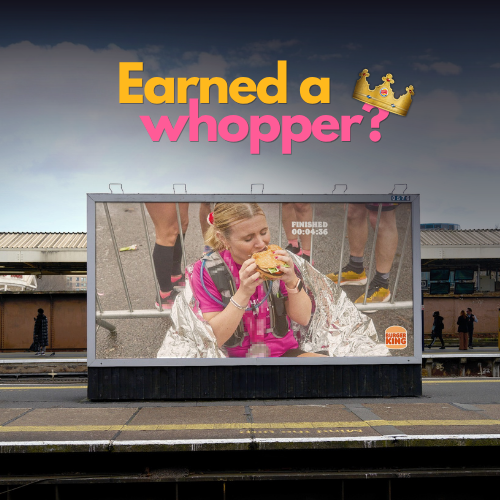
Burger King UK’s “Whopper of a Finish” campaign targets marathon season by positioning the Whopper as the most satisfying reward after completing a race.
Cultural Context: Brands Compete for the Marathon Moment
Major marathons have evolved beyond sporting events into cultural occasions. They attract elite athletes, casual runners, spectators, charities, media attention, and brand investment.
Traditionally, sportswear, hydration, and wellness brands dominate these moments, speaking the language of performance, recovery, and resilience.
But once the medal is earned and the finish line crossed, consumer needs shift. The mindset moves from discipline to reward.
That transition creates white space for brands outside the traditional sports ecosystem.
%20BKDSC08618_NEW.jpg)
Insight: After Restriction Comes Permission
Preparing for a marathon often involves months of structure—training plans, nutrition discipline, reduced indulgence, and routine sacrifice.
The emotional payoff of race day is not only finishing the course, but regaining permission. Permission to celebrate, relax, and enjoy something earned.
Burger King’s insight is that post-race hunger is both physical and symbolic. People are not just craving calories; they are craving reward.
This allows the Whopper to become more than a burger—it becomes the ritual conclusion to effort.
%20BKDSC08671-2_NOLOGO.jpg)
Media Strategy: Occasion-Led Relevance
Timing is central to the campaign. By launching around the UK’s biggest marathons, Burger King inserts itself into a high-attention seasonal moment with built-in emotional energy.
This is strategically stronger than generic food advertising because relevance is contextual. The product message becomes sharper when audiences are already thinking about finishing, effort, and reward.
Likely campaign touchpoints include:
- OOH near race routes, transport hubs, and city centers
- Social content tied to marathon conversations
- Tactical retail messaging around race weekends
- PR and earned media through topical relevance
Instead of buying attention broadly, the campaign borrows momentum from an existing cultural event.
%20BK%20MARATHON%206.png)
Creative Execution: “Whopper of a Finish” as Double Meaning
The line “Whopper of a Finish” works because it merges event language with product branding.
It signals:
- A dramatic or impressive ending
- The Whopper as the reward at the end
- Completion as something worthy of celebration
This kind of linguistic efficiency is powerful in OOH and fast-attention media. It is instantly understandable, brand-owned, and contextually relevant.
As part of the broader “Foodfillment” platform, the message extends beyond hunger satisfaction into emotional completion.
That shift matters. Consumers increasingly respond to how food fits moments, not just how it tastes.
%20BKDSC08796.jpg)
Strategic Impact: Entering a New Consumption Occasion
The smartest food campaigns often create or claim moments rather than simply promote products.
Burger King is effectively trying to own the post-race meal occasion—a space traditionally undefined and open for cultural capture.
This has multiple benefits:
- Builds relevance beyond standard meal times
- Connects the brand with achievement and celebration
- Broadens usage occasions without changing the product
- Generates seasonal repeatability every marathon calendar year
The Whopper remains the same product, but the meaning around it expands.
%20BKDSC08456_NOLOGO.jpg)
Brand Platform Strength: What “Foodfillment” Actually Does
Many food platforms focus on cravings or indulgence. “Foodfillment” is strategically broader because it links food to emotional states.
That gives Burger King flexibility across occasions:
- Post-race reward
- Late-night satisfaction
- Weekend treat moments
- Celebration meals
In this campaign, the platform is especially effective because marathon completion already carries emotional intensity. The Whopper simply becomes the object that completes the narrative.
%20BKDSC08757_NOLOGO.jpg)
Execution Insight: Competing With Sports Brands by Avoiding Their Language
Burger King does not try to sound like a sports nutrition brand. It does not talk about protein recovery, macros, or peak performance.
Instead, it owns what sports brands often cannot credibly say: joy, indulgence, and unapologetic reward.
That contrast helps the campaign stand out in a marathon environment crowded with serious messaging.
%20BKDSC08584_NOLOGO.jpg)
Final Reflection: The Finish Line Is Where Different Needs Begin
“Whopper of a Finish” shows how brands can win by understanding emotional timing.
The race ends, but a new consumer moment begins—hunger, celebration, permission, satisfaction. Burger King steps into that transition with a product already associated with fullness and reward.
In doing so, the brand demonstrates a powerful principle of modern marketing: sometimes the best moment to join a category conversation is after everyone else thinks it’s over.
Summary
Burger King UK partnered with BBH to launch “Whopper of a Finish,” a campaign timed around the UK’s biggest marathons. As the second chapter of the “Foodfillment” platform, the work reframes the Whopper not as indulgence, but as emotional and physical satisfaction after endurance achievement.
Sources
FAQs
What is the campaign about?
It is a marathon-season campaign positioning the Whopper as the ultimate meal after finishing a race.
Where did it launch?
The campaign launched in the United Kingdom around major marathon events.
What makes it innovative?
It reframes a fast food product as a culturally relevant post-achievement reward occasion.
What was the strategic insight?
After months of discipline, runners seek permission, celebration, and satisfying reward after race day.
Who created the campaign?
The campaign was created by BBH for Burger King UK.
FAQs about this campaign
What is the campaign about?
It is a marathon-season campaign positioning the Whopper as the ultimate meal after finishing a race.
Where did it launch?
The campaign launched in the United Kingdom around major marathon events.
What makes it innovative?
It reframes a fast food product as a culturally relevant post-achievement reward occasion.
What was the strategic insight?
After months of discipline, runners seek permission, celebration, and satisfying reward after race day.
Who created the campaign?
The campaign was created by BBH for Burger King UK.
Bring your idea to breakfast-time OOH
Explore formats that meet audiences in morning routines and commuter corridors.
Comments
Be the first to comment.