Quick Answer
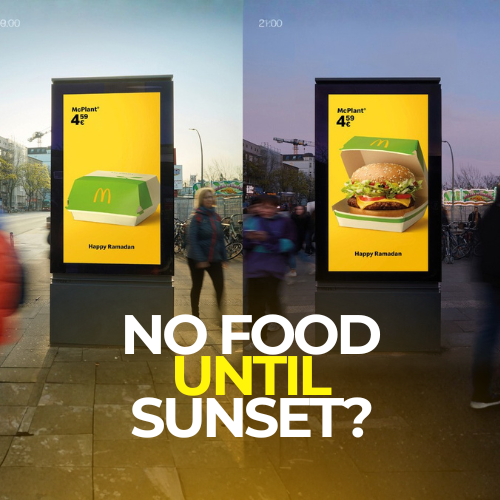
During Ramadan in Germany, McDonald’s demonstrated how contextual awareness can shape more meaningful advertising. By hiding food imagery during fasting hours.
Understanding the cultural context
Ramadan is a period defined by rhythm and discipline. From sunrise to sunset, millions of people abstain from food and drink, making daytime food advertising potentially intrusive or insensitive. For brands operating in multicultural markets, this creates an important challenge: how to remain present without disrupting the experience of fasting audiences.
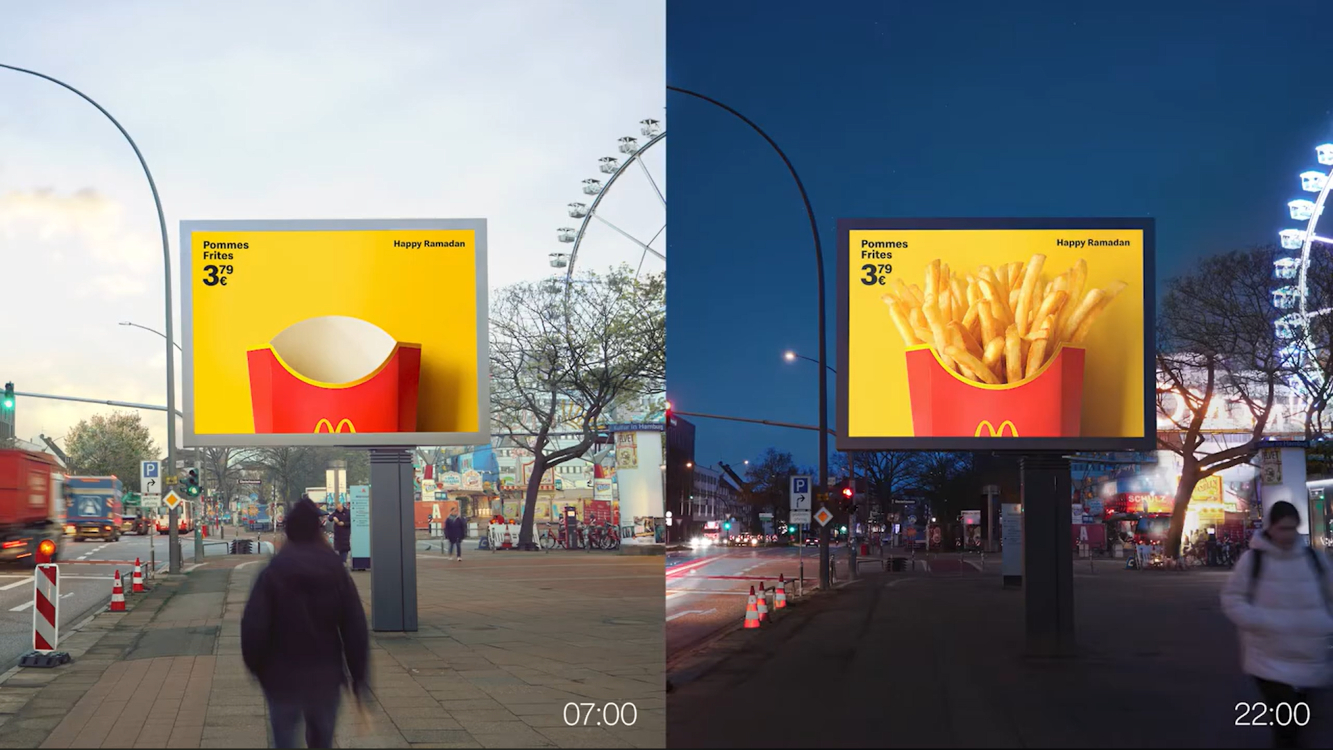
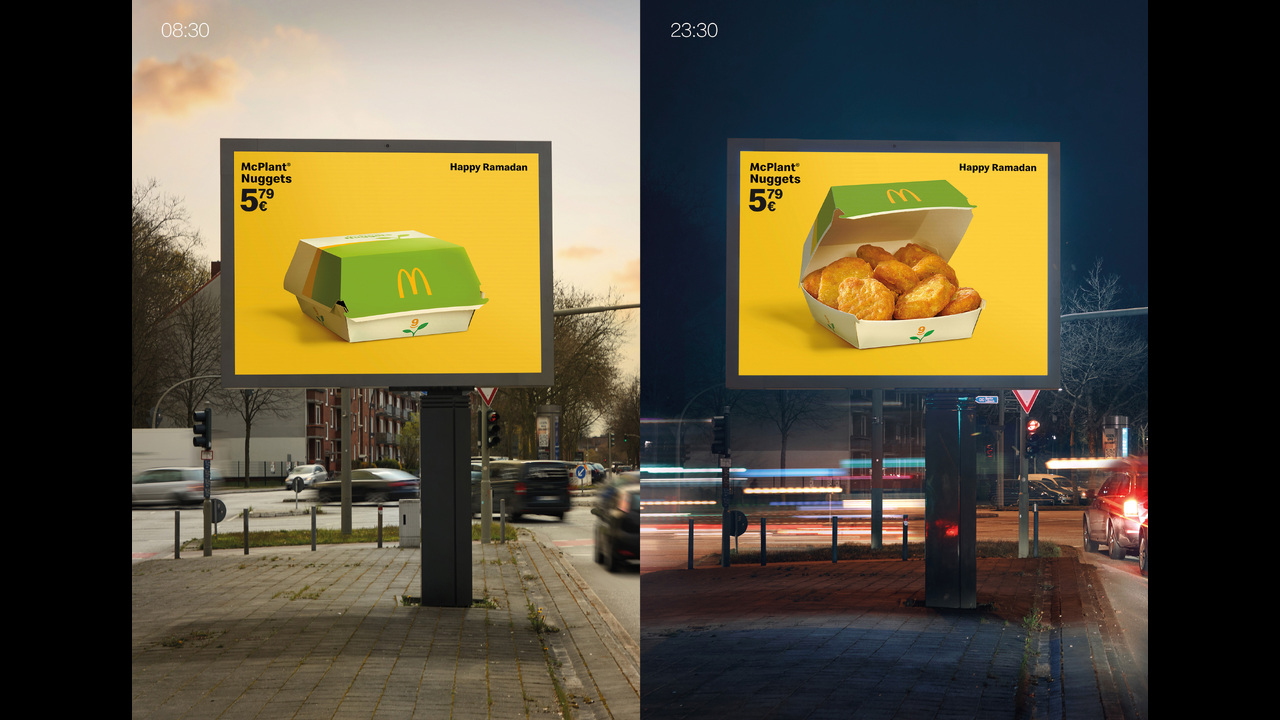
In Germany, McDonald’s approached this challenge through a contextual out-of-home strategy that aligned with the daily reality of Ramadan. Instead of showing appetizing food imagery throughout the day, the brand removed product visuals during fasting hours. Billboards remained present but visually restrained, reducing the sense of temptation that traditional fast-food advertising might create.
At sunset, when the fast traditionally ends with the evening meal, the campaign shifted. Food imagery appeared, turning the same billboard into a timely invitation to eat. This simple transformation created a powerful connection between advertising and lived experience.
Timing as a creative tool
What makes the campaign stand out is not visual complexity but strategic timing. The idea demonstrates how out-of-home media can evolve beyond static messaging into responsive communication that reflects real-world behavior.
By synchronizing creative content with the fasting schedule, the campaign transformed ordinary billboards into time-sensitive messages. The change from minimal daytime visuals to evening food imagery gave the advertising a narrative structure — quiet during the day, welcoming at night.
This approach shows how timing can become a creative device rather than just a scheduling decision. The absence of food visuals during the day became as meaningful as their appearance at sunset.
Building trust through restraint
Many campaigns attempt to maximize visibility, but this execution shows the value of selective presence. By deliberately limiting food imagery during fasting hours, McDonald’s demonstrated an understanding of cultural sensitivity that goes beyond surface-level messaging.
Instead of treating Ramadan as purely a commercial opportunity, the campaign acknowledged the emotional and cultural significance of the period. This approach helps position the brand as respectful and aware rather than opportunistic.

A model for culturally aware advertising
The campaign offers a broader lesson for advertisers working in diverse markets. Cultural relevance is not achieved only through themed visuals or seasonal promotions — it also depends on how and when messages appear.
By aligning its communication with the daily rhythm of Ramadan, McDonald’s showed that effective advertising is not always about being louder. Sometimes it is about being thoughtful, responsive and aware of the audience’s values.
In a crowded media environment, that kind of sensitivity can be one of the strongest signals a brand can send.
Summary
During Ramadan in Germany, McDonald’s demonstrated how contextual awareness can shape more meaningful advertising. By hiding food imagery during fasting hours and revealing it at sunset, the campaign aligned with the daily rhythm of its audience and highlighted the value of culturally sensitive marketing.
Sources
FAQs
What did McDonald’s change in its Ramadan campaign in Germany?
McDonald’s removed food imagery from billboards during fasting hours and revealed the food visuals again at sunset, aligning the campaign with the daily rhythm of Ramadan.
Why did McDonald’s hide food visuals during the day?
The strategy aimed to respect people observing Ramadan by avoiding tempting food imagery during fasting hours and showing cultural sensitivity in public advertising.
Where did the Ramadan OOH campaign take place?
The campaign was implemented in several cities across Germany using outdoor advertising formats such as billboards and digital screens.
What makes this campaign different from traditional food advertising?
Instead of maximizing constant exposure, the campaign used timing and restraint as creative tools, showing that contextual awareness can be more effective than continuous promotion.
FAQs about this campaign
What did McDonald’s change in its Ramadan campaign in Germany?
McDonald’s removed food imagery from billboards during fasting hours and revealed the food visuals again at sunset, aligning the campaign with the daily rhythm of Ramadan.
Why did McDonald’s hide food visuals during the day?
The strategy aimed to respect people observing Ramadan by avoiding tempting food imagery during fasting hours and showing cultural sensitivity in public advertising.
Where did the Ramadan OOH campaign take place?
The campaign was implemented in several cities across Germany using outdoor advertising formats such as billboards and digital screens.
What makes this campaign different from traditional food advertising?
Instead of maximizing constant exposure, the campaign used timing and restraint as creative tools, showing that contextual awareness can be more effective than continuous promotion.
Bring your idea to breakfast-time OOH
Explore formats that meet audiences in morning routines and commuter corridors.

Comments
Be the first to comment.