Quick Answer
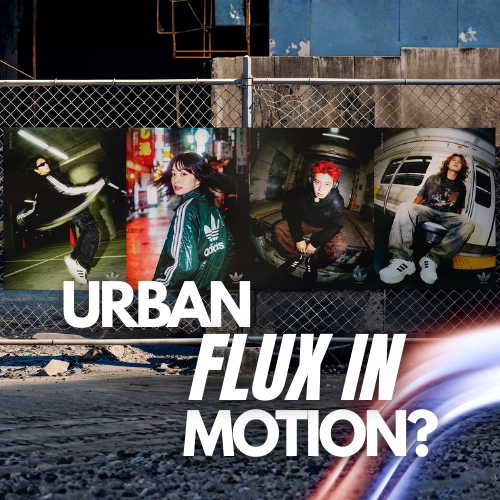
Urban Flux is a visual system developed by Yūkai Studio for adidas, designed to adapt consistently across multiple out-of-home formats—from digital metro screens.
From idea to asphalt
A powerful outdoor campaign is not only something you see — it’s something you experience as part of the city. With Urban Flux, Yūkai Studio developed a visual ecosystem for adidas designed to live directly in the urban landscape.
Instead of treating out-of-home placements as isolated executions, the studio approached the project as a unified system. Every visual element was designed to maintain consistency while adapting to different formats and surfaces. The objective was to create a campaign that could exist naturally across the city while still feeling unmistakably adidas.
Urban Flux translates brand identity into a flexible visual language that maintains coherence even in environments saturated with competing messages.

A visual system designed for the city
Cities present a complex media environment where advertising competes for attention at every corner. Urban Flux was designed to function effectively within that context, adapting from the fast-paced movement of digital metro screens to the physical texture of street-level bus shelters.
Each still and every OOH application was carefully considered to maintain what the studio describes as the brand’s “frequency.” The repetition of shapes, motion cues and graphic elements helps reinforce recognition across different touchpoints without becoming visually repetitive.
This consistency allows the campaign to feel continuous, even when audiences encounter it in completely different locations or formats.

Building tangible brand worlds
At its core, Urban Flux reflects a shift in how brands approach outdoor advertising. Instead of focusing solely on individual visuals, the project prioritizes the creation of a tangible brand environment that people encounter throughout their daily routines.
Yūkai Studio describes its approach as building worlds rather than images, and Urban Flux embodies that philosophy. The campaign turns the city into a living extension of the brand, where each placement contributes to a larger narrative.
The full project is expected to appear soon in the studio’s portfolio, offering a deeper look at how Urban Flux translates a brand’s identity into a flexible and immersive urban experience.

Summary
Urban Flux demonstrates how a flexible visual system can transform an outdoor campaign into a coherent urban ecosystem. Designed for adidas by Yūkai Studio, the project focuses on maintaining brand visibility and rhythm across diverse OOH environments.
FAQs
What is Urban Flux?
Urban Flux is a visual ecosystem created by Yūkai Studio for adidas that adapts across multiple out-of-home formats while maintaining visual consistency.
Who created the Urban Flux campaign?
The project was developed by Yūkai Studio for adidas.
Where is Urban Flux designed to appear?
The system is designed for urban environments including metro digital screens, street furniture and other OOH formats.
What makes Urban Flux unique?
Unlike traditional campaigns, Urban Flux works as a flexible visual ecosystem rather than a series of disconnected advertisements.
Will the full case study be released?
Yes. The complete project will be published soon in Yūkai Studio’s portfolio.
FAQs about this campaign
What is Urban Flux?
Urban Flux is a visual ecosystem created by Yūkai Studio for adidas that adapts across multiple out-of-home formats while maintaining visual consistency.
Who created the Urban Flux campaign?
The project was developed by Yūkai Studio for adidas.
Where is Urban Flux designed to appear?
The system is designed for urban environments including metro digital screens, street furniture and other OOH formats.
What makes Urban Flux unique?
Unlike traditional campaigns, Urban Flux works as a flexible visual ecosystem rather than a series of disconnected advertisements.
Will the full case study be released?
Yes. The complete project will be published soon in Yūkai Studio’s portfolio.
Bring your idea to breakfast-time OOH
Explore formats that meet audiences in morning routines and commuter corridors.
Comments
Be the first to comment.