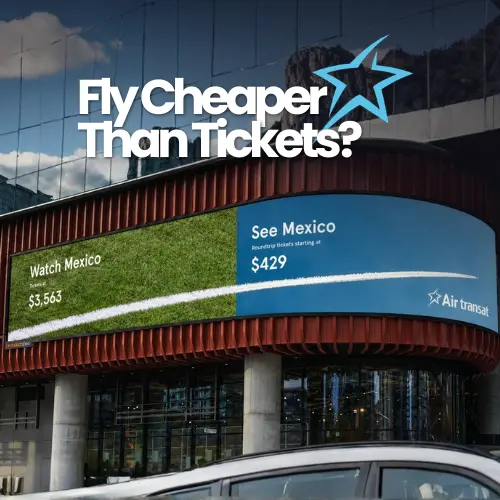
Quick Answer
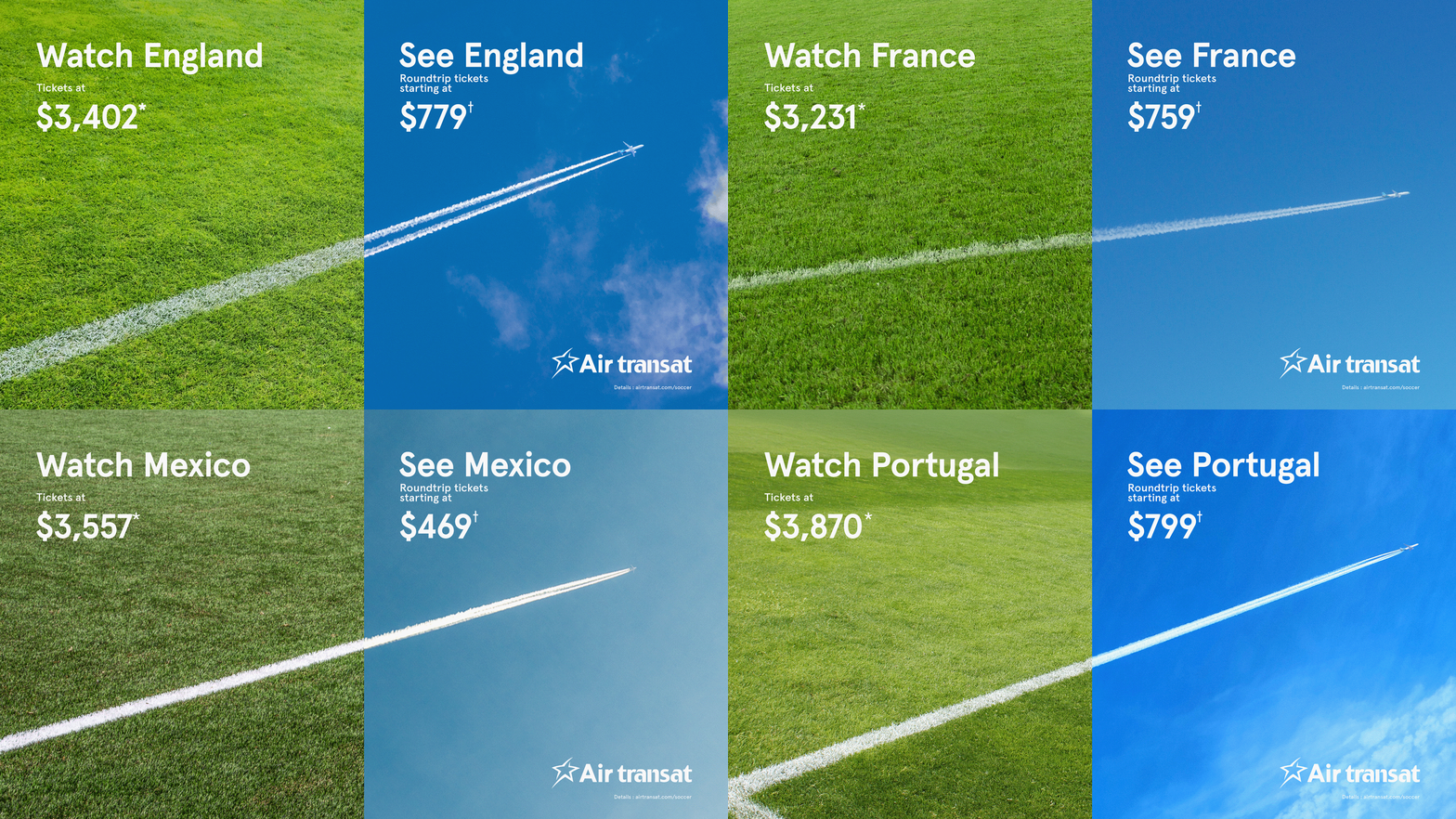
Air Transat’s World Cup campaign compares rising match ticket prices with return flights to football nations, reframing travel as a more rewarding alternative to expensive stadium access.
Cultural Context: Football Fandom Is Becoming Increasingly Expensive
As Canada approaches hosting one of football’s biggest global events, rising ticket prices have become a major point of frustration among fans.
For many supporters, attending marquee matches has shifted from dream experience to financial stretch.
This creates a cultural tension increasingly visible across sports:
- Fans feel emotionally invested
- Access feels financially restricted
The conversation around sport is no longer only about passion—it is also about affordability.
Rather than ignore that frustration, Air Transat turns it into the foundation of its strategy.
Insight: Fans Crave Football Culture, Not Just Stadium Access
The campaign is built around a subtle but powerful truth:
People love football because of culture, not only competition.
The rituals surrounding the sport often matter as much as the match itself:
- Street celebrations
- Cafés full of supporters
- Matchday traditions
- Shared local identity
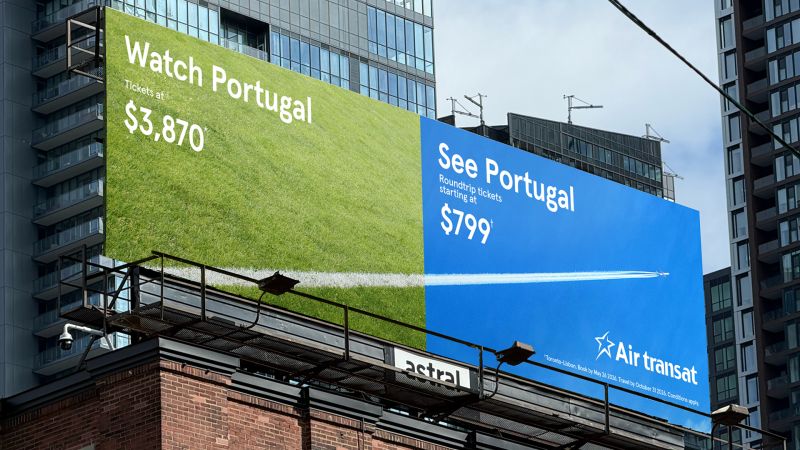
By comparing match admission costs to airfare, Air Transat reframes the value equation.
Instead of spending heavily on one stadium experience, fans could immerse themselves in the country behind the team they support.
The emotional reward becomes larger than the ticket itself.
Media Strategy: Real-Time Data as Cultural Participation
The campaign uses live ticket pricing for selected matches and compares it against return flights to the nations involved.
This reactive structure is strategically important because it behaves like sports discourse itself—dynamic, current, and conversational.
The idea naturally fits within:
- Social conversation around pricing frustration
- Sports media ecosystems
- Real-time fan reactions
Rather than interrupt the conversation, the brand enters it with relevance.
This makes the campaign feel timely instead of opportunistic.
Creative Execution: Turning Sticker Shock Into Wanderlust
The creative mechanic is elegantly simple:
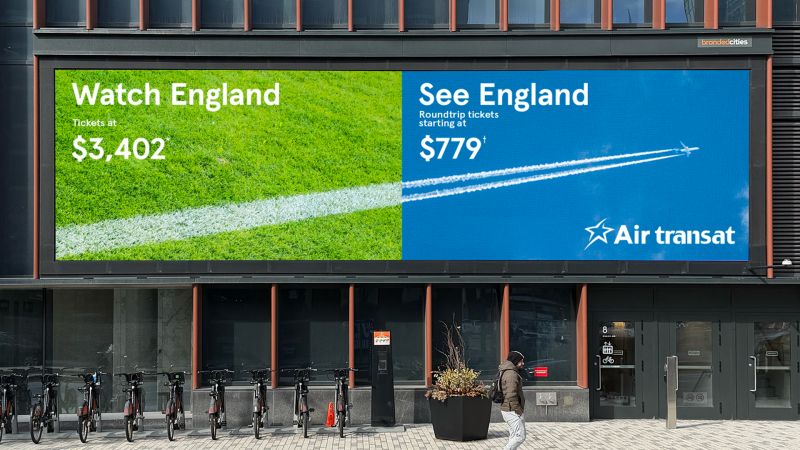
World Cup ticket price vs. flight cost
The contrast immediately creates surprise.
For example:
A single match ticket could cost the same—or more—than traveling to the football culture fans admire.
The brilliance lies in the reframing.
Air Transat does not position itself against the tournament. Instead, it expands the meaning of fandom.
Watching football becomes less about proximity to the pitch and more about proximity to culture.
Brand Strategy: Owning an Authentic Role Without Sponsorship
Major sporting events are often dominated by expensive sponsorship ecosystems.
Rather than competing through official branding, Air Transat finds an authentic entry point through a genuine consumer tension.
This creates several strategic advantages:
- Cultural relevance without sponsorship costs
- Brand credibility through practical utility
- Stronger emotional resonance through empathy
The airline earns attention by solving a conversation rather than hijacking it.
Strategic Impact: Data Makes Humor Feel Credible
The campaign succeeds because it balances playfulness with proof.
Without real-time pricing data, the idea risks feeling exaggerated.
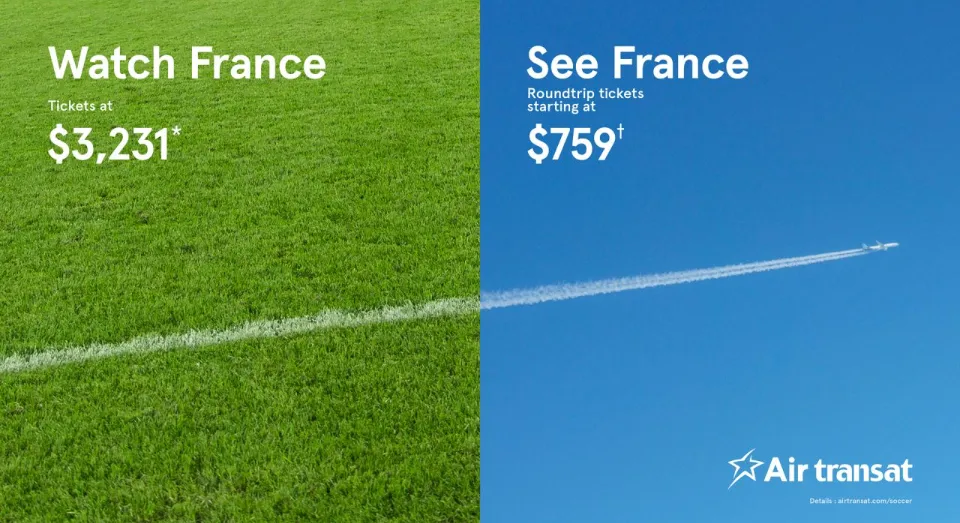
The live comparison creates legitimacy.
Fans can immediately see the logic for themselves.
That transparency increases:
- Memorability
- Shareability
- Trust in the message
The humor works because the frustration is real.
Execution Insight: Reactive Marketing Works Best When It Reflects Real Emotion
Many reactive campaigns chase trends without meaningful connection to brand truth.
This campaign works because the tension maps directly to what an airline offers: movement, destination, and experience.
The emotional frustration around ticket pricing becomes an invitation to travel instead.
The solution feels natural rather than forced.
Final Reflection: When a Consumer Problem Becomes a Travel Opportunity
Air Transat demonstrates how strong reactive marketing starts with empathy.
Instead of celebrating football through spectacle, the campaign addresses a frustration many fans already feel—and reframes it into possibility.
By shifting the focus from stadium seats to cultural immersion, the brand turns travel into a more meaningful version of fandom.
And in doing so, it reminds audiences that sometimes the best part of football is not where you watch it. It is where it takes you.
Summary
Air Transat partnered with Courage to transform rising World Cup ticket frustration into a reactive travel campaign. Using live ticket price comparisons, the work reframes fandom through cultural immersion, suggesting that for the cost of attending a single match, supporters could instead travel to the country they cheer for and experience football through everyday local culture.
Sources
FAQs
What is the campaign about?
It compares World Cup ticket prices with return flights to football-supporting nations.
What was the strategic insight?
Fans value football culture and shared experiences as much as stadium attendance.
What makes the campaign innovative?
It uses live pricing data to create reactive, culturally relevant comparisons.
Who created the campaign?
The campaign was created by Courage for Air Transat.
FAQs about this campaign
What is the campaign about?
It compares World Cup ticket prices with return flights to football-supporting nations.
What was the strategic insight?
Fans value football culture and shared experiences as much as stadium attendance.
What makes the campaign innovative?
It uses live pricing data to create reactive, culturally relevant comparisons.
Who created the campaign?
The campaign was created by Courage for Air Transat.
Bring your idea to breakfast-time OOH
Explore formats that meet audiences in morning routines and commuter corridors.



Comments
Be the first to comment.