Quick Answer
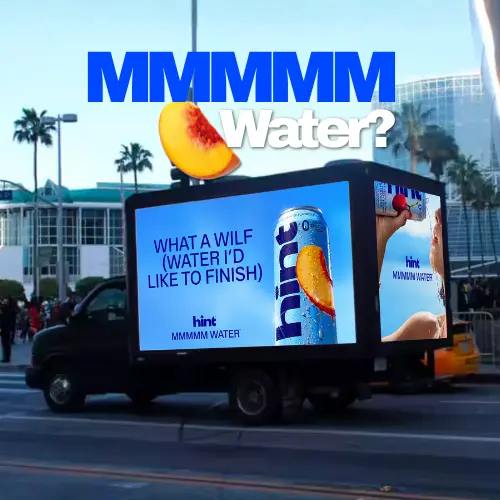
Hint’s “MMMMM Water” campaign reframes hydration through desire, humor, and cultural tension, positioning flavored water as something consumers actively crave rather than tolerate.
Cultural Context: Wellness Is Moving From Discipline to Desire
For years, health marketing has framed hydration as obligation.
Drink more water. Stay healthy. Build better habits.
The problem is that behavior driven by discipline often feels transactional. Consumers understand hydration matters, yet still struggle to make it habitual.
At the same time, wellness culture is evolving. Products increasingly succeed when they feel pleasurable rather than corrective.
Consumers do not want another task on their list. They want rituals that feel rewarding.
Hint recognizes this tension and flips the category logic entirely.
Insight: People Avoid Chores, But Chase Desire
The campaign is grounded in a sharp behavioral truth:
People are more likely to repeat behaviors they crave than behaviors they feel obligated to complete.
Hydration traditionally sits in the “should” category.
Hint’s reframing turns it into a “want.”
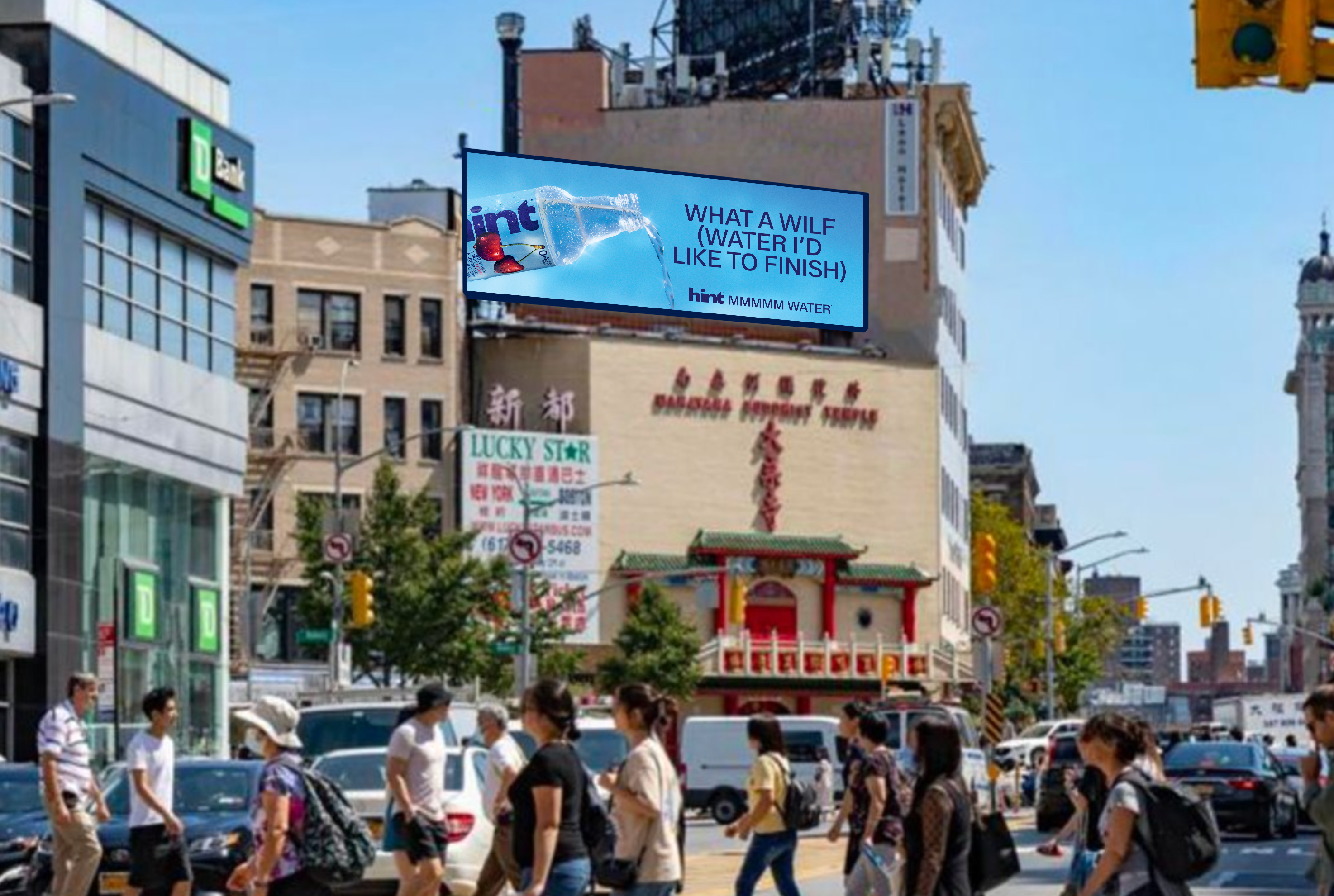
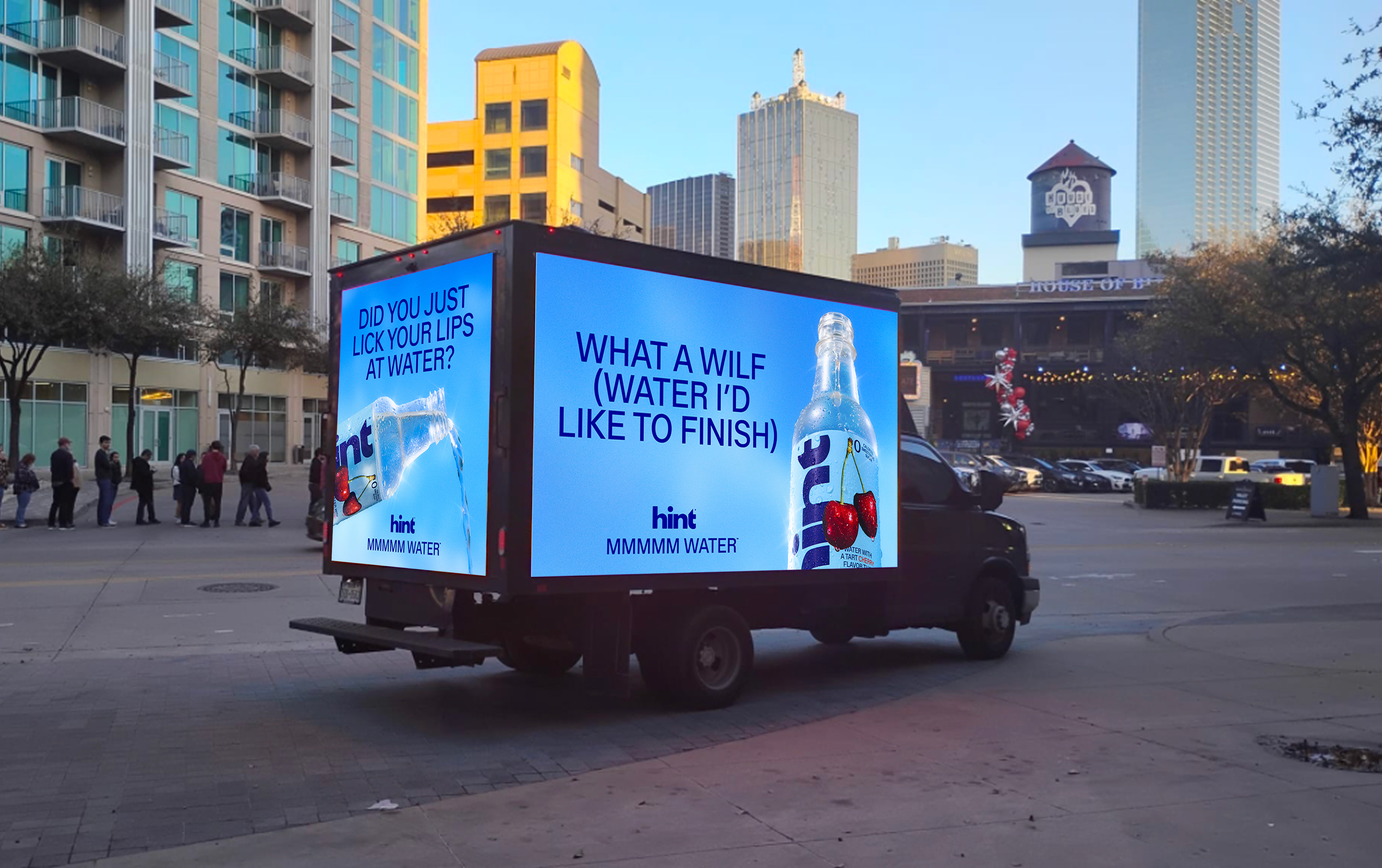
The campaign shorthand—WILF (Water I’d Like to Finish)—is intentionally provocative, playful, and culturally coded.
Rather than selling functional benefits, Hint positions itself around emotional pull.
When water tastes good enough to crave, drinking more of it becomes effortless.
Media Strategy: Placing Water Inside Desire Culture
The campaign deliberately enters environments where longing, attraction, and emotional intensity already exist.
Partnerships include:
- Love Island
- Yung Gravy
- Ari Kytsya
- Esther Perel through podcast sponsorships
This is strategically important.
Instead of placing water into traditional wellness spaces, Hint inserts itself into emotional and aspirational contexts where yearning already exists.
The product becomes part of cultural conversation rather than category convention.
Creative Execution: Selling Water Like Luxury Fragrance
The visual identity draws heavily from fashion and fragrance advertising.
Developed by Mythology and directed by Zach Tavel through BLINKINC, the hero films intentionally mislead viewers.
The cinematic setup suggests luxury perfume or sensual romance:
- Slow-motion condensation
- Fruit as tactile visual cues
- Romantic tension and foreplay
Only later is the reveal made:
The object of desire is water.
This misdirection works because it disrupts category expectations.
Consumers do not expect water advertising to feel cinematic, seductive, or humorous. That surprise becomes attention.
OOH Strategy: Humor as Cultural Hook
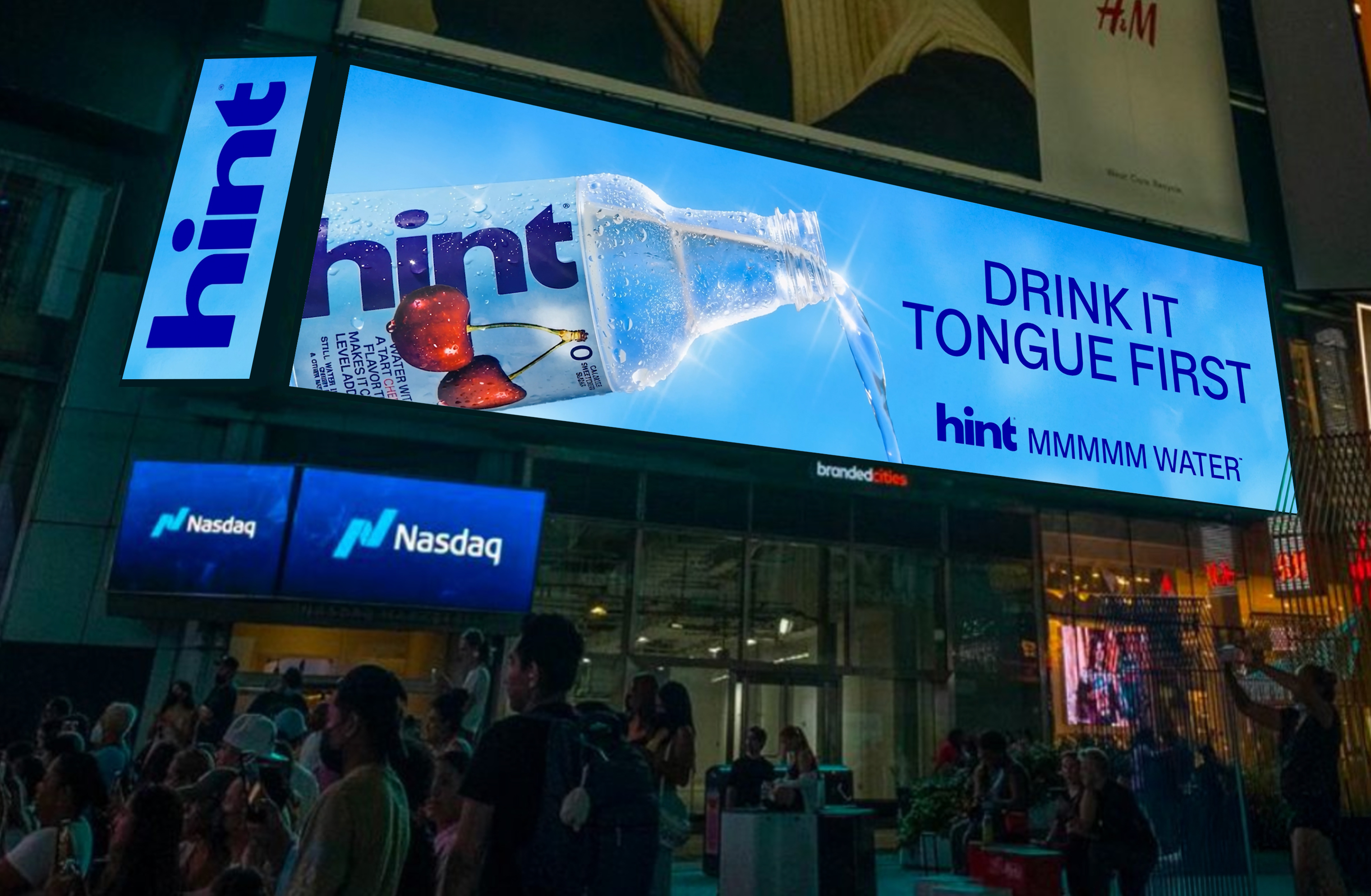
The OOH extensions continue the campaign’s playful tone.
Examples include:
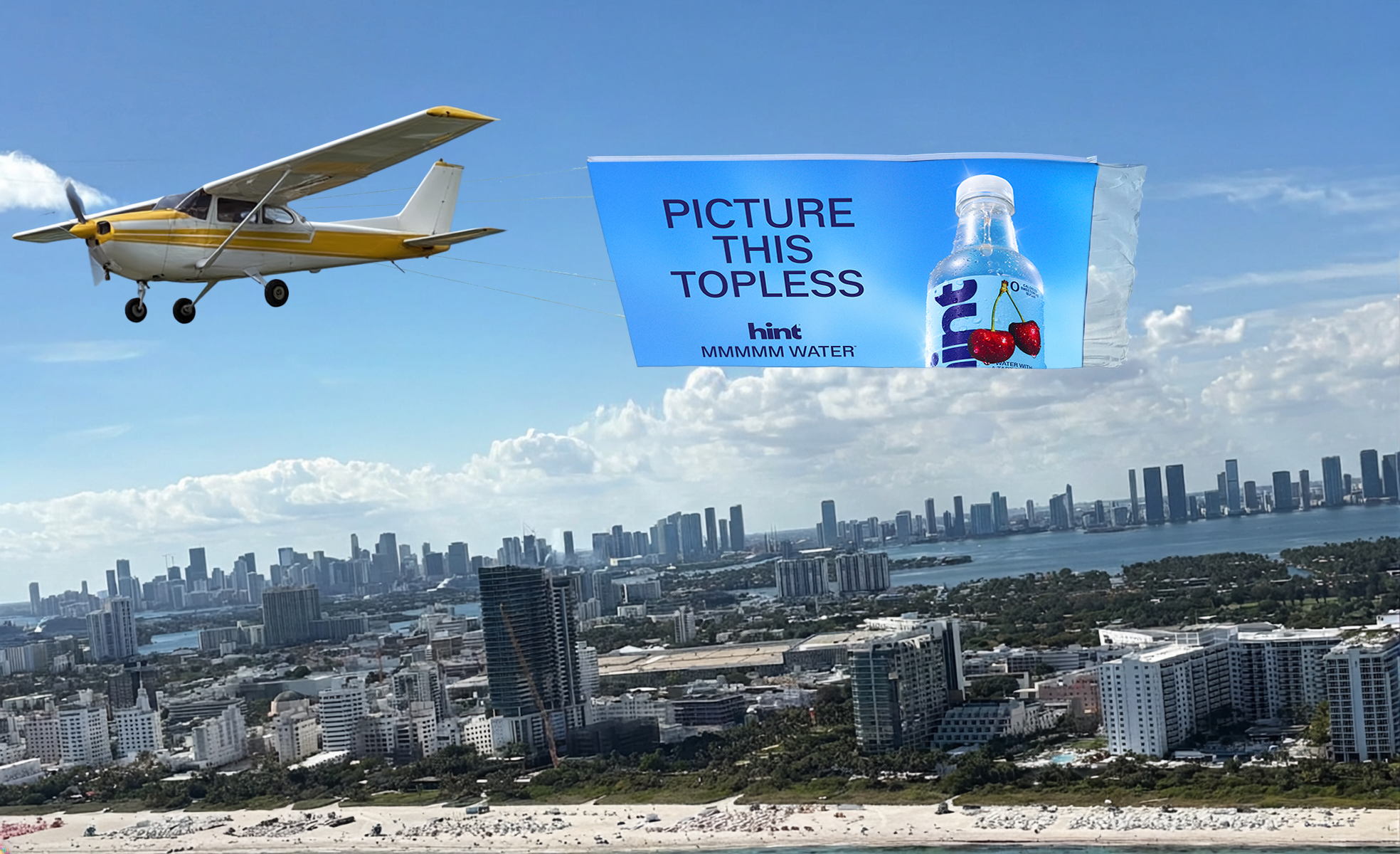
“Caught You Looking At Our Cans”
Aerial advertising promoting Hint’s new 19.2oz cans reframes product visibility through flirtatious language.
The humor matters strategically because it softens the provocation.
Without self-awareness, the campaign risks feeling overly performative. With humor, it feels culturally fluent.
The late-night hydration hotline similarly transforms product sampling into an entertainment mechanic rather than a transactional promotion.
Strategic Impact: Building Distinctiveness in a Crowded Category
Flavored water is an increasingly crowded space where functional claims often blur together.
Hint’s competitive advantage here is not product differentiation alone—it is emotional positioning.
“MMMMM Water” allows the brand to own territory competitors rarely occupy:
- Desire
- Playfulness
- Cultural fluency
- Humor-driven wellness
That positioning makes the brand easier to remember and harder to commoditize.
Execution Insight: Subversion Works When It Supports Product Truth
Many provocative campaigns fail because the tension feels disconnected from the product.
Here, the strategy remains tightly linked to a core truth:
Hint actually tastes better than consumers expect water to taste.
The desire narrative amplifies the product experience rather than distracting from it.
That alignment gives the work credibility underneath the humor.
Final Reflection: When Water Stops Feeling Like Work
Hint’s “MMMMM Water” campaign reflects a broader marketing shift:
Health behaviors become stronger when they feel emotionally rewarding.
By treating hydration like something worth craving, the brand moves beyond functional wellness into cultural identity.
The result is a campaign that does not ask consumers to drink more water because they should.
It asks them to because they want to.
And in behavior change, desire often works harder than discipline.
Summary
Hint partnered with Mythology to launch “MMMMM Water,” a provocative new campaign designed to make hydration feel desirable rather than dutiful. Following the brand’s March 2026 refresh, the integrated rollout uses fashion-advertising aesthetics, cultural partnerships, and irreverent humor to position water as something consumers genuinely crave.
Sources
FAQs
What is the campaign about?
It reframes hydration as something desirable and craveable rather than a health obligation.
What does WILF mean?
WILF stands for “Water I’d Like to Finish,” a playful shorthand introduced by the campaign.
What makes the campaign innovative?
It borrows luxury fragrance advertising codes to market flavored water through desire and humor.
What was the strategic insight?
People are more likely to maintain healthy behaviors when they feel rewarding instead of obligatory.
FAQs about this campaign
What is the campaign about?
It reframes hydration as something desirable and craveable rather than a health obligation.
What does WILF mean?
WILF stands for “Water I’d Like to Finish,” a playful shorthand introduced by the campaign.
What makes the campaign innovative?
It borrows luxury fragrance advertising codes to market flavored water through desire and humor.
What was the strategic insight?
People are more likely to maintain healthy behaviors when they feel rewarding instead of obligatory.
Bring your idea to breakfast-time OOH
Explore formats that meet audiences in morning routines and commuter corridors.
Comments
Be the first to comment.