Quick Answer
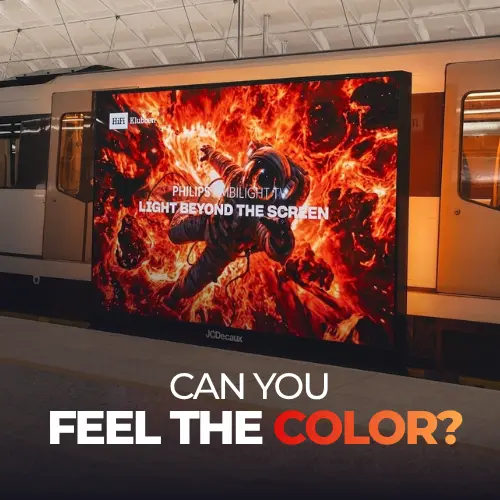
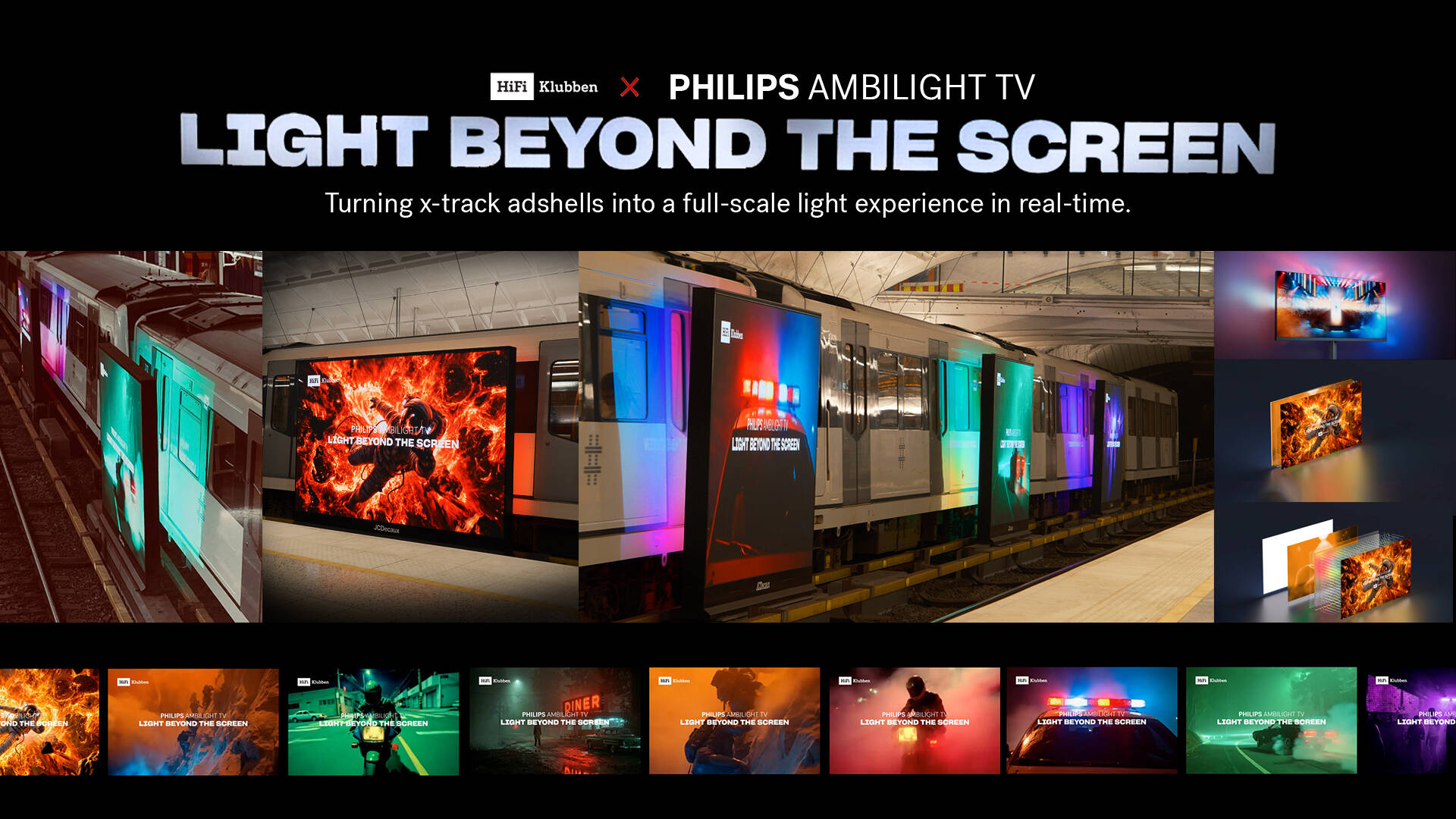
Philips Ambilight turned Oslo’s Stortinget station into a real-world demonstration of its TV technology, using subway trains and digital screens to recreate the immersive color-spill effect at city scale.
Cultural Context: Consumers Want to Experience Technology Before They Buy
Electronics advertising often struggles with a fundamental challenge: product features can feel abstract.
Specifications, technical language, and product claims rarely communicate emotional benefit.
This is especially true for premium home entertainment products, where the real value lies in sensory experience rather than functionality alone.
For retailers and brands, the challenge becomes clear:
How do you make people feel a feature before they own it?
Insight: Demonstration Beats Explanation
The campaign is built around a simple but powerful behavioral truth:
People understand technology faster when they experience it firsthand.
Philips Ambilight’s defining feature extends colors from the screen onto surrounding surfaces in real time, creating a more immersive viewing experience.
Explaining that visually through static advertising would require effort from the audience. Experiencing it instantly removes friction.
Rather than tell people what Ambilight does, the campaign lets them stand inside it.
Media Strategy: Turning Transit Infrastructure Into Product Media
The activation takes over the platform-facing digital screens at Stortinget Station, one of Oslo’s busiest transit hubs.
The strategic brilliance lies in how it uses the environment itself as part of the medium.
The setup works in layers:
- One screen displays cinematic visuals
- Opposite screens mirror those colors live
- Arriving subway trains become reflective “walls”
This transforms transit infrastructure into a functioning product demonstration.
The city becomes the living room.
Creative Execution: The TV Without the TV
One of the strongest creative decisions is restraint.
The activation never needs to show the television itself.
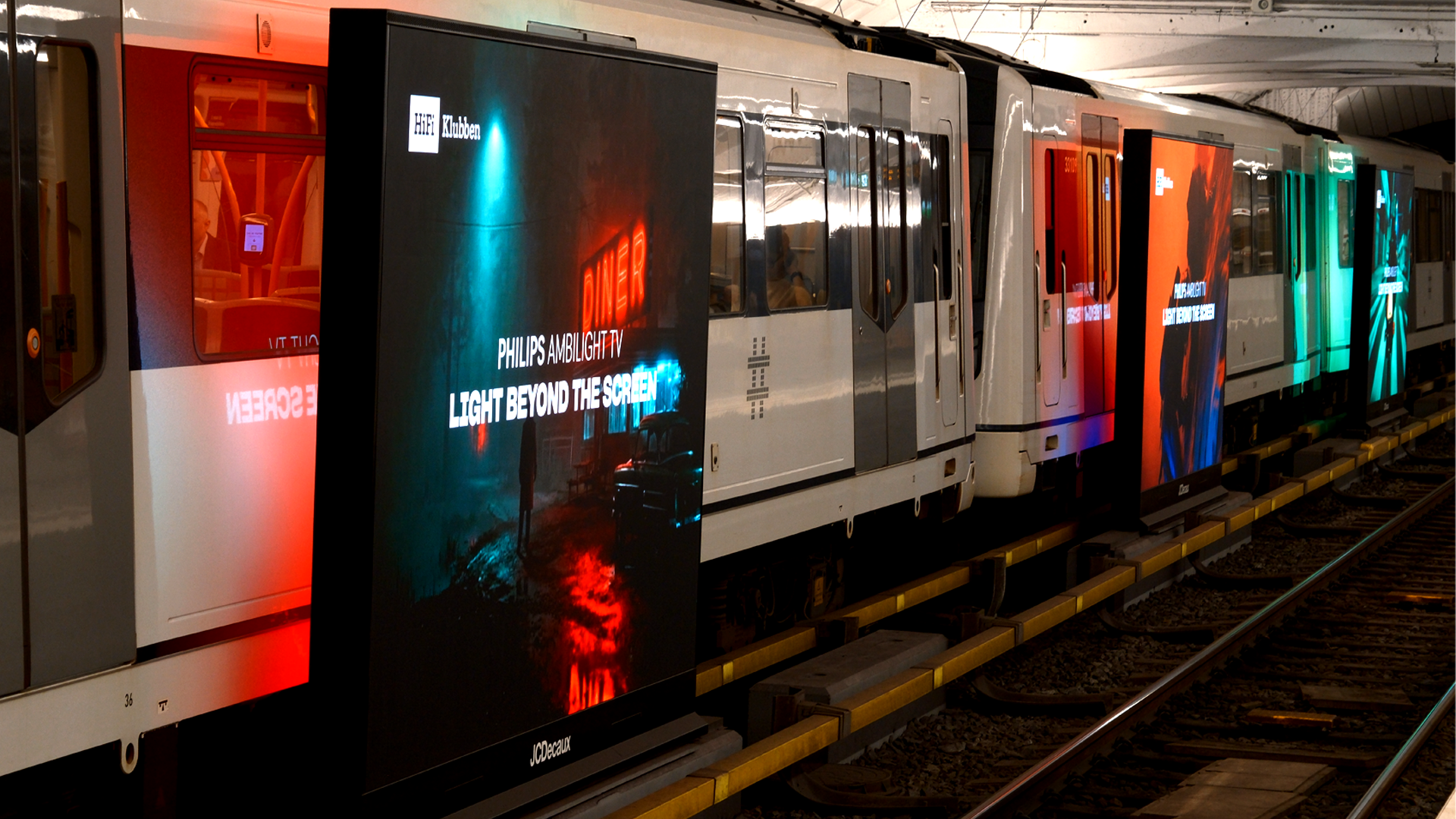
Instead, audiences encounter the emotional result of the product feature directly:
- Color spreading across walls
- Trains becoming immersive surfaces
- Everyday space transformed through motion and light
This creates surprise while preserving simplicity.
The absence of the product makes the feature more memorable because the experience becomes the message.
Retail Strategy: Proximity Drives Action
The activation’s location—just steps away from a nearby HiFi Klubben store—is strategically significant.
Experiential marketing works best when action is immediately possible.
Commuters experiencing the installation could quickly transition from curiosity to retail exploration.
This shortens the path between:
- Awareness
- Understanding
- Consideration
- Purchase intent
The station becomes both showroom and media placement.
Strategic Impact: From Product Claim to Public Proof
Technology brands often rely on exaggerated claims around immersion or realism.
This campaign avoids that trap entirely.
Instead of asking audiences to believe a promise, it demonstrates the outcome publicly and at scale.
This creates:
- Higher credibility
- Stronger memorability
- Organic social sharing
- Increased emotional engagement
The installation effectively turns commuters into witnesses rather than targets.
Execution Insight: The Best Product Demos Feel Accidental
Part of the campaign’s strength comes from surprise.
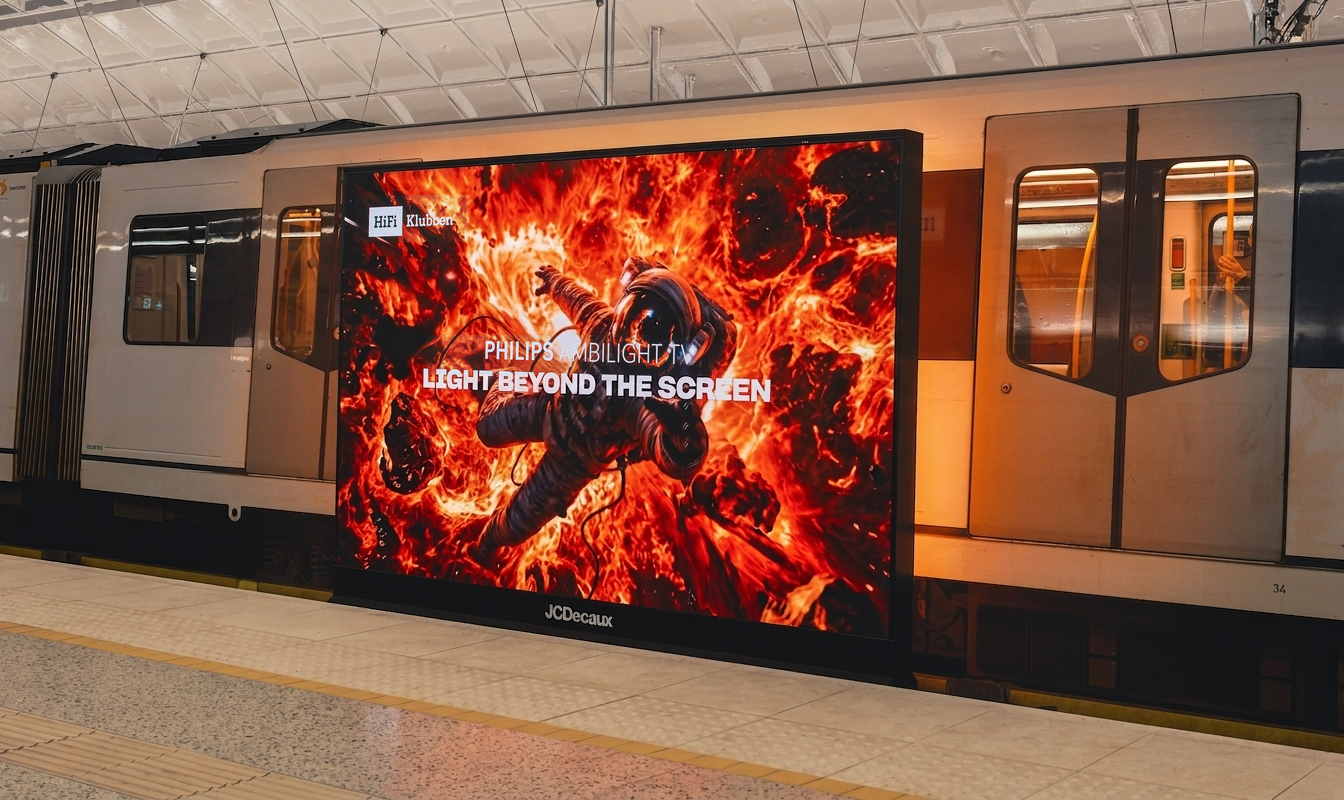
Commuters encounter the installation unexpectedly during routine travel.
That interruption of normality creates attention naturally.
By integrating with arriving trains and station movement, the experience feels alive rather than staged.
This increases emotional impact while avoiding the feel of traditional advertising.
Final Reflection: When OOH Becomes Product Experience
Philips Ambilight’s Oslo activation demonstrates how outdoor media can evolve beyond messaging into demonstration.
Rather than describing technology, the campaign immerses audiences inside it—without ever showing the device itself.
In a crowded electronics category, that kind of clarity matters.
Because sometimes the most convincing ad is not the one that explains the product. It is the one that lets people feel it.
Summary
Philips and HiFi Klubben partnered with POL to transform a subway station in Oslo into a full-scale demonstration of Ambilight technology. Using JCDecaux’s X-Track digital screens, the activation recreated the television’s signature immersive glow in real time, turning commuters into participants inside the product experience itself.
Sources
FAQs
What is the campaign about?
It demonstrates Philips Ambilight technology through an immersive subway activation in Oslo.
Where did it launch?
The campaign took over Stortinget subway station in Oslo, Norway.
What makes it innovative?
It recreates a TV feature at city scale using trains and digital screens.
What was the strategic insight?
Technology features are easier to understand through experience rather than explanation.
FAQs about this campaign
What is the campaign about?
It demonstrates Philips Ambilight technology through an immersive subway activation in Oslo.
Where did it launch?
The campaign took over Stortinget subway station in Oslo, Norway.
What makes it innovative?
It recreates a TV feature at city scale using trains and digital screens.
What was the strategic insight?
Technology features are easier to understand through experience rather than explanation.
Bring your idea to breakfast-time OOH
Explore formats that meet audiences in morning routines and commuter corridors.

Comments
Be the first to comment.