Valentine’s Day OOH Idea: When Less Says More
Article: Valentine’s Day OOH Idea: When Less Says More • 2026-02-16 • 4 min read • By Valentina Gasca

Valentine’s Day OOH Idea: When Less Says More

OOH Print Behavior Change
Quick Answer: A minimalist Valentine’s Day OOH concept using only a series title, episode number, and timestamp could trigger nostalgia and emotional recall—proving.

Quick Answer

A minimalist Valentine’s Day OOH concept using only a series title, episode number, and timestamp could trigger nostalgia and emotional recall—proving.

Where Did the Valentine’s OOH Go?

We don’t see a lot of Valentine’s Day OOH this year. Which is ironic, because if there’s one day practically designed for public displays of affection, it’s this one. Cities are emotionally charged. Storefronts turn red. Restaurants fill up. Social feeds overflow with curated romance.

Valentine’s Day is already a cultural stage.

So why not use it differently?

No hay descripción alternativa para esta imagen

A Concept Built on Restraint

Here’s the idea.

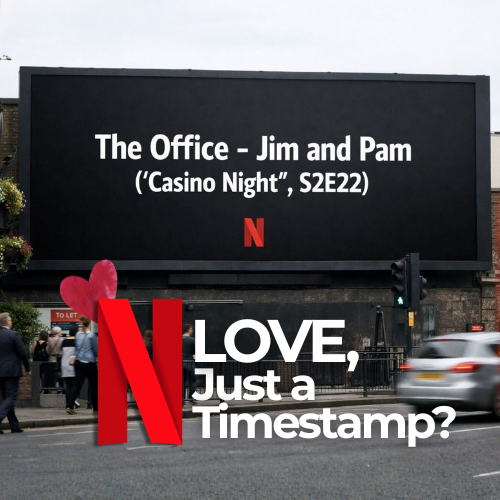
Imagine a billboard for Netflix. No couples embracing. No roses floating across the layout. No scripted headline about love being in the air.

Instead, the billboard simply shows:

Series title.
Season and episode.
Timestamp.

Nothing else.

No visual from the scene. No explanation.

Just coordinates.

For those who know, they know.

No hay descripción alternativa para esta imagen

Turning Memory into Media

That timestamp becomes a trigger. The audience doesn’t just look at the billboard—they mentally press play. The kiss. The confession. The breakup. The reconciliation. Whatever that iconic romantic moment was, it replays instantly in their head.

This approach transforms OOH from a display medium into a memory activation device. It relies on cultural literacy rather than spectacle. It assumes the audience is smart.

And that’s powerful.

Instead of consuming a pre-selected image, viewers participate. They complete the ad themselves. That participation builds stronger recall than simply showing a still frame ever could.

No hay descripción alternativa para esta imagen

Why Less Disrupts More

We live in an era of visual overload. Digital screens animate. DOOH loops flash. Typography competes with photography. Everything fights for attention.

Restraint becomes disruption.

A minimalist billboard—quiet, almost empty—stands out precisely because it refuses to shout. It creates a pause. A moment of recognition. A small smile.

And in the context of Valentine’s Day, that subtlety feels more intimate than oversized romance ever could.

No hay descripción alternativa para esta imagen

The Power of Suggestion

Sometimes the strongest OOH doesn’t show the scene. It doesn’t explain the emotion. It doesn’t underline the message.

It simply suggests.

And suggestion invites imagination.

On a day built around love, perhaps the most romantic gesture isn’t showing the moment at all—

but letting the audience replay it in their own way.

Summary

Instead of clichés like roses and couples, this Valentine’s Day billboard idea uses iconic love scene timestamps as memory triggers. The concept shows how restraint, cultural insight, and audience participation can elevate OOH impact.

Sources

FAQs

Why avoid traditional Valentine’s imagery?

Because clichés reduce impact. Minimalism creates curiosity and emotional participation instead of predictable visuals.

Why would timestamps work in OOH?

They function as cultural triggers. Fans instantly recognize the reference and mentally replay the scene.

Is minimalist OOH effective?

Yes. In visually saturated environments, restraint often creates stronger recall and differentiation.

Written by: Valentina Gasca  •  Reviewed by: Bm Outdoor Canada

FAQs about this campaign

Why avoid traditional Valentine’s imagery?

Because clichés reduce impact. Minimalism creates curiosity and emotional participation instead of predictable visuals.

Why would timestamps work in OOH?

They function as cultural triggers. Fans instantly recognize the reference and mentally replay the scene.

Is minimalist OOH effective?

Yes. In visually saturated environments, restraint often creates stronger recall and differentiation.

Bring your idea to breakfast-time OOH

Explore formats that meet audiences in morning routines and commuter corridors.
Summary:

Comments

0 total

Be the first to comment.

Outdoor Advertising

Outdoor advertising reaches people where they spend the majority of their time—outside. This includes posters, wall murals, and superboards that captivate audiences as they move through urban spaces.

Transit Advertising

Transit ads make use of public transportation to deliver messages, whether on buses, subways, or train stations. Ideal for reaching commuters in high-traffic areas.

Public Space Advertising

From airports to stadiums, public space advertising places your message in locations where large groups gather, creating strong brand awareness and high visibility.

Digital Advertising

Maximize your brand's impact with digital screens, which offer flexibility and dynamic content that can be tailored to different audiences and times of day.