Quick Answer
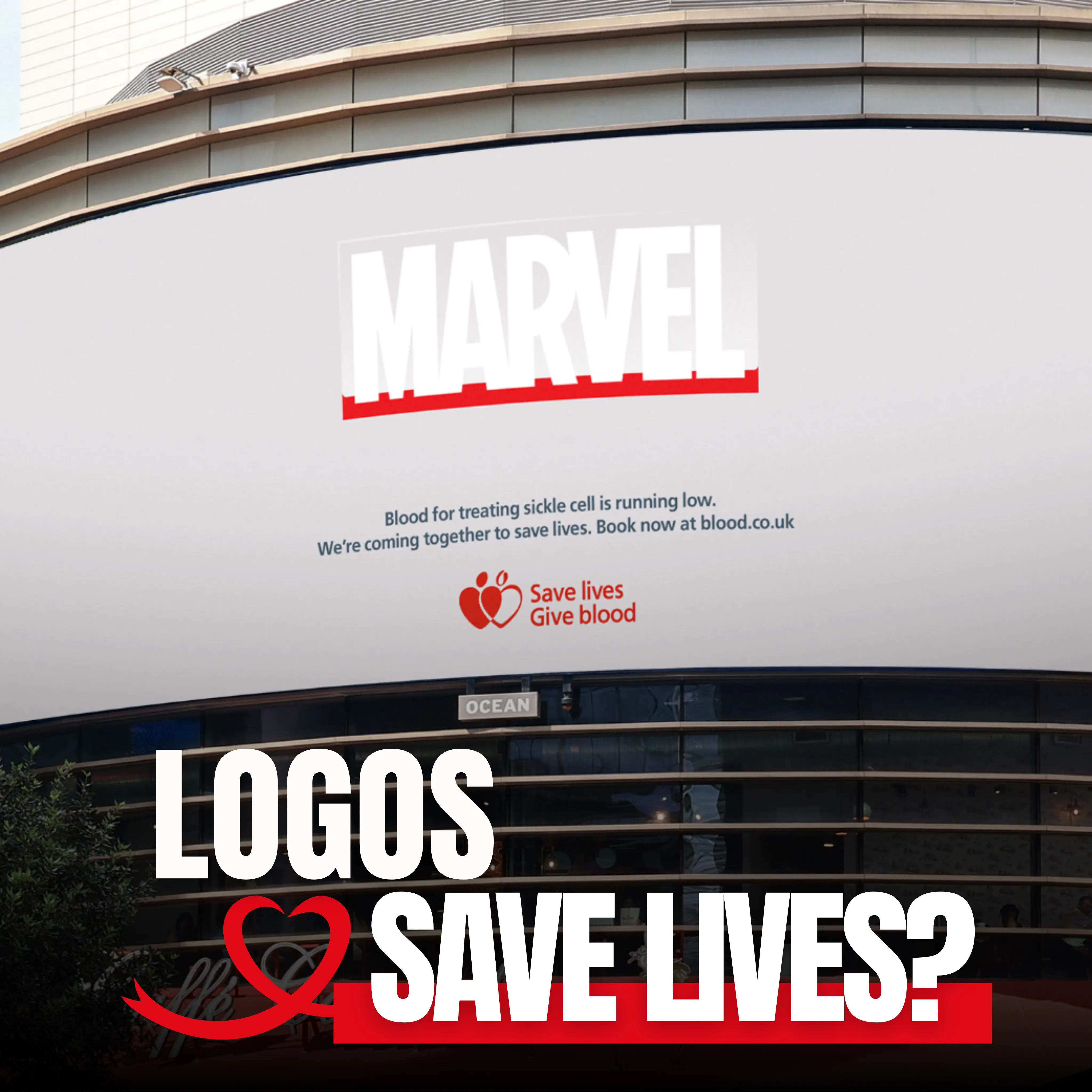
NHS Blood and Transplant launched “Emergency LOW-GOS,” a purpose-driven DOOH campaign developed by Havas London and supported by Ocean Outdoor. The campaign drains the red from iconic logos donated by brands including The Independent, English Heritage, Marvel, HSBC UK and Westfield to highlight low stocks of Ro, O negative and B negative blood needed to treat sickle cell patients in England.
Creative Context: When Familiar Logos Become a Warning
NHS Blood and Transplant has launched a new Digital Out of Home campaign to highlight low stocks of vital blood types needed to treat sickle cell in England.
The campaign activates its award-winning creative idea “Emergency LOW-GOS” for the first time.
Developed by Havas London, the work takes something instantly recognizable — iconic red brand logos — and removes the very color people expect to see.
The result is simple, disruptive and urgent.
By draining the red from famous logos, the campaign turns visual absence into a public reminder of the blood shortages affecting patients who depend on regular transfusions.
Brand Participation: Famous Red Logos Donated for a Cause
Major brands including The Independent, English Heritage, Marvel, HSBC UK and Westfield donated one of their most recognizable assets: their famously red logos.
Across the campaign, those logos appear without their red.
That creative transformation creates an immediate metaphor for low blood stocks.
It also shows how brand assets can be used for public good when they are flexible enough to serve a larger message.
Instead of asking partner brands to simply add a logo to a campaign, NHS Blood and Transplant asked them to visibly change it.
OOH Execution: Emergency LOW-GOS Across Ocean Outdoor Screens
The campaign runs across high-impact Ocean Outdoor Digital Out of Home sites in London, Manchester and Birmingham.
On these large-format screens, the drained logos become impossible to ignore.
The creative works because it uses the scale and public visibility of DOOH to create instant recognition, followed by a moment of discomfort.
Viewers know something is missing before they even read the full message.
That missing red becomes the campaign’s strongest visual device.
Health Context: Why Ro, O Negative and B Negative Blood Matter
Patients with sickle cell are most commonly treated with blood containing the Ro subtype.
Across England, NHS Blood and Transplant currently supplies around 3,600 units of Ro blood each month, while hospitals need approximately 7,400 units to meet demand.
That creates a shortfall of around 50%.
Because of that gap, the system must rely more heavily on stocks of O negative and B negative blood.
The campaign therefore serves as an urgent call for people with Ro, O negative and B negative blood to come forward and donate regularly.
Audience Strategy: Reaching the Donors Most Needed
NHS Blood and Transplant is especially encouraging new donors to book appointments.
The appeal is particularly important for donors of Black African heritage, because over 50% of Black heritage donors will have the Ro subtype, compared with around 2% of the wider population.
This makes representation and targeted donor recruitment critical to improving blood availability for sickle cell patients.
The campaign uses mass public media, but its message is tied to a very specific and urgent medical need.
Creative Recognition: From Competition Winner to Live Public Appeal
Emergency LOW-GOS previously won £75,000 of media space in Ocean Outdoor’s annual Digital Creative Competition.
The competition champions inventive and purposeful ideas that push the boundaries of Digital Out of Home.
Previous winners have gone on to receive recognition at Cannes Lions and other major international festivals.
For this campaign, the winning idea moves from concept to live public utility.
Its strength lies in the fact that it can be activated whenever blood supplies are running low.
Public Health Message: A Stark Reminder to Donate
Mark Chambers, director of donor experience at NHS Blood and Transplant, said boosting stocks of Ro, O negative and B negative blood is vital to saving and improving thousands of lives.
He noted that the organization is currently only able to meet around half of the demand for essential Ro blood, which is crucial for treating patients with sickle cell.
That shortage not only affects patients who rely on regular transfusions, but also places additional pressure on other vital blood stocks.
By transforming something familiar into a stark warning, the campaign creates a powerful reminder of the immediate impact of blood donation.
Agency Perspective: A Bloody Big Ask
Dan Cole, executive creative director at Havas London, described the campaign as proof that everyone can do their bit in an emergency.
Asking some of Britain’s biggest brands to lend their logos was already a major request.
Asking them to let those logos be visibly changed made the idea even bolder.
But the importance of the message helped bring partners together.
With support from Ocean Outdoor and the participating brands, Emergency LOW-GOS turns brand recognition into a life-saving call to action.
Media Perspective: DOOH With Longevity and Scale
Marie Le Hur, UK marketing director at Ocean Outdoor, described the campaign as disruptive, highly scalable and capable of putting DOOH on a different level.
The idea works beyond one moment because it can return whenever blood supplies run low.
That gives the campaign longevity as an emergency appeal.
It also shows how DOOH can respond to real-world needs with speed, scale and cultural impact.
Why the Campaign Works
The campaign works because it turns a visual shortcut into a public health message.
First, it uses famous red logos that people already recognize.
Second, it removes the red to create a simple but powerful metaphor for low blood stocks.
Third, it places that message on high-impact DOOH screens across major cities where the urgency can be seen at scale.
Finally, it connects creative disruption with a direct action: book an appointment and donate blood.
Final Reflection: Purpose-Driven DOOH That Saves Attention for What Matters
NHS Blood and Transplant’s Emergency LOW-GOS campaign is a strong example of how outdoor advertising can turn familiar brand assets into urgent public communication.
By draining the red from iconic logos, the campaign makes absence visible.
It reminds people that blood donation is not an abstract need, but a real and immediate requirement for patients who depend on transfusions.
For DOOH, the campaign demonstrates the power of simplicity, scale and collaboration.
Sometimes the most powerful thing a logo can do is show what is missing.
Summary
NHS Blood and Transplant activated its award-winning “Emergency LOW-GOS” creative idea for the first time to spotlight the urgent shortage of vital blood types used to treat sickle cell. Developed by Havas London, the campaign transforms high-impact Ocean Outdoor DOOH screens in London, Manchester and Birmingham by removing the red from famous brand logos. The visual absence becomes a stark public warning about low blood stocks and a direct call for new and regular donors, especially people with O negative, B negative and Ro blood.
Sources
FAQs
What is NHS Blood and Transplant’s Emergency LOW-GOS campaign?
It is a Digital Out of Home campaign that drains the red from iconic brand logos to highlight low stocks of vital blood types needed to treat sickle cell patients.
Who created the campaign?
The campaign was developed by Havas London for NHS Blood and Transplant, with media support from Ocean Outdoor.
Which blood types are most urgently needed?
NHS Blood and Transplant is calling for more donors with Ro, O negative and B negative blood to come forward and donate regularly.
Why are Black heritage donors especially encouraged to donate?
Over 50% of Black heritage donors will have the Ro subtype, compared with around 2% of the wider population, making their donations especially important for sickle cell treatment.
FAQs about this campaign
What is NHS Blood and Transplant’s Emergency LOW-GOS campaign?
It is a Digital Out of Home campaign that drains the red from iconic brand logos to highlight low stocks of vital blood types needed to treat sickle cell patients.
Who created the campaign?
The campaign was developed by Havas London for NHS Blood and Transplant, with media support from Ocean Outdoor.
Which blood types are most urgently needed?
NHS Blood and Transplant is calling for more donors with Ro, O negative and B negative blood to come forward and donate regularly.
Why are Black heritage donors especially encouraged to donate?
Over 50% of Black heritage donors will have the Ro subtype, compared with around 2% of the wider population, making their donations especially important for sickle cell treatment.
Bring your idea to breakfast-time OOH
Explore formats that meet audiences in morning routines and commuter corridors.


Comments
Be the first to comment.