Quick Answer
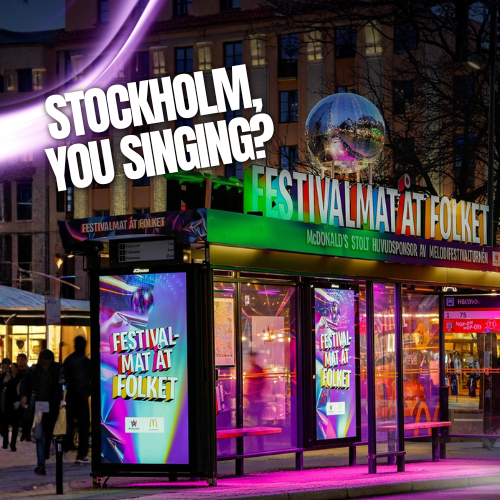
McDonald’s and JCDecaux transformed bus shelters in Stockholm into interactive music spaces to amplify Melodifestivalen’s cultural presence.
When OOH Becomes a Cultural Extension
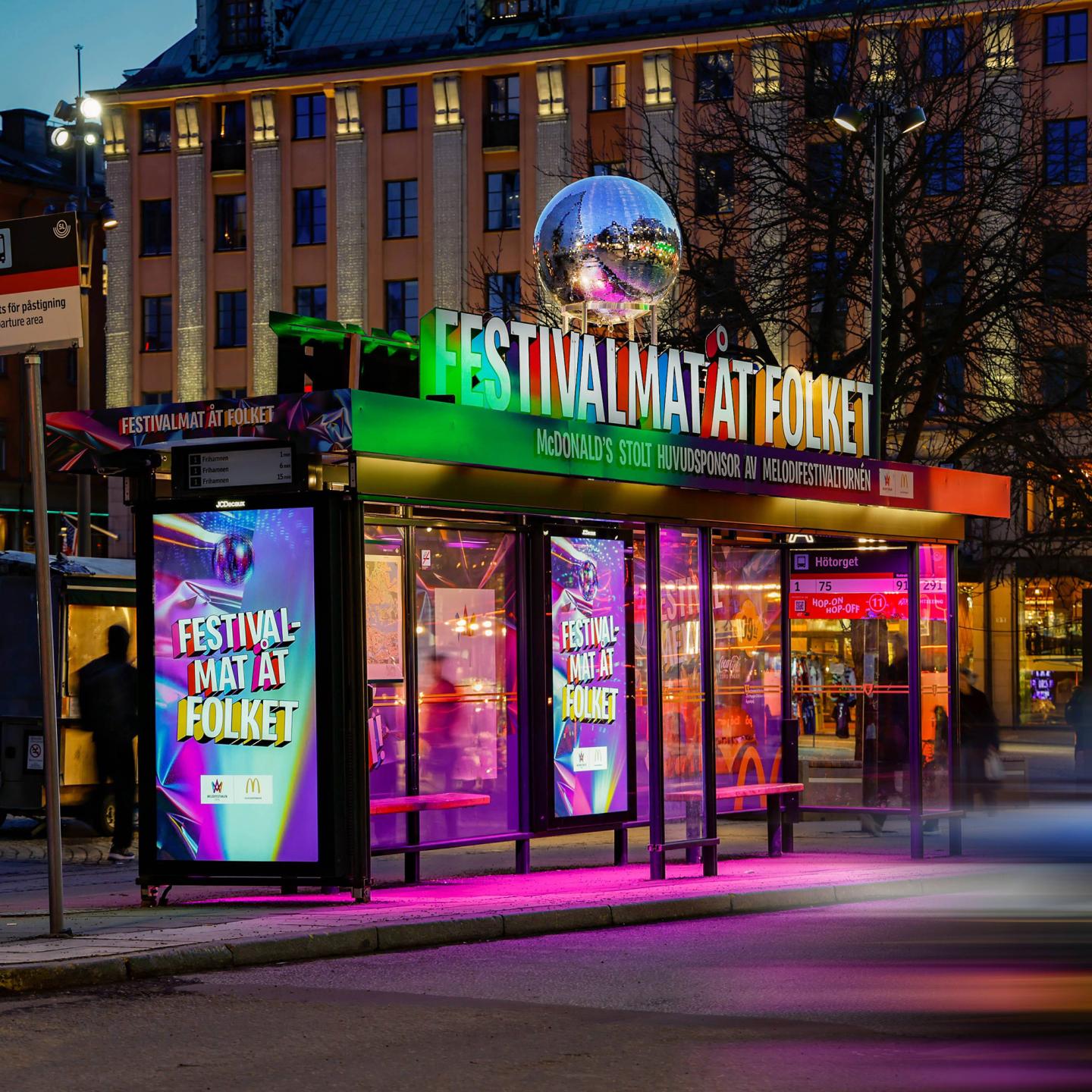
By stepping outside the broadcast environment, the campaign allows the show to exist where audiences already are, turning passive viewers into active participants.
Transforming Street Furniture Into Experience
Bus shelters, typically designed for waiting, become spaces for interaction. Through neon lighting, disco balls, and bold graphic messaging, these structures shift from functional objects to cultural touchpoints.
This transformation does two things strategically. First, it disrupts expectations, capturing attention in a cluttered urban environment. Second, it aligns the physical space with the emotional energy of the event.
Timing and Context as Media Strategy
The effectiveness of the campaign is closely tied to timing.
Melodifestivalen is not just a show, but a seasonal cultural moment in Sweden. By activating during its peak visibility, McDonald’s ensures relevance without needing additional explanation.
The city becomes part of the broadcast ecosystem. People encounter the brand and the event simultaneously, reinforcing both through context rather than repetition.
Brand Role: From Sponsor to Enabler
Instead of positioning itself as a sponsor, McDonald’s takes on the role of facilitator.
The brand enables moments of connection, turning waiting time into shared experiences. This aligns with a broader strategy in experiential marketing, where brands create value by enhancing existing behaviors rather than interrupting them.
In this case, commuting becomes entertainment.
OOH as Social Infrastructure
What makes this campaign particularly relevant is how it redefines the role of outdoor media.
OOH is no longer just a surface for messages. It becomes infrastructure for experiences. By integrating lighting, design, and spatial interaction, the campaign blurs the line between advertising and public installation.
For JCDecaux Sverige, this reflects a shift toward treating urban furniture as a platform for cultural expression, not just visibility.
A Broader Industry Signal
This activation highlights a growing trend in OOH:
- From static to interactive
- From message delivery to experience creation
- From media placement to cultural integration
By embedding itself into the rhythm of Stockholm, the campaign demonstrates how brands can move beyond visibility and become part of the environment itself.
Summary
McDonald’s partnered with JCDecaux Sverige to bring Melodifestivalen into the streets of Stockholm through an immersive OOH activation. By converting everyday urban furniture into vibrant music-driven spaces, the campaign connects entertainment, public space, and brand presence in real time.
Sources
FAQs
What is the Melodifestivalen OOH campaign?
An experiential outdoor campaign turning bus shelters into music-inspired spaces.
Where did it take place?
In Stockholm.
Who created the campaign?
JCDecaux Sverige in partnership with McDonald’s.
What is the strategic insight?
That cultural events can extend into public spaces to increase engagement.
What media channels were used?
Primarily OOH, enhanced with experiential elements and urban installations.
FAQs about this campaign
What is the Melodifestivalen OOH campaign?
An experiential outdoor campaign turning bus shelters into music-inspired spaces.
Where did it take place?
In Stockholm.
Who created the campaign?
JCDecaux Sverige in partnership with McDonald’s.
What is the strategic insight?
That cultural events can extend into public spaces to increase engagement.
What media channels were used?
Primarily OOH, enhanced with experiential elements and urban installations.
Bring your idea to breakfast-time OOH
Explore formats that meet audiences in morning routines and commuter corridors.

Comments
Be the first to comment.