Quick Answer
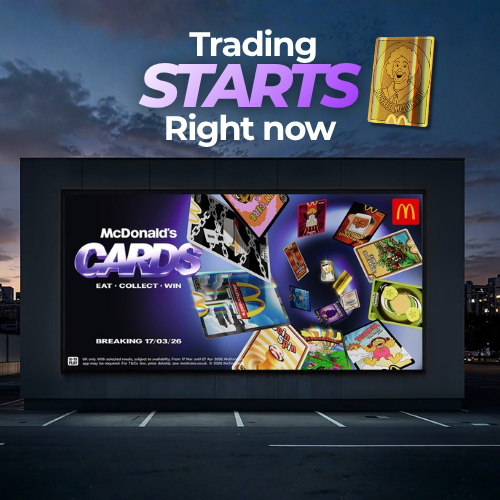
McDonald’s launched a trading card campaign turning its brand into a collectible universe, combining physical cards, digital tracking, and fan culture.
From Product to Universe
Fast food marketing typically focuses on immediacy. This campaign moves in the opposite direction, building a system designed for long-term engagement.
By introducing a structured trading card format, McDonald’s shifts from selling meals to creating a collectible universe. Characters, menu items, and brand history are reframed as assets within a broader narrative system.
This approach expands the role of the brand beyond consumption into ownership and participation.
Tapping Into Collector Culture
The strategy is rooted in a clear cultural insight. Collector culture has moved from niche hobby to mainstream behavior, driven by trading cards, gaming, and limited-edition drops.
The campaign mirrors this ecosystem closely. It includes booster packs, rarity tiers, collector tins, and even grading-style presentation formats. These elements are not decorative, but essential to making the experience feel authentic.
By aligning with established collector mechanics, the campaign gains credibility within a highly engaged audience.

Gamification as Engagement Strategy
A key innovation lies in how the cards function. Rather than being purely symbolic, they introduce a reward mechanic that guarantees value in every pack.
This removes the friction often associated with chance-based collectibles and aligns with McDonald’s core promise of instant gratification. The act of opening a pack becomes both a game and a transaction.
The result is a system where engagement extends beyond the point of purchase.
Digital Infrastructure as Extension
The campaign does not stop at physical assets. A digital hub allows users to track collections, unlock content, and explore brand lore.
This layer transforms the campaign into an ecosystem. Physical cards drive acquisition, while digital tools sustain interaction.
It also reflects a broader trend where brands build hybrid experiences that combine tangible and digital ownership.

Nostalgia Reimagined as IP
McDonald’s has decades of cultural equity, but this campaign reframes that legacy as intellectual property rather than memory.
Instead of referencing nostalgia passively, it actively reconstructs it. Characters and moments are redesigned as part of a fictional universe, giving them new relevance.
This allows the brand to connect with both older audiences who recognize the references and younger ones who engage with the format itself.
A Shift Toward Participatory Branding
The broader implication of the campaign is a shift in how brands create value.
Rather than delivering a fixed message, McDonald’s invites consumers to participate, collect, and build their own relationship with the brand.
This reflects a wider movement toward participatory systems, where engagement is driven by interaction rather than exposure.

Summary
McDonald’s partnered with Leo UK to create a trading card ecosystem that transforms brand assets into collectible items. By combining nostalgia, gamification, and digital infrastructure, the campaign repositions the brand as a participatory experience rather than a transactional one.
Sources
FAQs
What is the McDonald’s trading cards campaign about?
A collectible card system that turns the brand into a playable, fan-driven universe.
Who developed the campaign?
Leo UK.
What makes the campaign innovative?
It combines physical collectibles with digital tracking and guaranteed rewards.
What is the strategic insight?
That collector culture and nostalgia can drive deeper brand engagement.
What media channels were used?
Physical collectibles, digital platforms, experiential activations, and supporting media.
FAQs about this campaign
What is the McDonald’s trading cards campaign about?
A collectible card system that turns the brand into a playable, fan-driven universe.
Who developed the campaign?
Leo UK.
What makes the campaign innovative?
It combines physical collectibles with digital tracking and guaranteed rewards.
What is the strategic insight?
That collector culture and nostalgia can drive deeper brand engagement.
What media channels were used?
Physical collectibles, digital platforms, experiential activations, and supporting media.
Bring your idea to breakfast-time OOH
Explore formats that meet audiences in morning routines and commuter corridors.
Comments
Be the first to comment.