Quick Answer
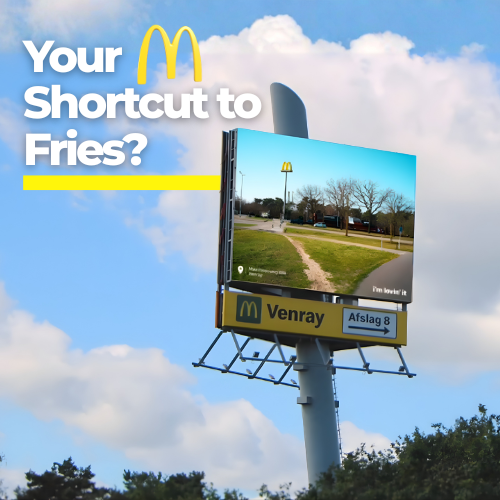
McDonald’s Netherlands created an OOH campaign using real unofficial paths people take, showing how everyday behavior naturally leads to its restaurants.
Behavioral Insight Hidden in Plain Sight
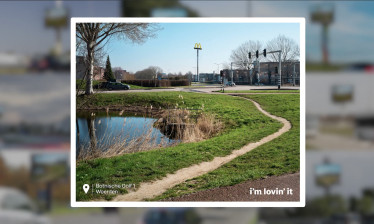
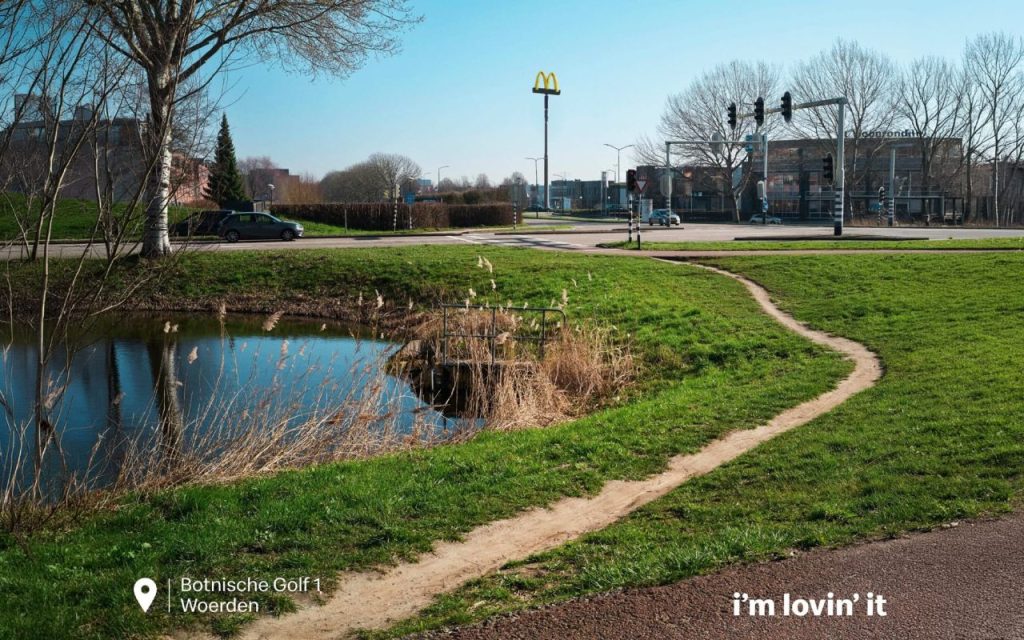
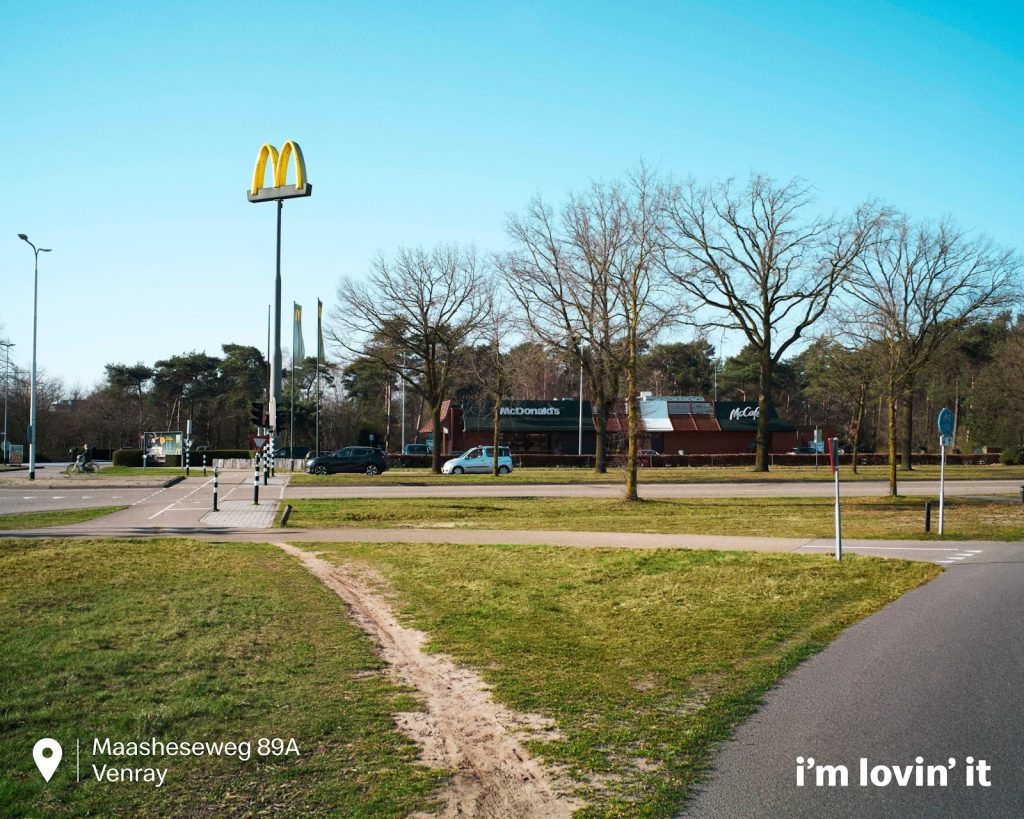
These informal trails, known as “desire lines,” emerge when individuals prioritize efficiency over structure. They represent collective behavior patterns formed organically over time.
The campaign identifies a key insight: these paths are not random. They reveal intent.
From Data to Cultural Observation
Rather than constructing a narrative, the campaign uncovers one that already exists.
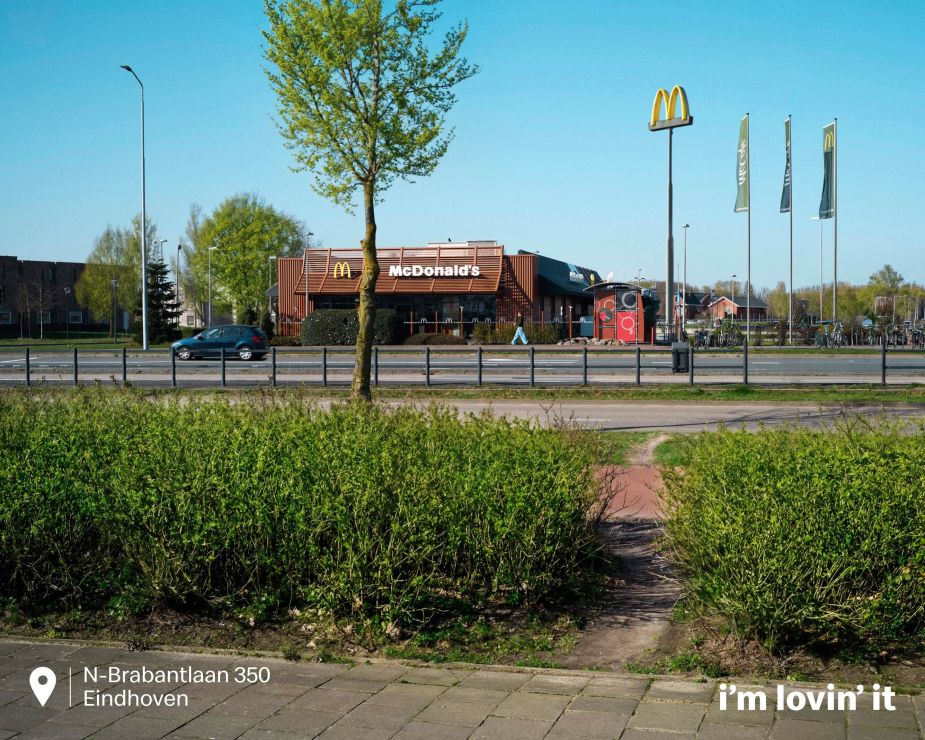
By combining open-source mapping data with restaurant locations, the team identified shortcuts that naturally align with journeys toward McDonald’s. These routes were then documented in their real environments.
This approach shifts the role of creativity. Instead of inventing meaning, it curates and frames existing behavior.
OOH as Contextual Storytelling
The use of OOH is critical to how the idea lands.
Placed within the same cities where these paths exist, the campaign creates a direct connection between message and environment. Viewers recognize the locations, or at least the behavior they represent.
This familiarity reduces the need for explanation. The audience understands the idea instinctively because they have participated in it.
Local Relevance at Scale
The campaign runs across multiple Dutch cities, including Almelo, Eindhoven, Venray, Woerden, and Lemmer.
Each execution is tailored to its specific location, reinforcing authenticity. While the concept is consistent, the visuals change depending on the environment.
This balance between scalability and localization allows the campaign to maintain both efficiency and relevance.
Brand Presence Without Interruption
One of the campaign’s strengths is its restraint.
It does not instruct, exaggerate, or dramatize. Instead, it observes.
By explicitly avoiding any suggestion that people should use these routes, McDonald’s positions itself as a brand that understands behavior rather than trying to control it.
This subtlety enhances credibility.
A Shift Toward Observational Marketing
The campaign reflects a broader trend in the industry.
Brands are increasingly moving toward observational strategies, where insights are derived from real-world behavior and translated into communication.
In this case, the insight is not hidden in research reports or data dashboards. It is visible in the landscape itself.
When Data Meets Simplicity
At its core, the campaign is a fusion of data and minimalism.
- Data identifies the patterns
- Photography captures them
- OOH places them back into context
The result is a form of storytelling that feels both analytical and human. here...
Summary
McDonald’s launched a print and OOH campaign in the Netherlands with TBWA\NEBOKO and OMD Netherlands, visualizing “desire lines” — informal shortcuts created by pedestrians — that often lead to its locations. The campaign transforms behavioral data into contextual storytelling, reinforcing the brand’s presence through observation rather than persuasion.
Sources
FAQs
What is the McDonald’s desire lines campaign?
An OOH campaign that highlights real shortcuts people take, often leading to McDonald’s locations.
Who created the campaign?
TBWA\NEBOKO with media by OMD Netherlands.
What is the strategic insight?
That informal paths reveal where people naturally want to go.
Where is the campaign running?
Across multiple cities in the Netherlands.
What media channels were used?
Print and out-of-home advertising.
FAQs about this campaign
What is the McDonald’s desire lines campaign?
An OOH campaign that highlights real shortcuts people take, often leading to McDonald’s locations.
Who created the campaign?
TBWA\NEBOKO with media by OMD Netherlands.
What is the strategic insight?
That informal paths reveal where people naturally want to go.
Where is the campaign running?
Across multiple cities in the Netherlands.
What media channels were used?
Print and out-of-home advertising.
Bring your idea to breakfast-time OOH
Explore formats that meet audiences in morning routines and commuter corridors.
Comments
Be the first to comment.