Quick Answer
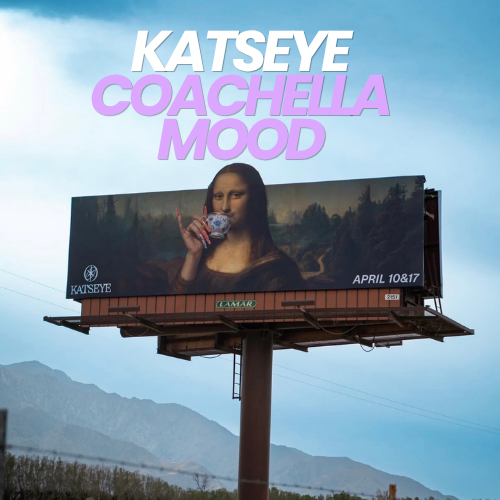
KATSEYE launched a desert billboard ahead of Coachella 2026 featuring a modern reinterpretation of the Mona Lisa to build anticipation for their performance.
Signaling a New Creative Era
The visual direction suggests more than a festival announcement.
By referencing an iconic artwork, KATSEYE positions itself within a broader cultural dialogue. The reinterpretation hints at evolution, signaling a shift in identity or artistic direction.
This aligns with how emerging global acts increasingly build narrative through imagery before music is even released.

Coachella as a Global Stage
The timing of the billboard is critical.
KATSEYE is part of Coachella Valley Music and Arts Festival 2026, one of the most influential platforms in global music culture. For many artists, Coachella is not just a performance but a moment of validation.
The billboard operates as a prelude. It announces presence without explanation, reinforcing the idea that the group is entering a larger cultural arena.
A Group Built for Global Reach
KATSEYE represents a new generation of pop groups designed for international audiences from inception.
Formed through a global development model, the group blends diverse cultural influences, combining elements of Western pop with the structure and discipline often associated with K-pop systems.
This positioning allows their campaigns to operate across markets, using universally recognizable symbols like the Mona Lisa to communicate beyond language.

The Desert as Media Environment
The location plays a strategic role.
Positioned in the California desert, the billboard exists within the same cultural geography as Coachella. This creates contextual relevance, linking the message directly to the event environment.
At the same time, the isolation of the landscape enhances visibility. With minimal visual noise, the image becomes more striking and more shareable.
The result is an execution designed as much for social distribution as for physical visibility.
From Promotion to Iconography
The campaign reflects a broader shift in music marketing.
Rather than relying on information-heavy messaging, artists increasingly use symbolic visuals to generate intrigue. The goal is not immediate understanding but sustained curiosity.
For KATSEYE, the billboard does not explain. It invites interpretation.
A Visual Strategy Rooted in Culture
By merging classical art with contemporary styling, the campaign positions the group at the intersection of tradition and modernity.
This duality mirrors the identity of many global pop acts today, where cultural references are layered, hybrid, and designed to resonate across different audiences.
In this sense, the billboard functions less as an announcement and more as a cultural artifact.
Summary
KATSEYE unveiled a high-impact OOH billboard in the California desert as a teaser for their Coachella debut. The visual blends classical art with contemporary aesthetics, signaling a new creative phase while positioning the group within a global pop and cultural conversation.
Sources
FAQs
What is the KATSEYE billboard about?
A teaser campaign promoting their upcoming Coachella performance.
Where is the billboard located?
In the California desert near the Coachella festival area.
Why use the Mona Lisa?
To reinterpret a globally recognized cultural icon and signal a new artistic direction.
What is the strategic insight?
That symbolic visuals can generate more engagement than direct messaging.
What does the billboard promote?
KATSEYE’s Coachella performance dates: April 10 and 17.
FAQs about this campaign
What is the KATSEYE billboard about?
A teaser campaign promoting their upcoming Coachella performance.
Where is the billboard located?
In the California desert near the Coachella festival area.
Why use the Mona Lisa?
To reinterpret a globally recognized cultural icon and signal a new artistic direction.
What is the strategic insight?
That symbolic visuals can generate more engagement than direct messaging.
What does the billboard promote?
KATSEYE’s Coachella performance dates: April 10 and 17.
Bring your idea to breakfast-time OOH
Explore formats that meet audiences in morning routines and commuter corridors.
Comments
Be the first to comment.