Quick Answer
A Type 1 diabetes awareness campaign from the Adam Bell Foundation, running across i-media’s UK motorway service area network, helped a 14-year-old girl recognise her symptoms, speak up and receive a diagnosis before her condition became critical.
Campaign Context: When OOH Becomes Life-Saving
Advertising rarely gets to call itself life-saving.
In this case, it can.
A diabetes awareness campaign from the Adam Bell Foundation, running across i-media’s UK motorway service area network, helped a 14-year-old girl recognise symptoms of Type 1 diabetes and seek medical help before her condition became critical.
The outcome shows how a carefully placed out-of-home message can move beyond awareness and create a direct, measurable human impact.
The Moment: A Poster Seen During a Family Journey
On Easter Sunday, a family stopped at a motorway service area while travelling to visit relatives.
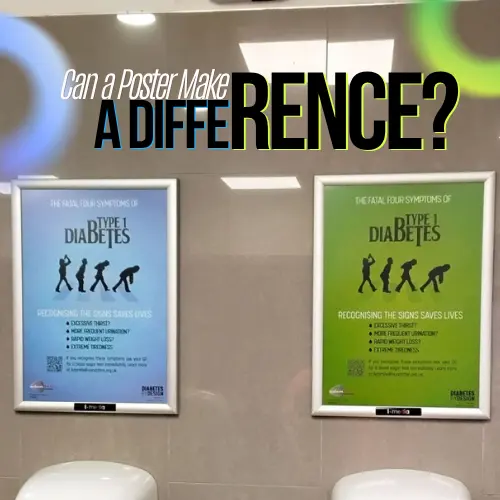
During that pause, in the kind of unhurried and distraction-free environment that defines motorway service areas, a 14-year-old girl noticed a striking diabetes awareness poster on the back of a cubicle door.
The creative, produced by the Adam Bell Foundation, used a Beatles-inspired visual reference as part of a paid campaign across i-media’s UK motorway service area estate.
That poster became the turning point.
The Symptoms: A Message That Connected at the Right Time
For several weeks, the teenager had been experiencing symptoms she had not yet connected.
She had increased thirst, frequent trips to the bathroom and persistent fatigue.
Her mother had also noticed something was not right, but neither of them had acted.
After seeing the campaign, the teenager asked her mother that evening whether she might have Type 1 diabetes.
The following morning, a home blood sugar test confirmed elevated levels.
The family went straight to hospital, where doctors confirmed the diagnosis.
Importantly, her ketone levels were only just above normal, meaning the condition had been caught in time.
She is now home, receiving treatment and beginning a new chapter.
OOH Impact: The Second Documented Real-World Outcome
This is the second time the Adam Bell Foundation’s motorway service area campaign has delivered a documented, real-world outcome.
It is also the clearest evidence yet that the right message, in the right environment, at the right moment, can do far more than generate impressions.
In this case, the campaign did not simply raise awareness.
It gave someone the knowledge and confidence to speak up about what she was feeling.
Why Motorway Service Areas Were the Right Environment
The placement was no accident.
i-media’s estate covers 98% of UK motorway service areas, reaching families, solo travellers, commuters and long-distance drivers during moments of pause and high attention.
These environments offer extended dwell time in a low-distraction setting.
That makes them especially powerful for messages that ask people to recognise symptoms, reflect on their own behaviour or take action.
For Type 1 diabetes awareness, motorway service area washroom environments were a deliberate strategic choice because anyone experiencing symptoms may be using those facilities more than usual.
Creative Strategy: A Beatles-Inspired Message That Stood Out
The Adam Bell Foundation made the creative intentionally eye-catching with a Beatles reference.
The approach was connected to Adam himself, who was a musician from Liverpool.
The campaign needed imagery that could resonate with both men and women, while also cutting through in a public setting where attention can be difficult to earn.
By using a familiar cultural reference and placing the message in a relevant environment, the campaign increased the chance that someone experiencing symptoms would stop, read and connect the message to their own life.
Helen Rowe on the Campaign’s Purpose
Helen Rowe of the Adam Bell Foundation said the case reflects exactly how the campaign was intended to work.
She explained that reaching someone at the critical moment is like finding a needle in a haystack.
With Type 1 diabetes, the foundation knew that anyone experiencing symptoms would likely be using motorway service area facilities more than usual.
That is why the environment was chosen deliberately.
The campaign had to be direct because the window for helping someone showing symptoms can be short.
A few weeks too late, and the outcome could be fatal.
Physical Media in a World of Digital Noise
For health charities, reaching audiences with trustworthy and actionable content has become increasingly difficult.
Digital noise, medical misinformation and algorithmic filtering can make it harder for critical health messages to reach people at the right time.
This campaign demonstrates what precisely placed physical media can still do.
It can insert itself into a shared public moment, in a trusted environment, without relying on an algorithm.
At a time when people are often isolated when discussing health, campaigns that prompt awareness and conversation can make a meaningful difference.
i-media’s Role: Right Format, Right Location, Right Creative
Hannah Ainsworth, Chief Marketing Officer at i-media, described the outcome as the result of a campaign planned and executed with real precision.
The right format, the right location and the right creative all worked together.
She noted that the Adam Bell Foundation understood how its audience behaves in a motorway service area environment and built the media strategy around that insight.
Motorway service areas are places where real life happens: families on the move, individuals in transit and people away from screens.
That is what made the campaign’s impact possible.
The Mother’s Letter: A Turning Point
The mother’s original letter to the Adam Bell Foundation, written in the weeks after her daughter’s diagnosis, described the campaign as a turning point.
It gave her daughter the knowledge to trust what she was feeling.
It also gave her the confidence to speak up.
In her words, it changed everything.
Why the Campaign Works
The campaign works because it combines creative clarity with environmental intelligence.
The message was not placed randomly.
It appeared in a setting where the audience had time, privacy and a relevant behavioural connection to the symptoms being described.
The creative was direct enough to be understood quickly, but distinctive enough to be remembered.
That combination helped turn a health message into real action.
Final Reflection: Beyond the Media Plan
As Diabetes Awareness Week 2026 marks another year of education, advocacy and the fight against stigma, this case stands as evidence of what can happen when creative vision, strategic media planning and audience behaviour align.
A 14-year-old is well.
Her family is grateful.
And out-of-home advertising has once again earned its place beyond the media plan.
Summary
The Adam Bell Foundation’s diabetes awareness OOH campaign has delivered a documented real-world outcome after a 14-year-old girl saw a Beatles-inspired poster on the back of a cubicle door at a UK motorway service area. After recognising symptoms including increased thirst, frequent bathroom trips and fatigue, she asked her mother whether she might have Type 1 diabetes. A home blood sugar test the next morning showed elevated levels, and doctors later confirmed the diagnosis. Because the condition was caught in time, her ketone levels were only just above normal. The case demonstrates how the right message, in the right environment, at the right moment, can do far more than generate impressions.
Sources
FAQs
What is the Adam Bell Foundation diabetes OOH campaign?
It is a Type 1 diabetes awareness campaign running across i-media’s UK motorway service area network, using strategically placed creative to help people recognise symptoms and take action.
How did the campaign help a teenager?
A 14-year-old girl saw the campaign poster, recognised symptoms she had been experiencing, asked her mother whether she might have Type 1 diabetes and received a diagnosis in time.
Why were motorway service areas chosen?
Motorway service areas offer moments of pause, extended dwell time and relevant washroom environments where people experiencing symptoms may be more likely to notice and connect with the message.
What does this campaign show about OOH advertising?
It shows that physical media, when strategically placed, can deliver more than impressions by prompting awareness, conversation and real-world action.
FAQs about this campaign
What is the Adam Bell Foundation diabetes OOH campaign?
It is a Type 1 diabetes awareness campaign running across i-media’s UK motorway service area network, using strategically placed creative to help people recognise symptoms and take action.
How did the campaign help a teenager?
A 14-year-old girl saw the campaign poster, recognised symptoms she had been experiencing, asked her mother whether she might have Type 1 diabetes and received a diagnosis in time.
Why were motorway service areas chosen?
Motorway service areas offer moments of pause, extended dwell time and relevant washroom environments where people experiencing symptoms may be more likely to notice and connect with the message.
What does this campaign show about OOH advertising?
It shows that physical media, when strategically placed, can deliver more than impressions by prompting awareness, conversation and real-world action.
Bring your idea to breakfast-time OOH
Explore formats that meet audiences in morning routines and commuter corridors.


Comments
Be the first to comment.