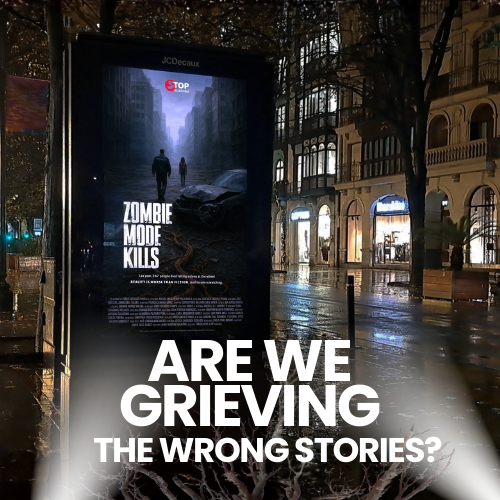
“THE MOST TALKED-ABOUT DEATHS ARE THE ONES THAT AREN’T REAL.” With that bold line, StopAccidentes marks its 25th anniversary by confronting a disturbing cultural contradiction.
The new campaign, “Reality Is Worse Than Fiction”, exposes how vividly we remember fictional deaths — from the shock of a TV character’s final moment to the heated discussions that erupt online minutes later. Yet the real deaths happening around us every day, on our roads, fade almost instantly from public memory.
We react to fiction, but ignore reality
Each year in Spain, more than 1,050 people die in road accidents. And still, fictional tragedies generate stronger emotional reactions. Research shows social media activity can increase fourfold during shocking on-screen deaths — sometimes even leading to memorial pages for fictional characters.
Clutter-breaking OOH: TV posters that aren’t what they seem
To expose this blindspot, the creative team reimagined iconic posters from some of the most talked-about TV shows. At first, each billboard appears to promote a familiar series. But look closer — hidden within the visuals is a real road accident, integrated seamlessly into the composition.
A tribute to real lives lost, hidden in plain sight
Instead of listing actors, directors, or producers, the credits feature the names of people who actually died in road accidents across Spain: Josep, Pablo, Jessica, and many more whose stories ended abruptly and silently. This transforms each OOH piece into both a statement and a memorial.
HeimatTBWA: “Fictional deaths leave a mark… real ones disappear in silence.”
The team at HeimatTBWA designed the campaign to break through cultural numbness. Their philosophy — Disruption® — rejects incrementalism and instead forces audiences to confront truths they overlook.
In their own words: “People no longer want to be taught about brands, but to experience them. That's why the brand essence must be activated across the full experience.”
Why this campaign matters
We obsess over deaths on screen, but ignore the real ones happening meters from our homes. By blending entertainment aesthetics with real-life tragedy, StopAccidentes challenges us to refocus our attention — from fiction to reality, from discussion to responsibility.
FAQs about this campaign
What is the idea behind 'Reality Is Worse Than Fiction'?
The campaign highlights how people remember fictional deaths from TV shows, while quickly forgetting the real road fatalities happening every day.
How many people die in road accidents in Spain each year?
More than 1,050 people lose their lives annually on Spanish roads due to distractions, speeding, or alcohol consumption.
How does the campaign use OOH?
By reimagining iconic TV series posters — at first glance familiar, but upon closer inspection revealing hidden accidents and real victims’ names.
Who created the campaign?
The campaign was developed by HeimatTBWA, known for Disruption®-driven brand experience work.
Bring your idea to breakfast-time OOH
Explore formats that meet audiences in morning routines and commuter corridors.
Comments
Be the first to comment.