Quick Answer
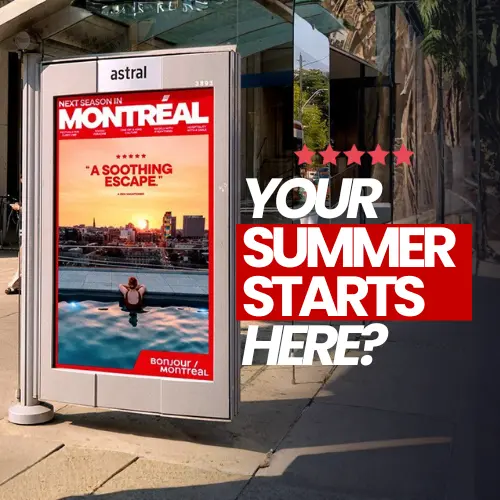
Tourisme Montréal’s new campaign uses reality TV storytelling to position the city as an immersive summer experience where visitors become the protagonists.
Cultural Context: Travel Is Becoming Narrative-Driven
The tourism category has shifted from showcasing landmarks to selling experiences.
Travelers today are less interested in ticking off destinations and more focused on how a place makes them feel—and how those moments translate into personal stories.
At the same time, reality television continues to dominate global entertainment, driven by its relatability, emotional intensity, and participatory format.
Tourisme Montréal identifies the intersection of these two forces:
- Travel as storytelling
- Entertainment as lived experience
Insight: People Want to Be the Main Character
The campaign is built on a powerful behavioral shift: travelers increasingly see themselves as protagonists in their own narratives.
Social media has amplified this mindset. Trips are documented, shared, and framed as episodes of a larger personal story.
By borrowing the codes of reality TV, the campaign taps into this desire.
Montreal is not presented as a destination to visit—it becomes a setting to perform, experience, and live within.
Media Strategy: 360 Integration Across Screens and Streets
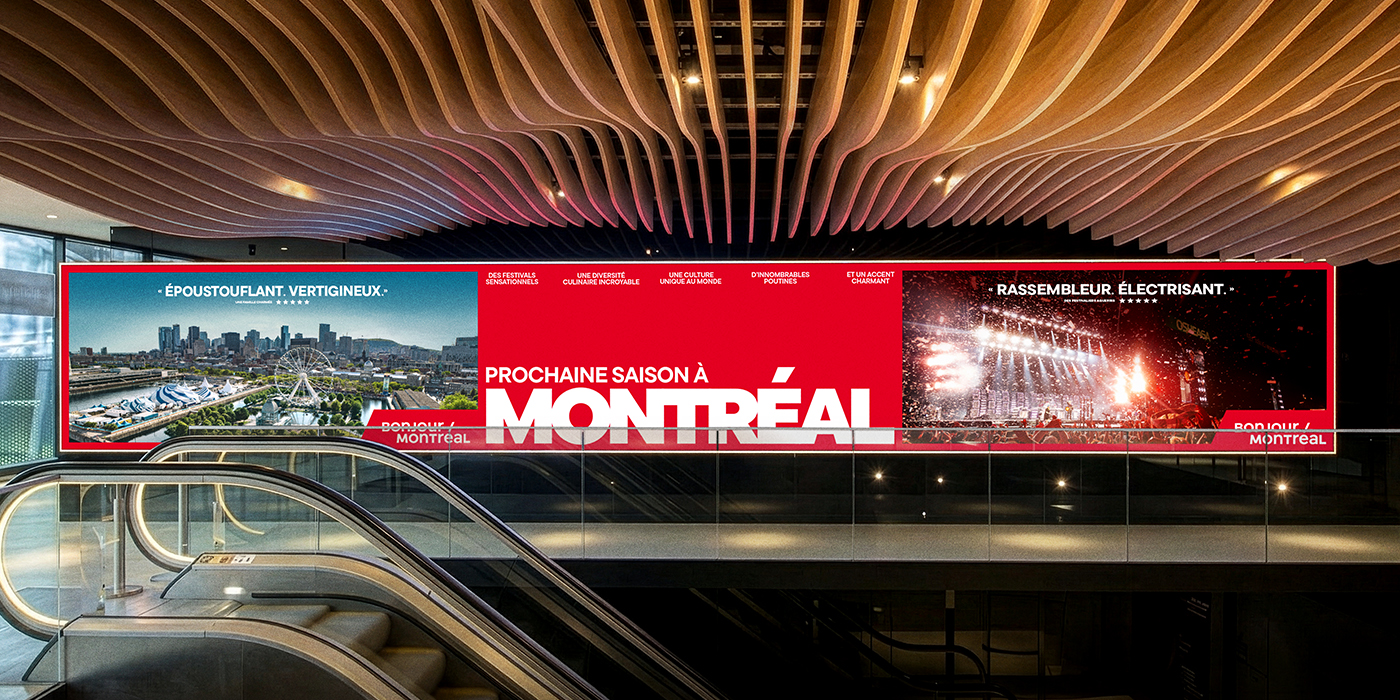
The campaign spans cinema, web, and OOH, ensuring both narrative depth and broad visibility.
OOH plays a key role by translating the concept into fast, contextual messaging.
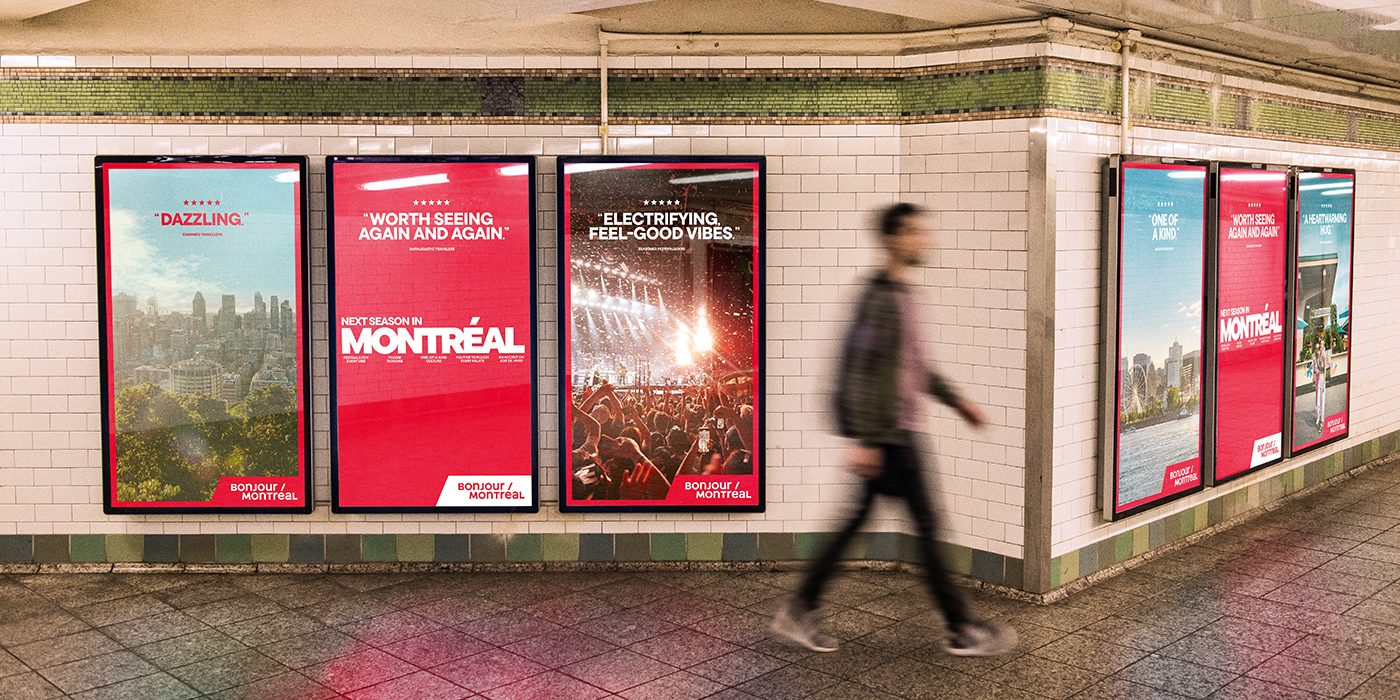
Using formats inspired by TV and film reviews, the outdoor executions feature double-meaning quotes that:
- Mimic entertainment critique language
- Highlight emotional intensity
- Reinforce the “show” narrative
This allows the idea to scale across markets, including France, the United States, and multiple Canadian regions.
Creative Execution: Montreal as a Season, Not a Place
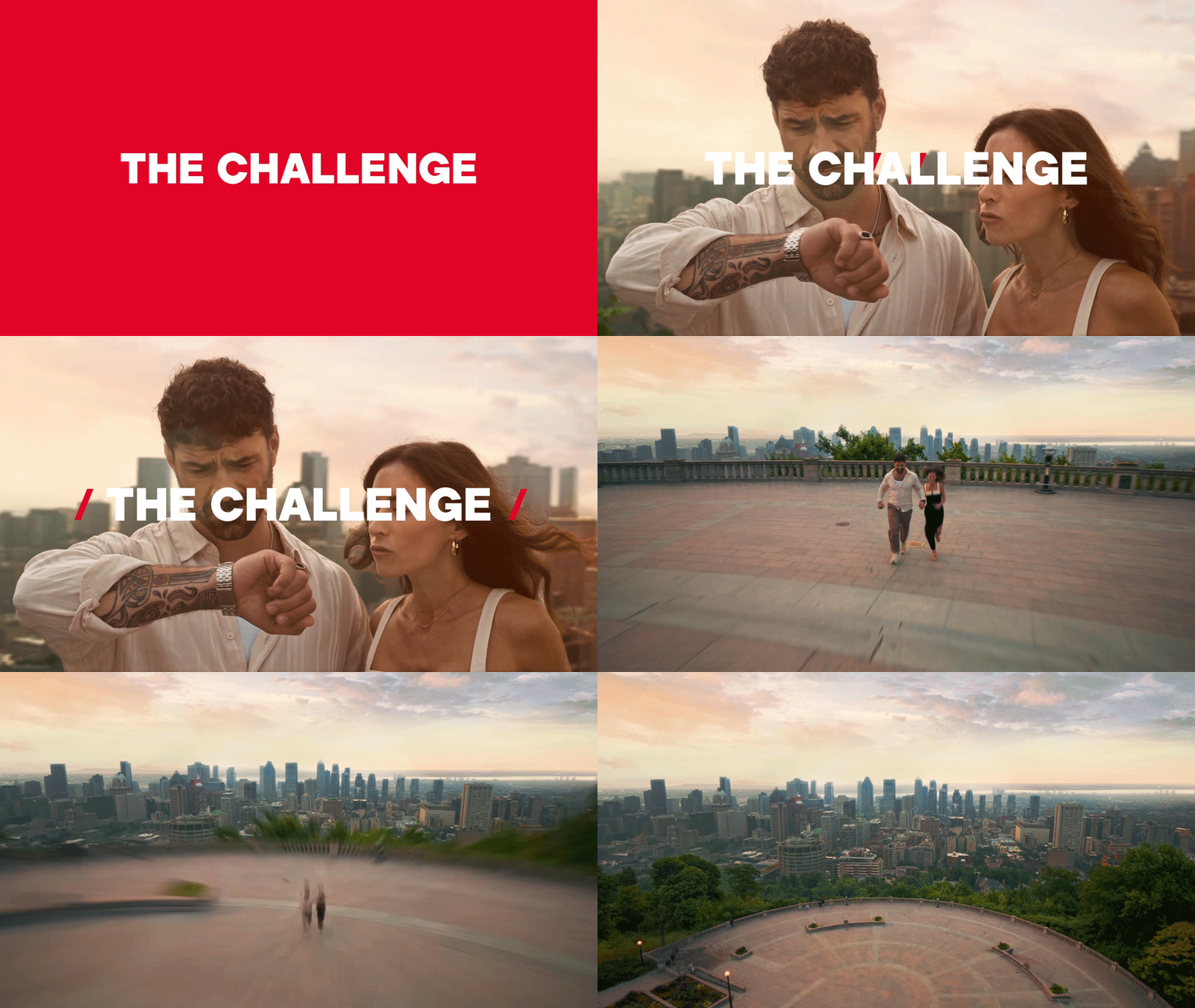
The hero film is structured like a trailer for a reality show season.
This framing achieves several things:
- Builds anticipation (like a series launch)
- Suggests ongoing experiences rather than one-off visits
- Positions the city as dynamic and evolving
Visitors are cast as participants rather than observers.
This shift is critical. It moves the brand from showcasing features (food, culture, neighborhoods) to enabling experiences.

Strategic Impact: Leveraging Cine-Tourism
The campaign aligns with the rise of cine-tourism, where destinations gain popularity through screen exposure.
By adopting the visual and narrative codes of television, Montreal effectively places itself within that ecosystem without needing a traditional film production.
This creates:
- Immediate emotional connection
- Familiar storytelling structure
- Increased memorability
The city becomes both content and context.
Execution Insight: Borrowing Codes to Accelerate Understanding
One of the campaign’s strengths is its use of recognizable formats.
Audiences already understand:
- Reality show trailers
- Dramatic voiceovers
- Episodic storytelling
By leveraging these codes, the campaign reduces cognitive effort. Viewers instantly grasp the concept without needing explanation.
This is especially effective in OOH, where clarity and speed are essential.
Final Reflection: When a Destination Becomes a Story Engine
Tourisme Montréal’s campaign demonstrates how destination marketing is evolving.
It is no longer enough to show what a place looks like. Brands must show what it feels like—and how people fit into that experience.
By turning Montreal into a living narrative, the campaign invites visitors to do more than travel. It invites them to participate.
And in a world where experiences are increasingly shared as stories, that positioning is both timely and scalable.

Summary
Tourisme Montréal partnered with Cossette to launch a 360 campaign inspired by reality television. By reframing the city as a stage for personal stories, the platform positions Montreal as a destination where visitors actively live, rather than passively observe, their travel experience.
Sources
FAQs
What is the campaign about?
It positions Montreal as a reality show-like experience where visitors become the protagonists.
Where did it launch?
The campaign launched across Canada, the U.S., and France through cinema, web, and OOH.
What makes it innovative?
It uses reality TV storytelling to reframe tourism as a personal, immersive experience.
What was the strategic insight?
Travelers want to live and share experiences as if they are the main characters of their own stories.
FAQs about this campaign
What is the campaign about?
It positions Montreal as a reality show-like experience where visitors become the protagonists.
Where did it launch?
The campaign launched across Canada, the U.S., and France through cinema, web, and OOH.
What makes it innovative?
It uses reality TV storytelling to reframe tourism as a personal, immersive experience.
What was the strategic insight?
Travelers want to live and share experiences as if they are the main characters of their own stories.
Bring your idea to breakfast-time OOH
Explore formats that meet audiences in morning routines and commuter corridors.
Comments
Be the first to comment.