Quick Answer
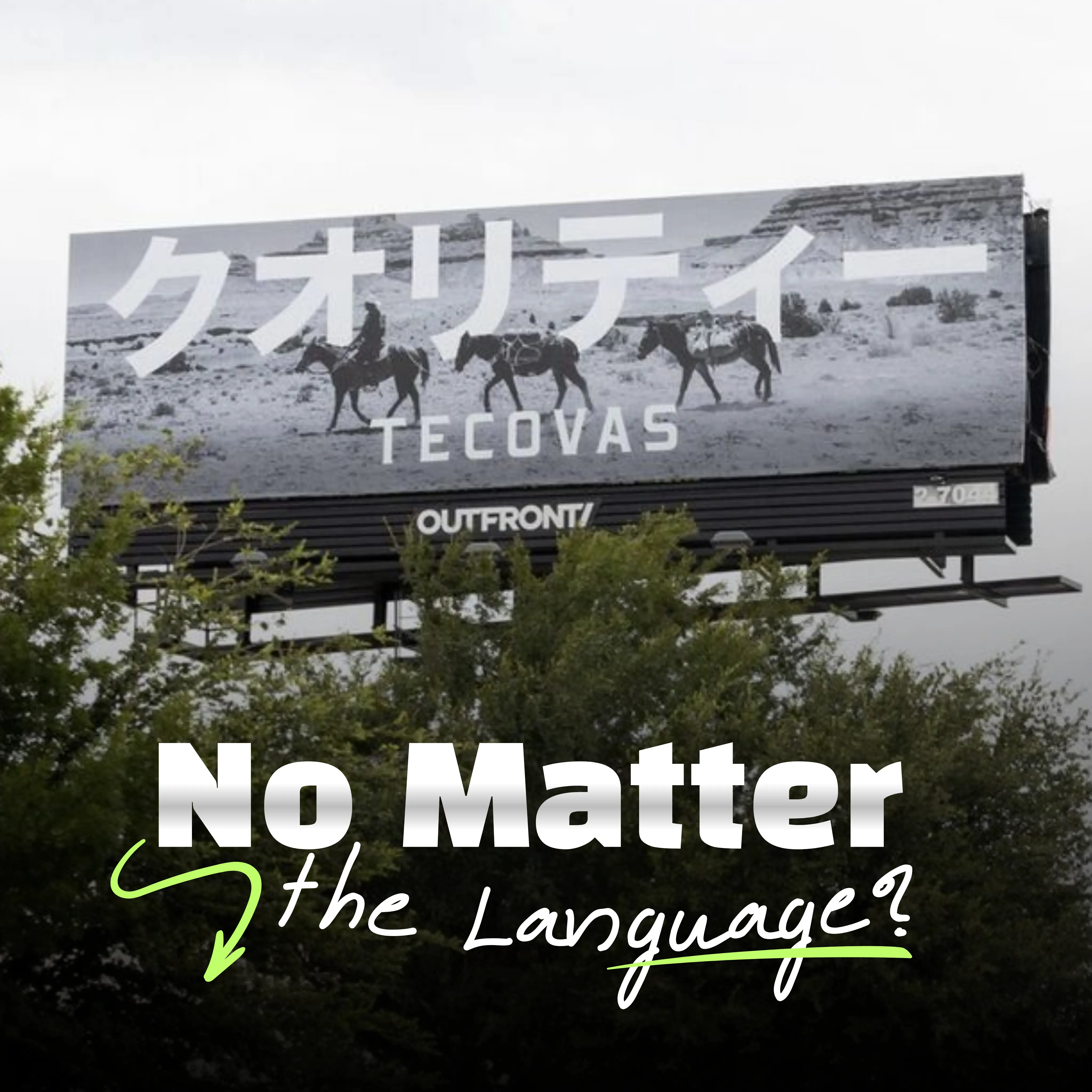
Tecovas used sequential OOH in Dallas, Texas, during the FIFA World Cup 2026 to connect with both local and international visitors. The campaign delivered a series of billboard messages around one simple brand idea: “Quality,” no matter what language you speak.
Creative Context: Dallas Becomes a World Cup Stage
With Dallas, Texas hosting multiple FIFA World Cup 2026 matches, the city became a major destination for both local and international visitors.
For brands, that created a rare opportunity to reach audiences during one of the biggest cultural and sporting moments in the world.
Tecovas used the occasion to show how Out of Home can connect place, timing and creative messaging in a simple but effective way.
The brand leaned into sequential OOH, delivering a series of billboard messages designed to build recognition across multiple placements.
OOH Strategy: The Power of Sequential Messaging
Sequential OOH works by using multiple placements to tell a connected story or build a message step by step.
Instead of expecting one billboard to do all the work, the campaign creates a rhythm across the route.
Each message adds to the previous one, giving the audience a stronger sense of movement, discovery and brand presence.
For Tecovas, this made the campaign feel more dynamic and memorable during a period of increased city traffic and attention.
Campaign Idea: Quality in Any Language
The central idea of the campaign was built around one universal word: “Quality.”
During the World Cup, Dallas welcomed visitors from different countries, cultures and languages.
Tecovas used that international context to make a simple brand point.
No matter what language someone speaks, quality is something people can recognize.
That makes the campaign easy to understand for a diverse audience moving through the city.
Location Strategy: Reaching Fans Beyond the Stadium
The campaign demonstrates how brands can extend the World Cup conversation beyond the stadium.
Fans do not only experience major tournaments during the match itself.
They experience them while travelling, commuting, walking through the city, visiting restaurants, shopping and moving between event locations.
OOH gives brands a way to appear naturally in those moments.
For Tecovas, Dallas became both a host city and a media environment.
Brand Fit: Western Quality Meets Texas Hospitality
Tecovas has a natural connection to Texas culture, craftsmanship and Western style.
By activating in Dallas during a global sports event, the brand could speak to both hometown pride and international curiosity.
The campaign did not need to overexplain the product.
It used a clear quality message and the cultural setting of Texas to reinforce what the brand represents.
This balance made the OOH feel local, but still accessible to visitors from around the world.
Why Sequential OOH Works During Major Events
Major sporting events create unusual movement patterns across a city.
Visitors travel between airports, hotels, stadiums, entertainment districts and shopping areas.
Sequential billboards can use that movement to build a stronger brand impression over time.
When a campaign is placed along key routes, each exposure can feel like part of a larger experience.
This is especially valuable during the World Cup, when audiences are highly attentive to their surroundings and actively documenting the host city.
Why the Campaign Works
The campaign works because it connects a global moment with a simple brand truth.
First, it uses Dallas’ World Cup visibility to reach a wider audience.
Second, it uses sequential OOH to create a more memorable rhythm across multiple billboard placements.
Third, it keeps the creative message easy to understand across languages.
Finally, it ties Tecovas to quality, Texas culture and the excitement of a major international event.
Final Reflection: A Smart OOH Play for a Global Crowd
Tecovas’ Dallas World Cup campaign is a strong example of how brands can use Out of Home to break through during major cultural moments.
By using sequential billboard messaging, the brand turned city movement into part of the media experience.
The campaign understood that World Cup audiences are not only inside stadiums.
They are everywhere across the host city.
For Tecovas, the message was simple: quality speaks for itself, no matter what language you speak.
Summary
With Dallas hosting multiple FIFA World Cup matches, Tecovas used the moment to reach a growing mix of local fans, tourists and international visitors through sequential Out of Home advertising. The campaign used a series of creative billboard messages designed to build impact over multiple placements rather than relying on a single static execution. By tying the idea of “quality” to a global sporting moment, Tecovas showed how OOH can blend audience, location and cultural timing in a simple but memorable way.
Sources
FAQs
What is Tecovas’ Dallas World Cup OOH campaign?
It is a sequential OOH campaign using a series of billboard messages in Dallas during the FIFA World Cup 2026 to connect with local and international visitors.
What does sequential OOH mean?
Sequential OOH uses multiple placements to deliver a connected series of messages, building a stronger impression as audiences move through a city or route.
Why did the campaign work in Dallas?
Dallas was welcoming a large mix of local and international World Cup visitors, making it a strong setting for a campaign built around quality, movement and cultural timing.
What was the main message?
The campaign centered on the idea that quality can be understood no matter what language someone speaks.
FAQs about this campaign
What is Tecovas’ Dallas World Cup OOH campaign?
It is a sequential OOH campaign using a series of billboard messages in Dallas during the FIFA World Cup 2026 to connect with local and international visitors.
What does sequential OOH mean?
Sequential OOH uses multiple placements to deliver a connected series of messages, building a stronger impression as audiences move through a city or route.
Why did the campaign work in Dallas?
Dallas was welcoming a large mix of local and international World Cup visitors, making it a strong setting for a campaign built around quality, movement and cultural timing.
What was the main message?
The campaign centered on the idea that quality can be understood no matter what language someone speaks.
Bring your idea to breakfast-time OOH
Explore formats that meet audiences in morning routines and commuter corridors.

Comments
Be the first to comment.