
Quick Answer
McDonald’s created a minimalist outdoor campaign using scattered fry patterns to humorously show how its iconic fries are so irresistible that someone always tries to steal one.
The Universal Truth Behind the Idea
Few fast-food items have achieved the cultural recognition of McDonald’s fries.
They are often ordered as a side, but rarely consumed alone. Whether among friends, family members, or even strangers sharing a table, the familiar dynamic of someone reaching over to take “just one” fry has become a near-universal experience.
The campaign builds directly on this behavioral insight: McDonald’s fries invite sharing — sometimes involuntarily.
By focusing on this everyday moment, the campaign turns a common social interaction into the core narrative of the advertising concept.
A Minimalist Visual Language
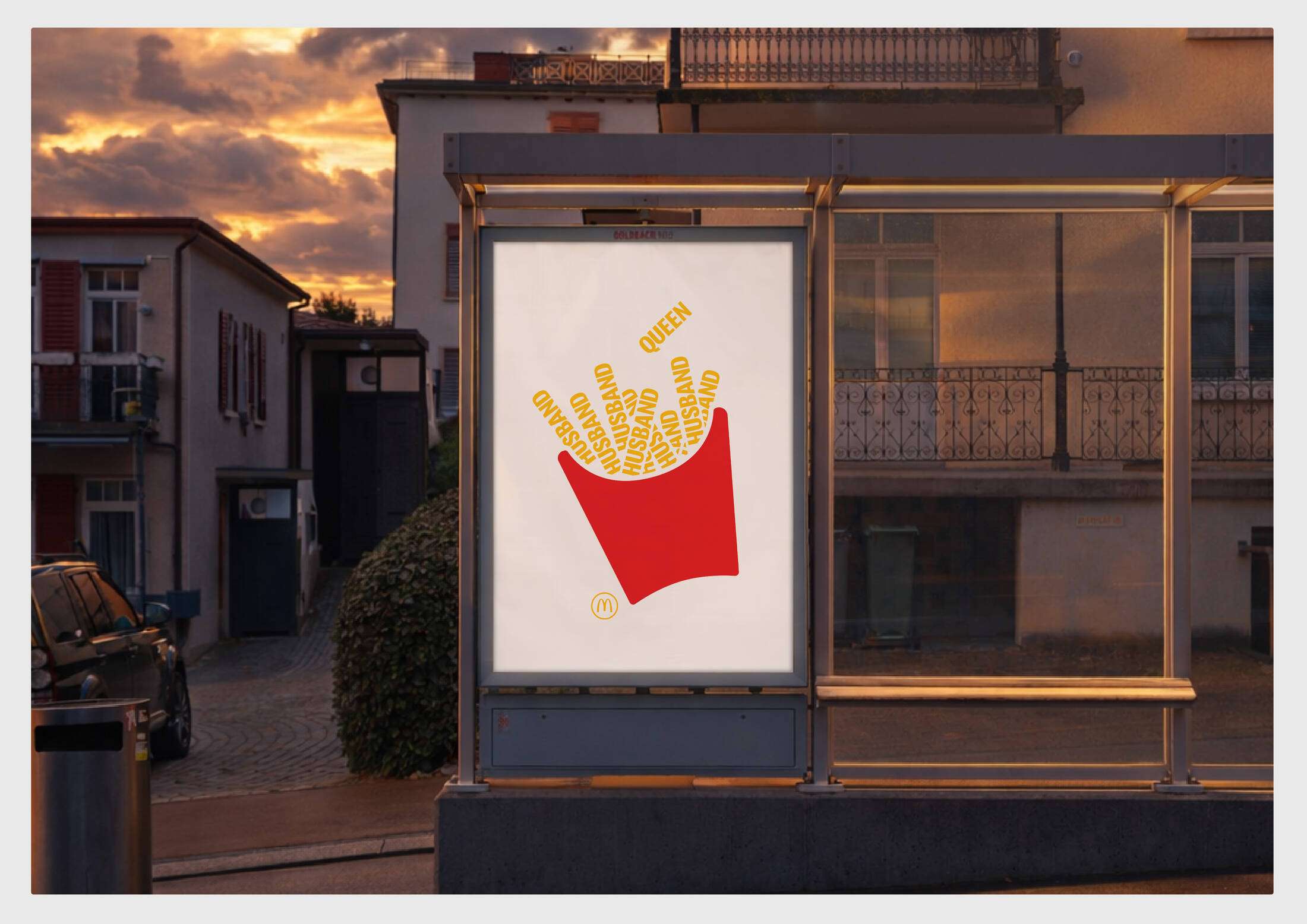
Rather than showing the product directly, the posters rely on abstraction.
Each design features scattered fry shapes arranged across a bold red background. The positioning of the fries subtly tells a story: a missing fry here, a shifted line there, suggesting the moment someone reaches in to grab one.
The simplicity is deliberate. Without photography, text-heavy messaging, or complex graphics, the campaign communicates entirely through:
-
Shape
-
Color
-
Repetition
-
Spatial arrangement
This minimalist approach echoes the brand’s long-standing design strategy, where iconic colors and instantly recognizable products carry the message without explanation.
Small Stories Hidden in the Posters
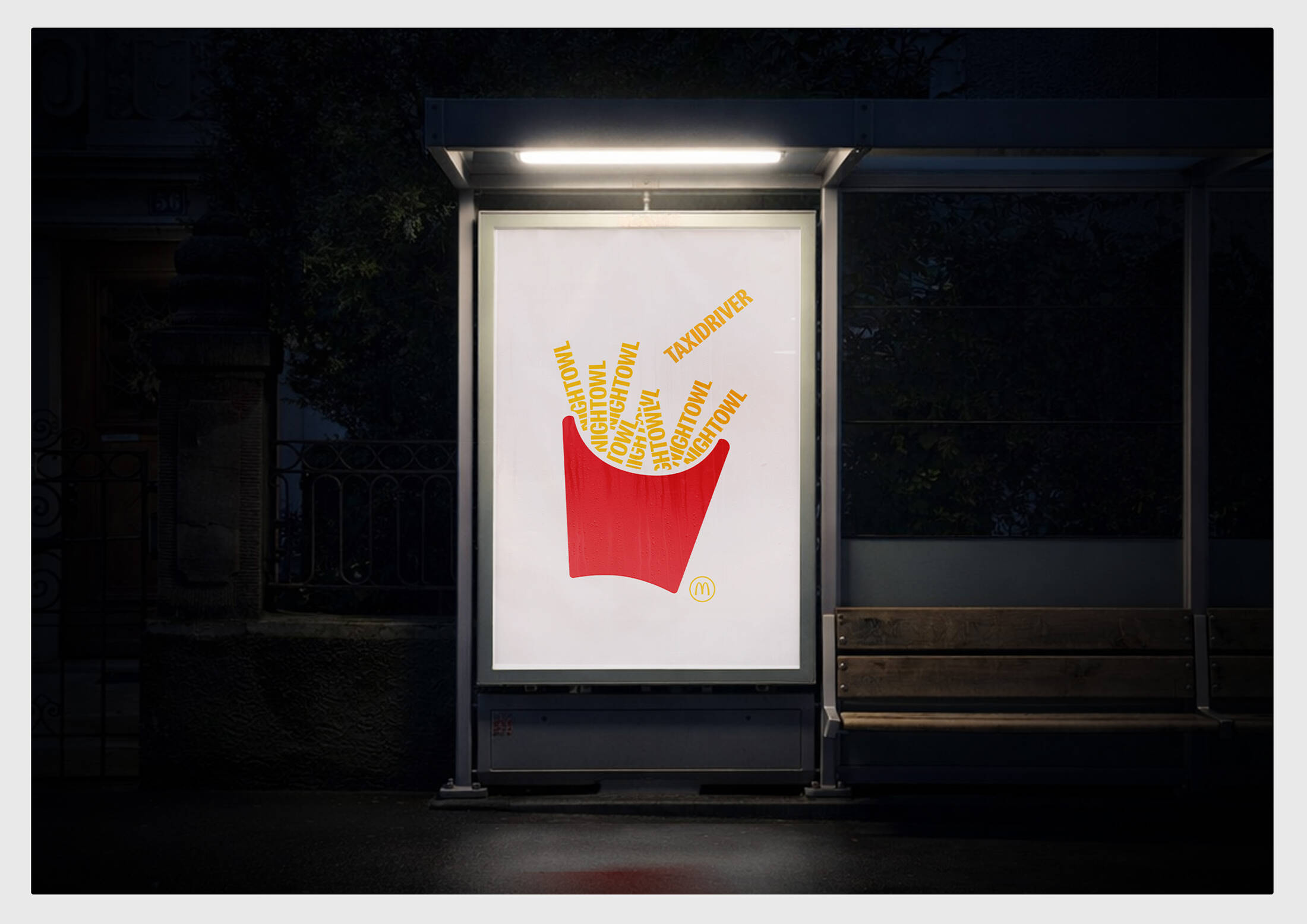
Every poster variation hints at a different “fry thief.”
In some cases, the culprit is human — like a taxi driver grabbing a fry during a late-night ride. In others, the scenario is more playful, such as a seabird swooping in for a quick snack.
The humor comes from the universality of the behavior. The campaign suggests that the temptation to steal a fry is not limited to one situation, one culture, or even one species.
Anyone, anywhere, might reach for that extra fry.
Why Simplicity Works in OOH
Out-of-home advertising rewards clarity.
Unlike digital ads, which can rely on interaction and longer attention spans, billboards and posters must communicate instantly to audiences who may only glance at them for a few seconds.
This campaign embraces that limitation by stripping the concept down to its most essential visual elements.
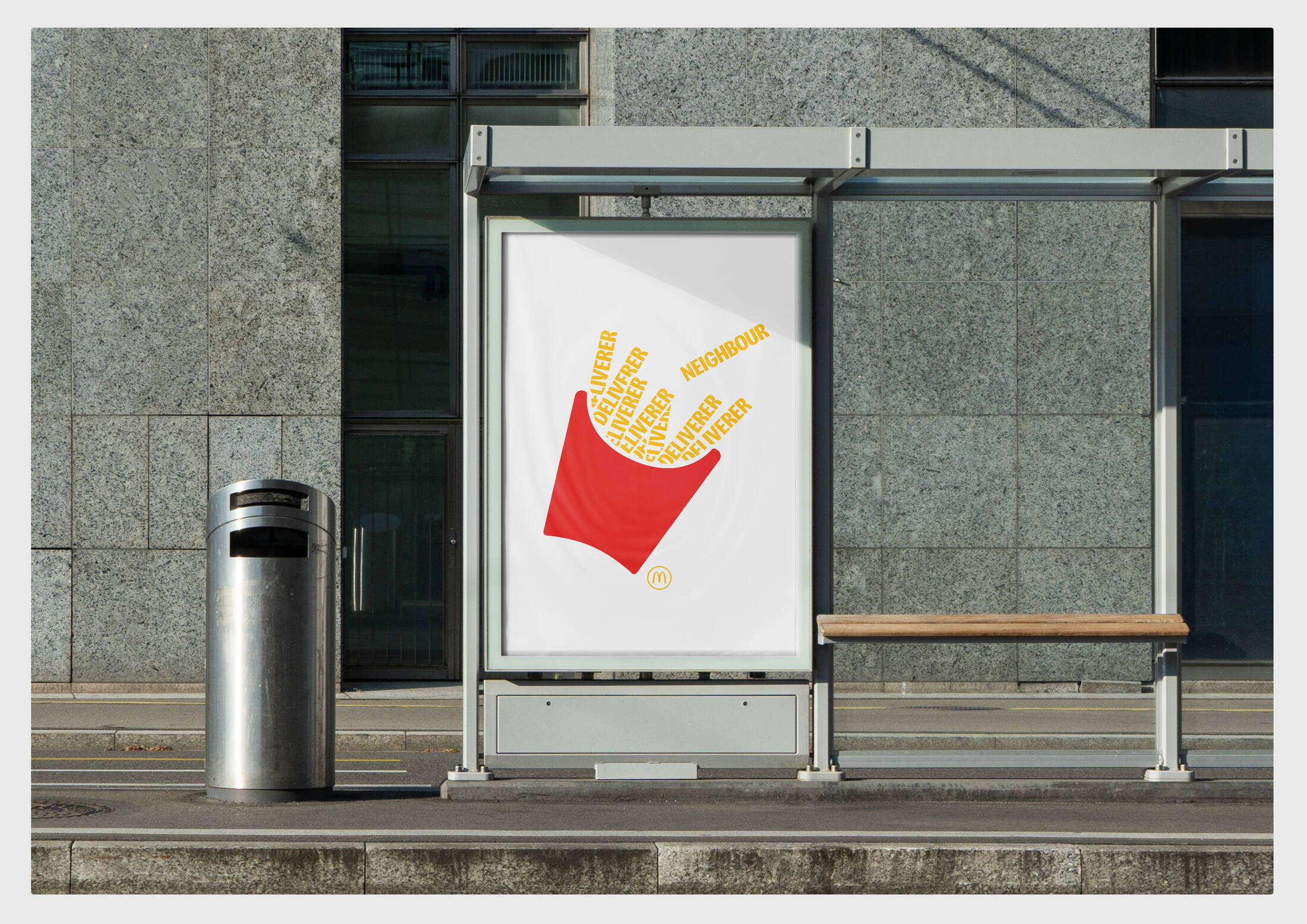
Drivers, pedestrians, and commuters do not need to read anything to understand the joke. The arrangement of fries alone communicates the story.
In doing so, the campaign demonstrates how strong design can sometimes replace copy entirely.
Reinforcing an Iconic Product
McDonald’s fries have long been positioned as one of the brand’s most iconic menu items.
Instead of introducing a new flavor, promotion, or limited-time offer, the campaign celebrates the product’s cultural status. The message is simple: the fries are so good that people cannot resist taking one.
By turning this everyday behavior into a visual storytelling device, the campaign strengthens the emotional connection between consumers and one of the most recognizable foods in fast-food culture.
Sometimes, the most effective advertising insight is also the most obvious.
Summary
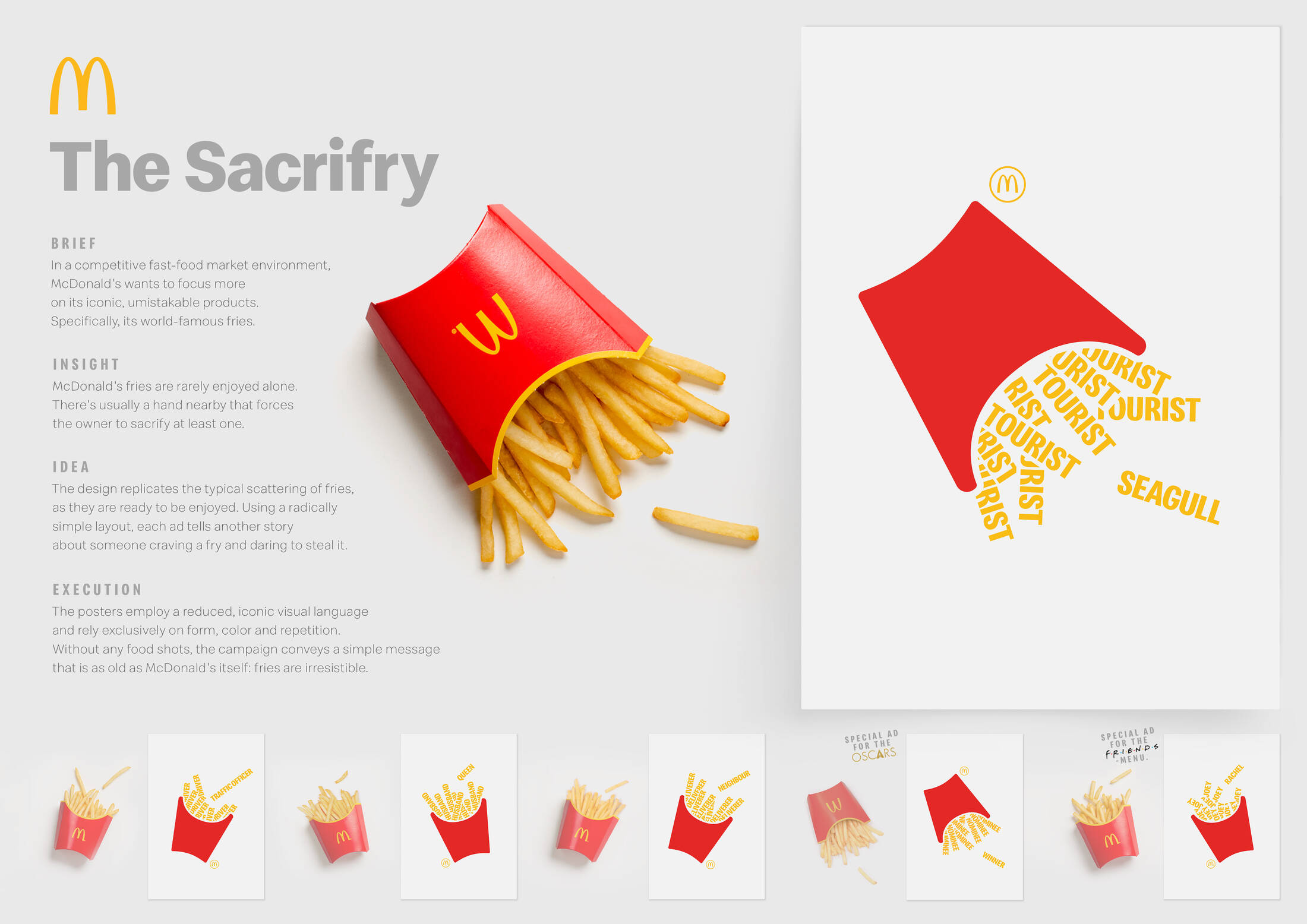
McDonald's launched a minimalist out-of-home campaign built around a simple cultural truth: its famous fries rarely stay untouched. Instead of traditional food photography, the posters use the repetition and placement of fry shapes to depict moments where someone — or something — is tempted to steal a fry.
Sources
FAQs
What is the concept behind the McDonald’s fries campaign?
The campaign humorously illustrates how McDonald’s fries are so irresistible that someone always tries to steal one.
What makes the campaign visually unique?
Instead of showing the food directly, the posters use minimalist fry shapes and patterns to tell the story.
Who launched the campaign?
The campaign was created for McDonald's by TBWA\Zurich
What insight inspired the campaign?
The universal behavior of people reaching over to grab “just one fry.”
FAQs about this campaign
What is the concept behind the McDonald’s fries campaign?
The campaign humorously illustrates how McDonald’s fries are so irresistible that someone always tries to steal one.
What makes the campaign visually unique?
Instead of showing the food directly, the posters use minimalist fry shapes and patterns to tell the story.
Who launched the campaign?
The campaign was created for McDonald's by TBWA\Zurich
What insight inspired the campaign?
The universal behavior of people reaching over to grab “just one fry.”
Bring your idea to breakfast-time OOH
Explore formats that meet audiences in morning routines and commuter corridors.
Comments
Be the first to comment.