Quick Answer
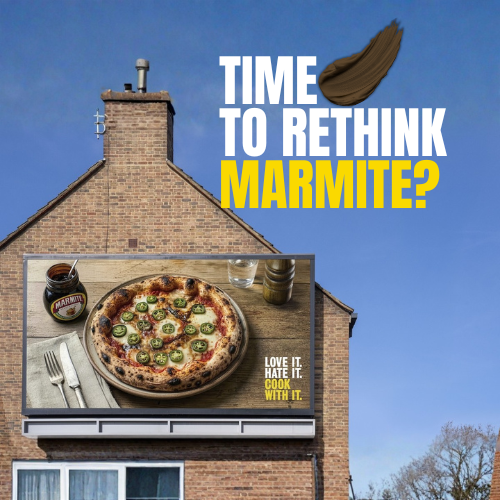
Marmite’s “Dishes of Love and Hate” campaign uses print and outdoor media to reposition the product as a cooking ingredient, moving beyond its traditional association with toast.
Cultural Context: The Decline of the Breakfast Ritual
For decades, Marmite has been closely tied to a specific cultural moment: the British breakfast, particularly toast. However, that habit has significantly evolved. Only 18% of UK consumers now choose toast as their primary breakfast option, representing a 62% decline over the past 15 years.
This shift reflects broader lifestyle changes—faster routines, more diverse diets, and the rise of alternative breakfast formats. For a brand historically anchored to that occasion, the implication is clear: relevance declines alongside the habit.
At the same time, a counter-signal emerges. Usage of Marmite in cooking has increased by 37%, revealing an existing behavior the brand can scale rather than invent.
Insight: From Polarizing Product to Expressive Ingredient
Marmite’s identity has always revolved around tension: “love it or hate it.” Rather than moving away from this, the campaign reframes it as a creative advantage.
The key insight is that food is not purely functional—it is expressive. Cooking reflects personal taste, identity, and experimentation. By positioning Marmite as an ingredient within everyday dishes, the brand extends its emotional impact beyond a single use case.
Instead of asking consumers to change their perception, the campaign invites them to reinterpret it in a broader culinary context.
Media Strategy: OOH as a Tool for Visual Reframing
The choice of outdoor and print media plays a strategic role. OOH is uniquely effective at delivering immediate, high-impact visual messages that can reshape perception in seconds.
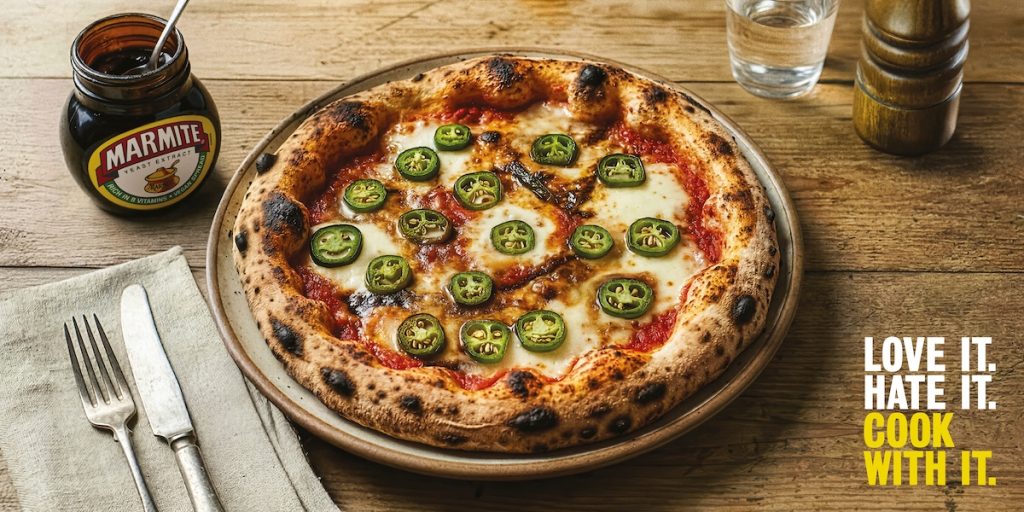
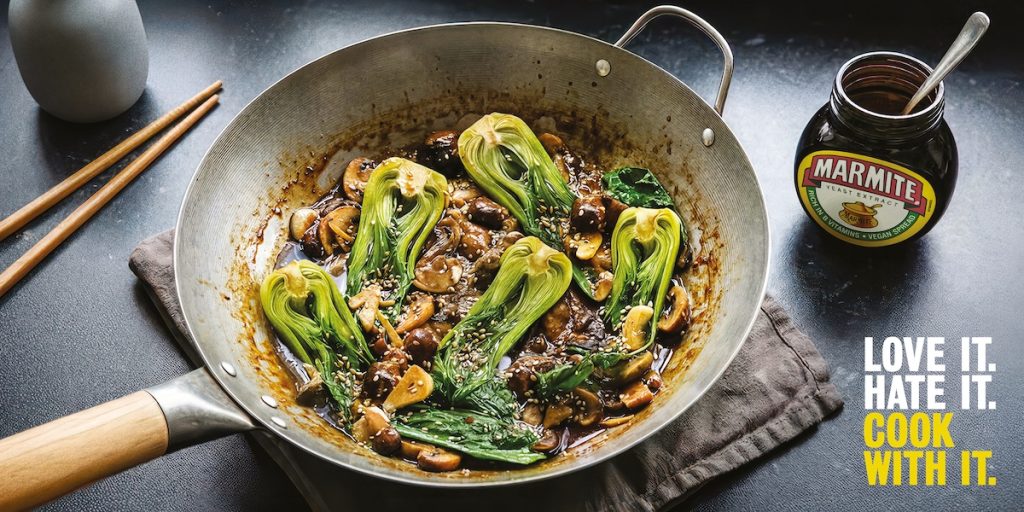
Rather than explaining new product usage, the campaign demonstrates it visually. Familiar dishes—pizza, pasta, and others—are presented with Marmite integrated into the recipe, helping audiences quickly form new mental associations.
Placements across outdoor sites and high-reach publications like Metro and The Sun ensure repeated exposure, reinforcing the shift from “breakfast spread” to “cooking ingredient.”
In this context, OOH functions not just as awareness media, but as a behavioral bridge between old and new consumption habits.
Creative Execution: Appetite Meets Emotional Duality
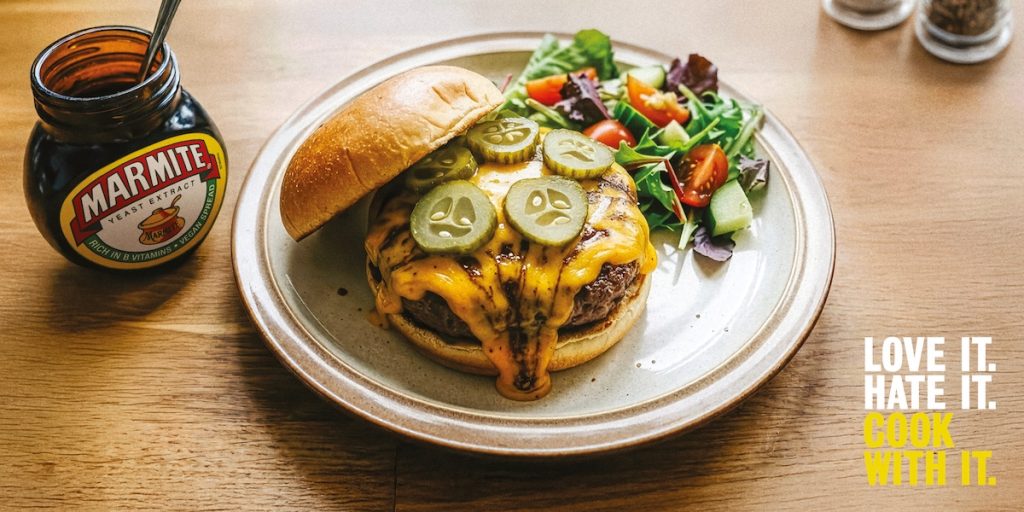
The creative strength of “Dishes of Love and Hate” lies in its layered visual storytelling. At first glance, each execution appears as a beautifully styled, appetizing dish.
On closer inspection, however, ingredients are arranged to subtly form expressive faces—some delighted, others repulsed—mirroring Marmite’s iconic duality.
This dual-reading approach achieves multiple objectives:
- Reinforces brand identity without explicit messaging
- Encourages viewer engagement through discovery
- Bridges familiarity (everyday meals) with novelty (Marmite usage)
- Enhances memorability through visual surprise
Importantly, the campaign shows rather than tells, allowing the audience to decode the message themselves.
Strategic Impact: Expanding Usage Without Losing Identity
One of the most complex challenges for legacy brands is evolving without losing what makes them distinctive. Marmite addresses this by expanding its role rather than redefining it entirely.
The shift from “spread” to “ingredient” is subtle but powerful. It increases consumption occasions while maintaining the brand’s core emotional territory.
This approach aligns with a broader industry trend: turning products into versatile components within a wider ecosystem of use. By doing so, brands increase frequency and embed themselves more deeply into daily routines.
For Marmite, the result is not just repositioning, but category expansion anchored in cultural relevance and behavioral insight.
Final Reflection: When OOH Reprograms Consumption
“Dishes of Love and Hate” illustrates how OOH can move beyond visibility into cognitive reframing. The campaign does not introduce a new product—it introduces a new way of thinking about an existing one.
By combining cultural data, creative precision, and strategic media placement, Marmite successfully transitions from a declining habit to an emerging one.
It is a case study in how brands can use physical media not just to communicate, but to reshape how—and when—they are used.
Summary
Marmite, under Unilever, partnered with adam&eve\TBWA to create an OOH and print campaign that reframes its famously divisive product as a versatile cooking ingredient. The strategy responds to shifting breakfast habits while leveraging Marmite’s polarizing identity to drive renewed relevance in everyday meals.
Sources
FAQs
What is the campaign about?
It is an OOH and print campaign repositioning Marmite as a cooking ingredient rather than just a breakfast spread.
Where did it launch?
The campaign launched in the United Kingdom across outdoor advertising and national press.
What makes it innovative?
It uses layered food imagery to subtly communicate Marmite’s polarizing identity while introducing new usage occasions.
What was the strategic insight?
The decline in traditional breakfast habits combined with increased cooking usage created an opportunity for repositioning.
FAQs about this campaign
What is the campaign about?
It is an OOH and print campaign repositioning Marmite as a cooking ingredient rather than just a breakfast spread.
Where did it launch?
The campaign launched in the United Kingdom across outdoor advertising and national press.
What makes it innovative?
It uses layered food imagery to subtly communicate Marmite’s polarizing identity while introducing new usage occasions.
What was the strategic insight?
The decline in traditional breakfast habits combined with increased cooking usage created an opportunity for repositioning.
Bring your idea to breakfast-time OOH
Explore formats that meet audiences in morning routines and commuter corridors.


Comments
Be the first to comment.