Quick Answer
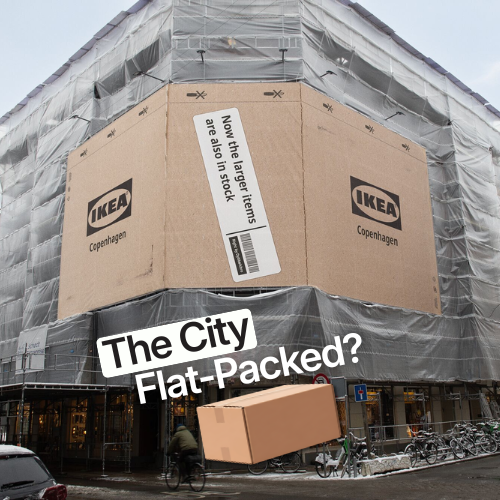
IKEA Copenhagen launched an OOH campaign that wrapped the city in oversized flat-pack visuals to communicate a simple message: large furniture items are now available.
What happened
IKEA Copenhagen faced a familiar urban retail challenge. While the city-centre store was popular for browsing and inspiration, many customers believed it wasn’t the place to buy large furniture items. When shoppers needed a sofa, wardrobe, or bookcase, they often headed to IKEA’s larger out-of-town locations instead.
To change that perception, IKEA expanded its warehouse capacity in Copenhagen, allowing a much wider range of large products to be available for immediate pick-up directly in the city.
The communication challenge was simple: how do you make people truly believe it?

Turning the city into a flat-pack
Instead of promoting individual products or prices, IKEA took a literal and unmistakable approach. The brand wrapped Copenhagen in its most recognizable visual asset: the flat-pack.
Oversized flat-pack graphics appeared across the city, visually embedding IKEA into the urban landscape and delivering one clear message:
“Now the larger items are also in stock.”
The executions didn’t need explanation. The flat-pack is one of IKEA’s strongest brand codes, instantly associated with practicality, accessibility, and take-home convenience.
One message, zero clutter
The strength of the campaign lies in its restraint. There are no hero products, no offers, and no complex storytelling. Just a city wrapped in flat-pack logic, reinforcing a functional truth about the store.
By stripping the message down to availability, IKEA aligned communication perfectly with the business objective — driving city shoppers to consider the Copenhagen store for full-scale purchases, not just inspiration.
OOH as proof, not promise
The campaign uses out-of-home advertising as evidence rather than aspiration. Seeing flat-packs physically integrated into the city reinforces the idea that IKEA is no longer something you have to travel for — it’s already there, and it’s ready.
The scale and repetition across Copenhagen helped reset consumer perception, turning a logistical update into a city-wide statement.

Why this OOH campaign works
IKEA Copenhagen’s flat-pack takeover stands out because it:
Addresses a real retail misconception
Uses a powerful brand asset instead of product imagery
Communicates availability, not promotion
Transforms the city into part of the message
It’s a reminder that effective OOH doesn’t always need spectacle — sometimes clarity is the most disruptive thing you can deliver.
Reframing the city store
With this campaign, IKEA reframed its Copenhagen location from showroom to destination. By visually wrapping the city in flat-packs, the brand made a logistical upgrade feel tangible, memorable, and unmistakably IKEA.
It’s a smart example of how outdoor advertising can bridge the gap between perception and reality — one flat-pack at a time.

Summary
To change the perception of its Copenhagen city store as “just a showroom,” IKEA launched a bold out-of-home campaign that turned the city itself into a flat-pack. The activation delivered a single, practical message: big IKEA items are now in stock and ready to take home the same day.
Sources
FAQs
What problem was IKEA Copenhagen addressing?
The perception that the city-centre store was only a showroom and didn’t stock large items for immediate pick-up.
What was the main message of the campaign?
That large IKEA items are now in stock and available to take home the same day in Copenhagen.
How was the message communicated?
By wrapping the city in oversized flat-pack visuals through OOH placements.
Why did IKEA avoid showcasing specific products?
To keep the message simple and focus on availability rather than promotion.
FAQs about this campaign
What problem was IKEA Copenhagen addressing?
The perception that the city-centre store was only a showroom and didn’t stock large items for immediate pick-up.
What was the main message of the campaign?
That large IKEA items are now in stock and available to take home the same day in Copenhagen.
How was the message communicated?
By wrapping the city in oversized flat-pack visuals through OOH placements.
Why did IKEA avoid showcasing specific products?
To keep the message simple and focus on availability rather than promotion.
Bring your idea to breakfast-time OOH
Explore formats that meet audiences in morning routines and commuter corridors.


Comments
Be the first to comment.