Quick Answer
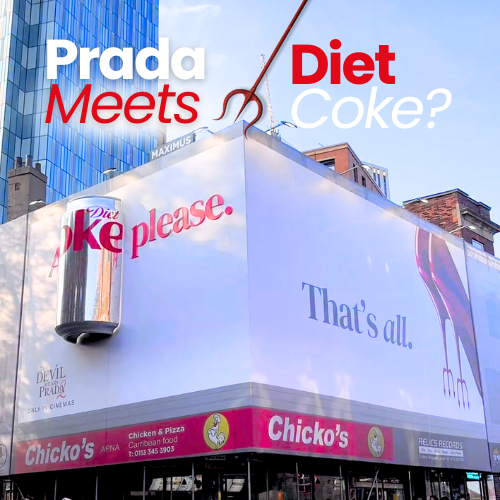
The Devil Wears Prada x Diet Coke campaign uses bold OOH and 3D billboard executions in the UK to blend Y2K nostalgia with contemporary cultural relevance.
@thehootleeds A new The Devil Wears Prada x Diet Coke ad has popped up in Leeds - “that’s all”. #tdwp #tdwp2 #thedevilwearsprada #dietcoke #leedscitycentre ♬ original sound - girl_of_dreams
Cultural Context: The 2000s Are Back as Commercial Currency
The return of early-2000s culture continues to shape fashion, entertainment, and brand strategy. What was once recent memory is now nostalgia, especially for millennial audiences who grew up with iconic films, celebrity magazines, and aspirational pop culture.
Few titles from that era carry the same lasting fashion relevance as The Devil Wears Prada. It remains culturally referenced for style, ambition, quotable moments, and workplace archetypes.
At the same time, Diet Coke has its own legacy as a lifestyle symbol tied to office culture, fashion circles, and polished urban identity.
Bringing the two together creates immediate cultural shorthand.
Insight: Nostalgia Works Best When It Is Reframed, Not Repeated
The campaign appears built on a smart tension: audiences want familiar references, but they do not want stale recreations.
Instead of simply replaying memories of the original film, the collaboration uses nostalgia as a launchpad for something visually contemporary.
That is why the pairing works. It leverages recognition while updating tone, scale, and media execution for today’s audiences.
Consumers are not buying the past—they are buying the feeling of relevance attached to it.

Media Strategy: OOH as Pop Culture Amplifier
Outdoor advertising is particularly effective for entertainment collaborations because it transforms promotion into public conversation.
A film and beverage partnership needs scale, visibility, and shareability. OOH delivers all three, especially in high-footfall city environments like Leeds.
The campaign’s strength lies in how it uses urban media not just to announce, but to stage the collaboration.
Strategic benefits include:
- High reach across commuter and retail audiences
- Organic social sharing through striking visuals
- Repetition that reinforces memory structures
- Cultural legitimacy through physical presence
When people start posting the billboard, media impressions multiply beyond paid space.
Creative Execution: Simple, Bold, Impossible to Ignore
The strongest OOH campaigns often rely on clarity rather than complexity, and this campaign appears to follow that rule.
By combining instantly recognizable franchise equity with iconic Diet Coke branding, the creative likely avoids overexplaining itself. Audiences understand the reference quickly.
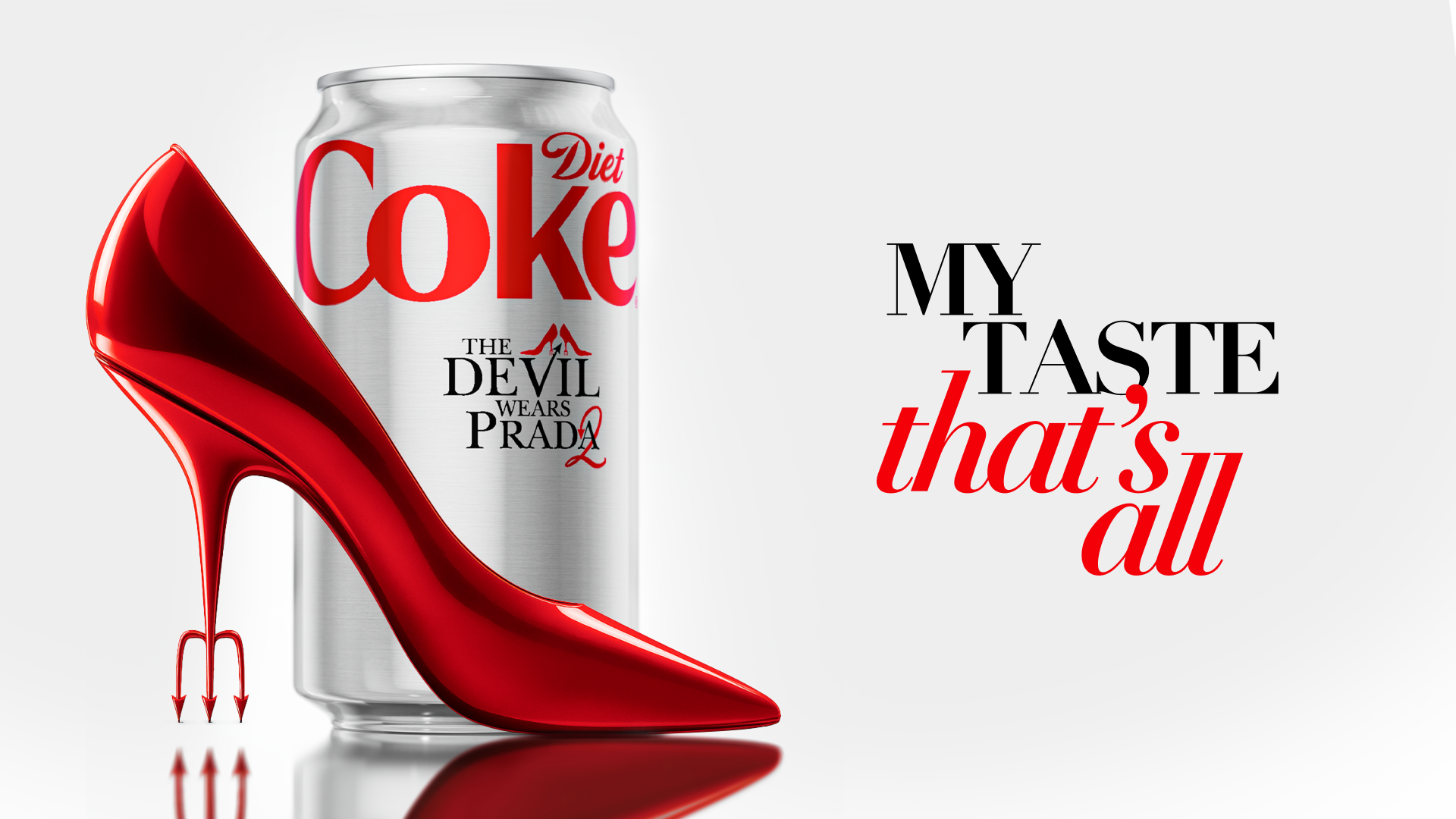
The standout element is the 3D can execution, which adds dimensionality and spectacle. This matters because:
- 3D formats naturally stop attention
- Product presence becomes physical and playful
- Social photos become more likely
- The brand feels contemporary rather than retro-only
The execution respects nostalgia while behaving like modern media.
Strategic Impact: Two Brands Borrowing Equity From Each Other
Collaborations work best when both sides gain something distinct. Here:
The Devil Wears Prada gains:
- Everyday visibility outside film channels
- Lifestyle relevance through a known consumer brand
- Cross-generational recognition
Diet Coke gains:
- Fashion and entertainment cachet
- Renewed relevance through pop culture alignment
- Emotional storytelling beyond beverage utility
This reciprocal value exchange is what makes the partnership strategically stronger than a standard sponsorship.
Execution Insight: Simplicity Is a Premium Signal
The user observation is correct: simple, audacious OOH often outperforms overloaded messaging.
In crowded urban environments, audiences reward creative confidence. If a billboard can communicate in seconds, it has a higher chance of being remembered.
This campaign appears to understand that the assets themselves—film title, beverage iconography, 3D spectacle—already carry enough weight.
No excess is required.

Final Reflection: When Nostalgia Gets a Modern Media Budget
The Devil Wears Prada x Diet Coke campaign demonstrates how legacy IP can feel current when paired with the right partner and medium.
Rather than relying solely on memory, it uses contemporary OOH formats to create new moments people want to photograph, share, and talk about.
That is the real power of nostalgia in 2026: not looking backward, but giving the past a bigger stage today.
Summary
The Devil Wears Prada partners with Diet Coke in a high-impact UK outdoor campaign that taps into nostalgia for the original film while feeling modern and socially shareable. With standout executions including a 3D can near Leeds, the collaboration turns familiar brand codes into unmissable public spectacle.
Sources
FAQs
What is the campaign about?
It is a UK OOH collaboration between The Devil Wears Prada and Diet Coke using nostalgia-led creative.
Where did it launch?
The campaign is visible in UK cities, including Leeds and other high-footfall locations.
FAQs about this campaign
What is the campaign about?
It is a UK OOH collaboration between The Devil Wears Prada and Diet Coke using nostalgia-led creative.
Where did it launch?
The campaign is visible in UK cities, including Leeds and other high-footfall locations.
Bring your idea to breakfast-time OOH
Explore formats that meet audiences in morning routines and commuter corridors.
Comments
Be the first to comment.