Quick Answer
Coca-Cola’s “Zero Pressure Connections” campaign targets Gen Z dating fatigue by encouraging low-pressure, real-life lunch meetups instead of superficial app interactions.
Cultural Context: Gen Z Is Tired of Swipe Culture
Dating apps have normalized fast judgment. Profiles are scanned in seconds, decisions are made on minimal information, and interactions often remain superficial.
For Gen Z, this has created a paradox: more ways to meet people, but fewer meaningful connections.
The pressure to present a curated identity, combined with fear of rejection, makes dating feel performative rather than natural.
This opens space for brands to rethink how connection happens.
Insight: Lower Pressure Leads to Higher Authenticity
The campaign is built on a key behavioral insight: people connect more naturally when expectations are reduced.
Traditional dates carry weight—time commitment, emotional stakes, and social pressure.
By reframing the interaction as a casual lunch during the workday, the campaign removes friction.
Lunch is:
- Familiar
- Short
- Low commitment
- Socially acceptable
This creates an environment where people can show up as themselves, rather than as curated profiles.
Media Strategy: From Digital Friction to Physical Interaction
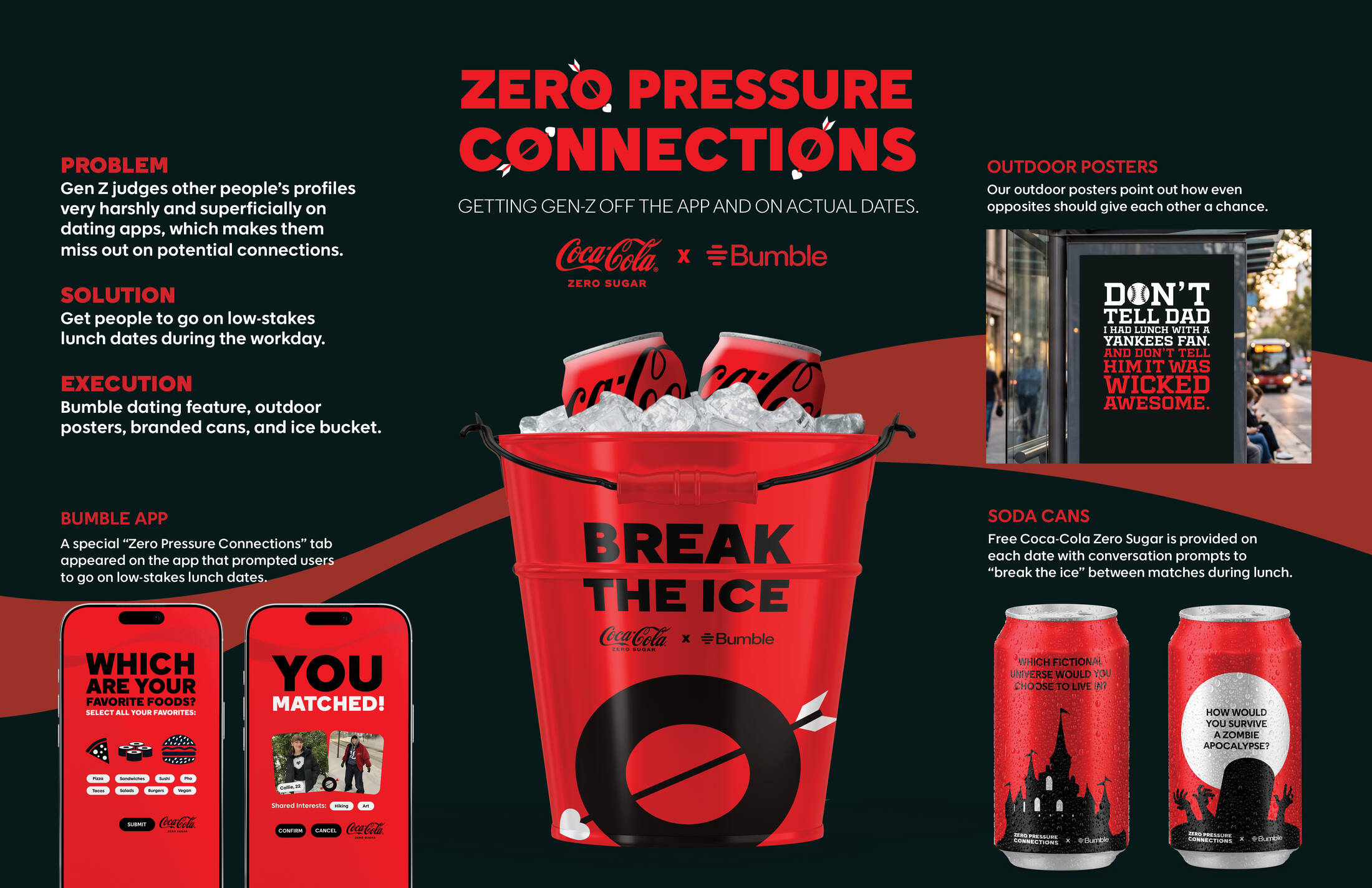
The campaign spans digital, experiential, and OOH channels, but its core strength lies in how these channels work together.
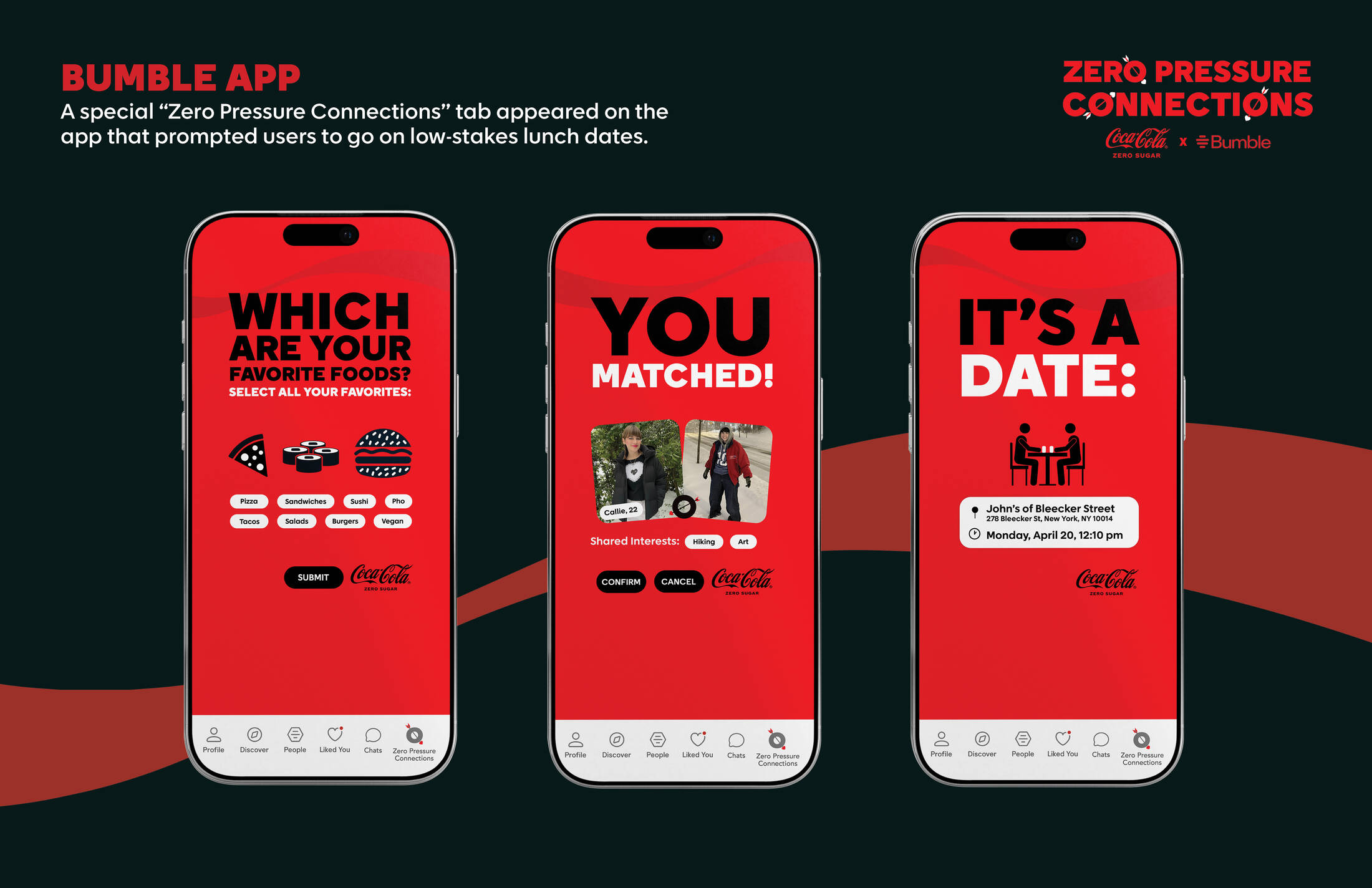
- Digital introduces the concept and invites participation
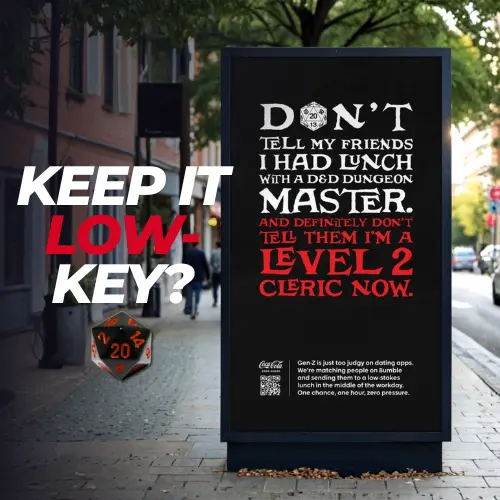
- OOH builds awareness and normalizes the behavior in public space
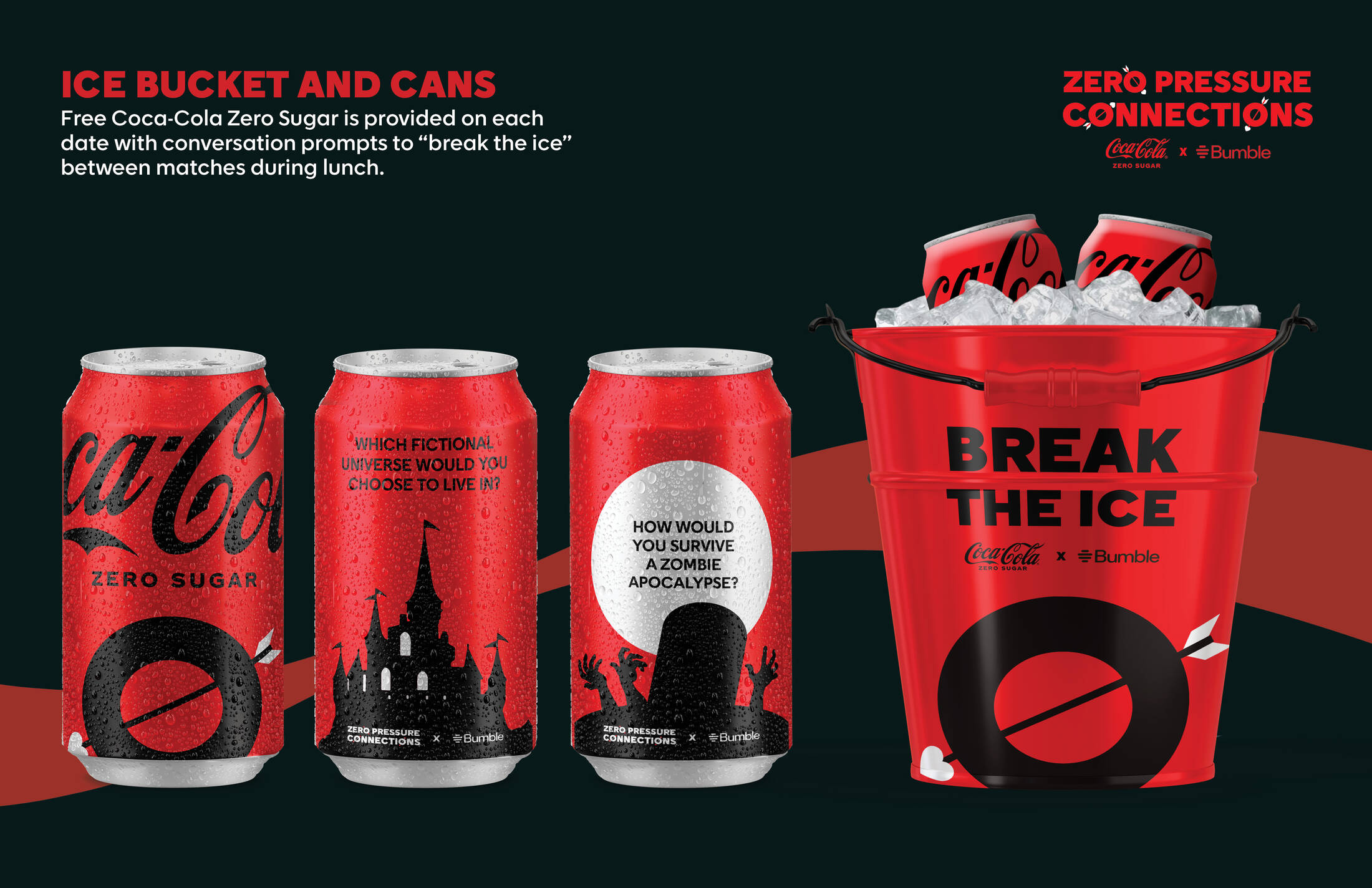
- Experiential delivers the actual connection through lunch meetups
This integrated approach ensures the idea is not just communicated—it is experienced.
OOH likely plays a critical role in reframing dating culture by placing the message in everyday environments like campuses, business districts, and transit areas.
Creative Execution: Turning “Zero” Into a Social Concept
The use of “Zero” extends beyond the product name. It becomes a cultural statement:
- Zero pressure
- Zero expectations
- Zero pretense
This is a smart extension of the Coca-Cola Zero identity into behavior and mindset.
Rather than focusing on product attributes, the campaign builds a social utility around the brand.
The creative idea is simple but scalable—anywhere people can meet casually becomes a potential touchpoint.
Strategic Impact: From Beverage to Social Facilitator
Coca-Cola has long positioned itself around togetherness and shared moments. This campaign modernizes that idea for Gen Z.
Instead of large group gatherings or celebratory occasions, it focuses on one-on-one connection in a realistic, everyday context.
This shift delivers:
- Greater relevance among younger audiences
- Alignment with current social anxieties
- A clear behavioral role for the brand
The product becomes part of the interaction, not the message itself.
Execution Insight: Behavior Change Over Awareness
Many campaigns aim to change perception. This one aims to change behavior.
Encouraging people to move from apps to real-life lunches is a tangible action, not just an idea.
That makes the campaign more impactful, but also more challenging. It requires:
- Clear incentives
- Easy participation
- Social proof
If executed effectively, it could create repeatable patterns beyond the campaign period.
Final Reflection: When Brands Help People Be More Human
“Zero Pressure Connections” reflects a broader shift in marketing—from communication to facilitation.
Instead of telling people how to feel, it creates conditions where they can feel something real.
By addressing a genuine tension in Gen Z dating culture, the campaign positions Coca-Cola not just as a drink, but as a catalyst for authentic interaction.
In a world of curated profiles, the simplest idea may be the most powerful: just meet. here...
Summary
Coca-Cola and Coca-Cola Zero are reimagined through “Zero Pressure Connections,” a student-led campaign developed at S.I. Newhouse School of Public Communications. The idea challenges Gen Z’s swipe-based dating culture by creating low-stakes, real-world lunch interactions, positioning the brand as a facilitator of authentic connection.
Sources
FAQs
What is the campaign about?
It encourages Gen Z to replace dating app interactions with low-pressure, real-life lunch meetups.
Where did it launch?
The campaign was developed in the United States with digital, OOH, and experiential components.
What makes it innovative?
It reframes dating behavior by reducing pressure and encouraging authentic, in-person interaction.
What was the strategic insight?
Gen Z feels overwhelmed by superficial and high-pressure dating app environments.
FAQs about this campaign
What is the campaign about?
It encourages Gen Z to replace dating app interactions with low-pressure, real-life lunch meetups.
Where did it launch?
The campaign was developed in the United States with digital, OOH, and experiential components.
What makes it innovative?
It reframes dating behavior by reducing pressure and encouraging authentic, in-person interaction.
What was the strategic insight?
Gen Z feels overwhelmed by superficial and high-pressure dating app environments.
Bring your idea to breakfast-time OOH
Explore formats that meet audiences in morning routines and commuter corridors.
Comments