Quick Answer
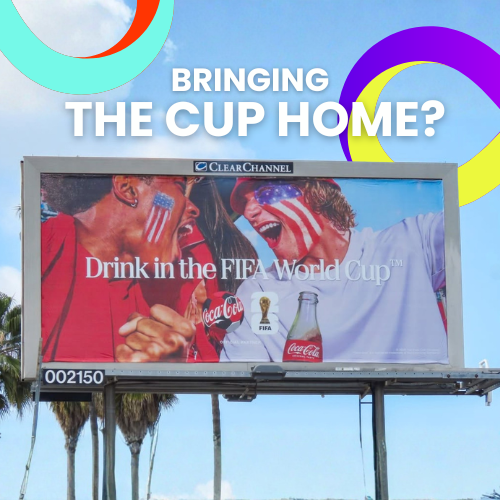
Coca-Cola launched a community-focused OOH campaign in high-indexing U.S. Hispanic neighborhoods, tapping into rising World Cup interest and bringing tournament energy.
Fandom Beyond the Screen
World Cup passion doesn’t begin when the first match airs. It builds in conversations at family gatherings, in barbershops, on street corners, and across neighborhood storefronts. For many Hispanic communities in the United States, soccer is not just an event — it’s heritage, identity, and collective celebration.
Recognizing this cultural truth, Coca-Cola shifted its focus from traditional broadcast-heavy hype to hyper-local presence. Instead of waiting for game day, the brand showed up early, embedding itself into the physical spaces where anticipation already lives.
![Coca-Cola | Celebrate FIFA World Cup 2026™with Us | Coca-Cola [REGION]](https://www.coca-cola.com/content/dam/onexp/global/central/offerings/fifa-world-cup-2026/hero-home_fifa-wc-2026_desktop.png)
Data-Led, Community-Driven
According to Nielsen, 40% of the U.S. Hispanic population expects heightened interest in the World Cup. That insight became the strategic backbone of the campaign.
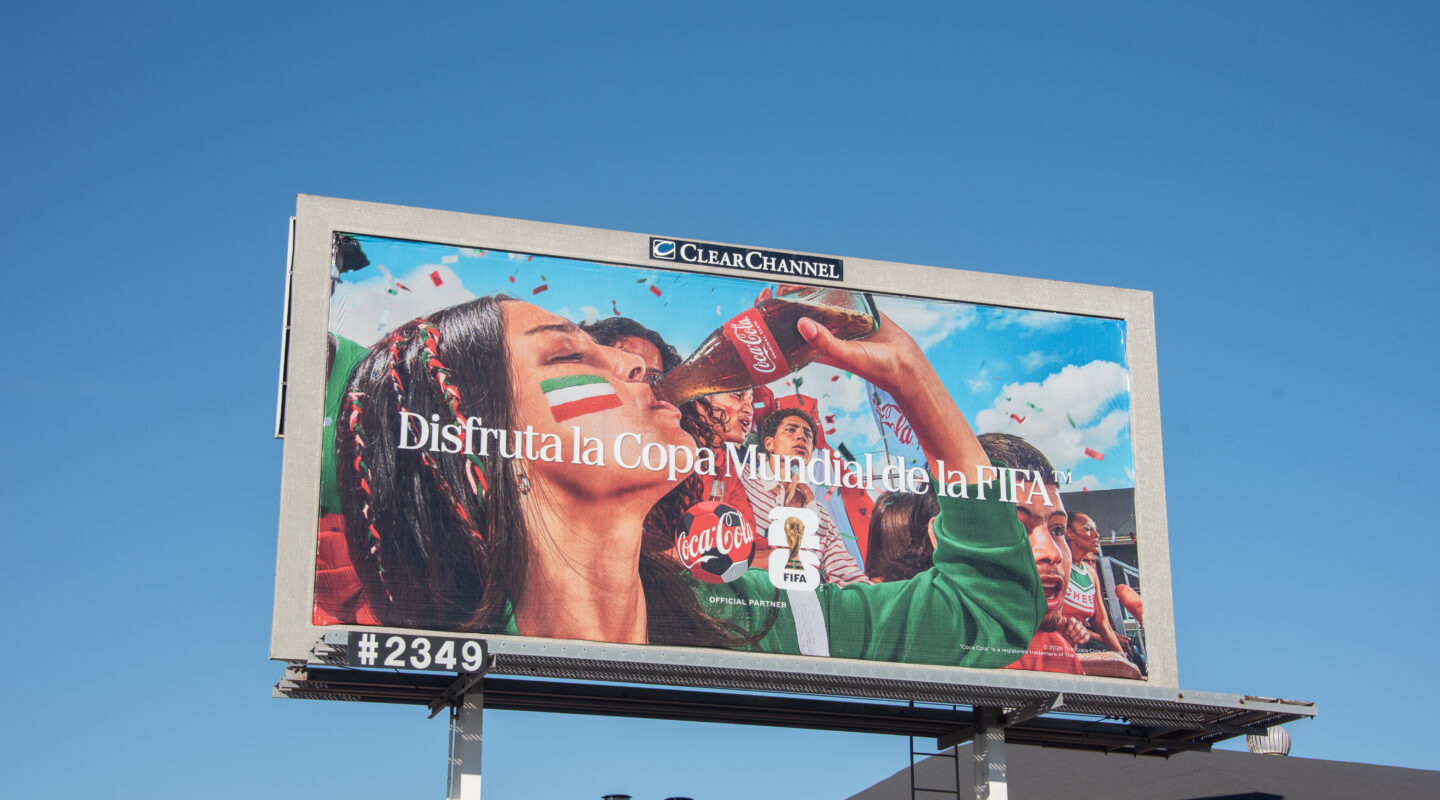
Rather than deploying generic national messaging, Coca-Cola identified high-indexing neighborhoods where World Cup engagement would likely be strongest. There, the brand installed bold outdoor creative infused with pride, color, and cultural relevance.
The approach wasn’t about volume alone — it was about placement. By prioritizing communities where enthusiasm runs deep, the campaign amplified authenticity and visibility simultaneously.

OOH as Cultural Mirror
Out-of-home advertising has a unique strength: it exists inside the same environment as the audience. When done right, it reflects culture in real time.
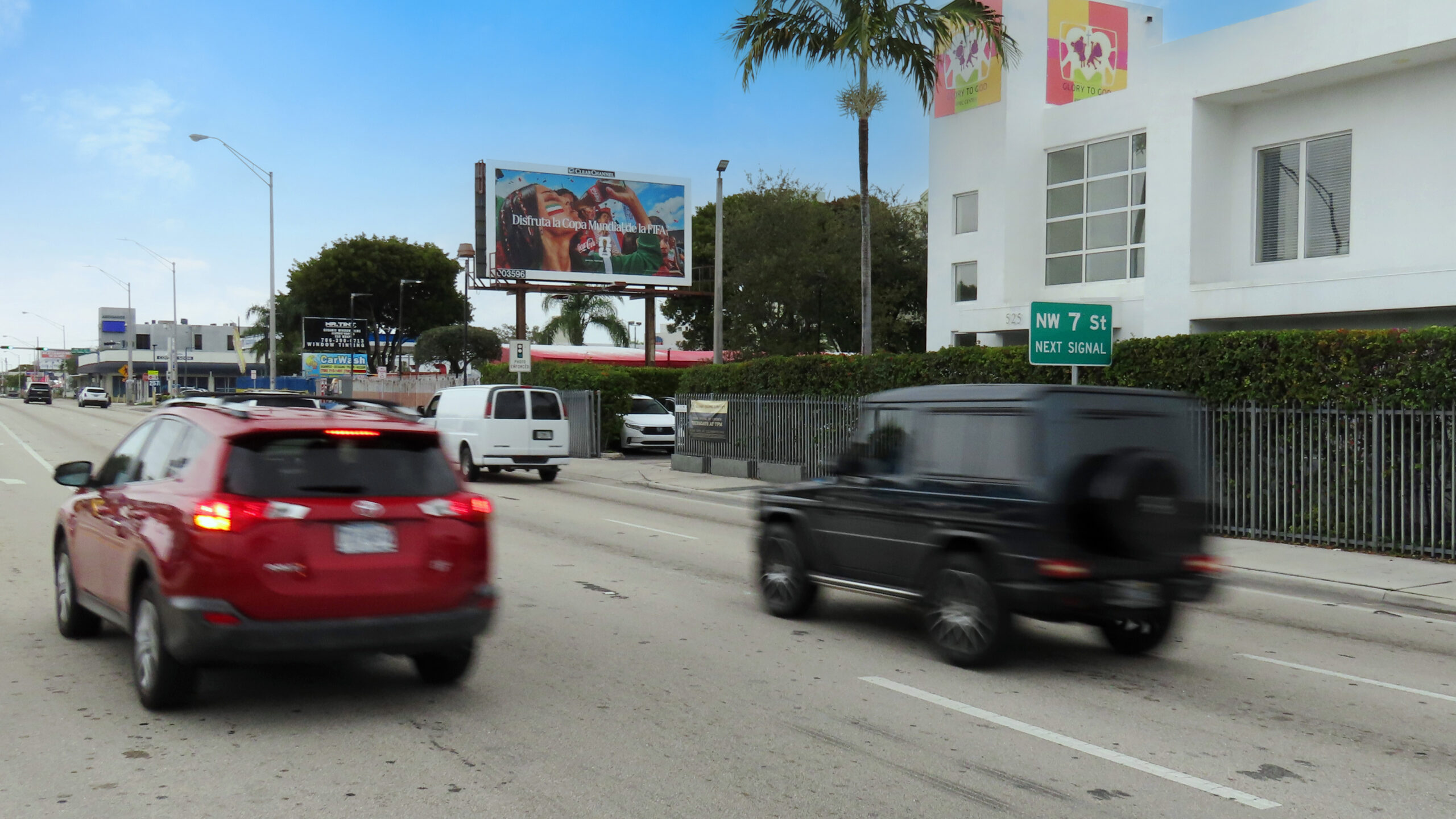
In this case, billboards and street-level placements didn’t just promote the tournament; they mirrored the conversations already happening locally. The work made the World Cup feel close, present, and communal — even before kickoff.
OOH became more than a media channel. It became a signal that the global event belongs to the neighborhood.
Showing Up Where It Matters
For global brands, cultural moments can sometimes feel distant or overly commercialized. Coca-Cola’s strategy demonstrates the value of grounding those moments in lived experience.
By activating early and focusing on culturally resonant communities, the brand transformed anticipation into visibility. The message was clear: World Cup fandom isn’t confined to screens — it lives in the streets.
And by meeting fans where they already gather, Coca-Cola turned outdoor media into a celebration of shared identity.
Summary
With data from Nielsen showing that 40% of the U.S. Hispanic population expects increased interest in the World Cup, Coca-Cola placed bold, pride-driven creative in neighborhoods where soccer culture thrives — making the tournament visible long before kickoff.
Sources
FAQs
What insight informed the campaign?
Nielsen reported that 40% of the U.S. Hispanic population expects increased interest in the World Cup.
What was Coca-Cola’s strategy?
To place bold OOH creative in high-indexing Hispanic neighborhoods across the U.S.
Why focus on OOH?
OOH reflects culture in real time and connects with communities in their everyday environments.
FAQs about this campaign
What insight informed the campaign?
Nielsen reported that 40% of the U.S. Hispanic population expects increased interest in the World Cup.
What was Coca-Cola’s strategy?
To place bold OOH creative in high-indexing Hispanic neighborhoods across the U.S.
Why focus on OOH?
OOH reflects culture in real time and connects with communities in their everyday environments.
Bring your idea to breakfast-time OOH
Explore formats that meet audiences in morning routines and commuter corridors.



Comments
Be the first to comment.