Quick Answer
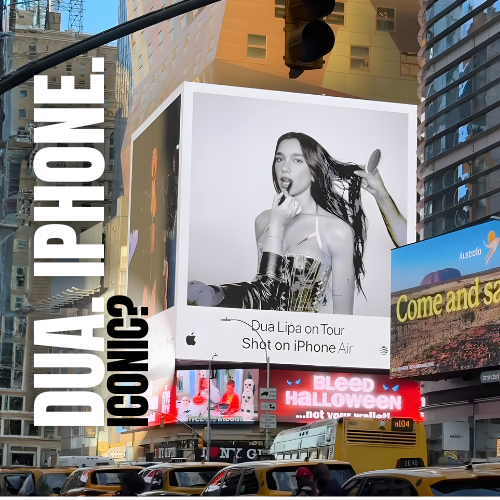
Apple deployed large-scale billboards across North America and Latin America featuring Dua Lipa photographed with the iPhone Air.
Cultural Context: The Artist as Creative Proof
For more than a decade, Apple has positioned the iPhone camera not merely as a technical feature, but as a creative tool. The brand’s “Shot on iPhone” platform reframed smartphone photography as cultural production.
The collaboration with Dua Lipa builds on this legacy. As a global pop figure with strong resonance in both North America and Latin America, she represents creative authorship, not just celebrity endorsement. The billboards do not feel like traditional advertising photography. They feel like artistic documentation.
In an era where audiences are skeptical of polished commercial imagery, authenticity is currency. By foregrounding images captured with the iPhone Air, Apple aligns product performance with cultural credibility.
The move reflects a broader marketing trend: shifting from aspirational perfection to documented reality.
The Strategic Insight: Scale Validates Capability
The core insight behind the billboards is simple but powerful. If a device can produce images strong enough to dominate large-format urban spaces, its technical legitimacy becomes self-evident.
OOH becomes a proof-of-performance medium. A billboard magnifies every pixel. Any limitation in resolution, dynamic range, or sharpness would be exposed at scale.
By choosing high-impact urban placements across multiple regions, Apple effectively says: this device does not just perform in social feeds; it performs at architectural scale.
This is particularly relevant for the iPhone Air, positioned as the brand’s thinnest model. Thinness can imply compromise. The campaign counters that perception visually, proving that design minimalism does not diminish imaging capability.
Media Strategy: Regional Presence, Global Narrative
The billboards span North America and Latin America, signaling coordinated regional deployment rather than isolated placements. This reinforces Apple’s global consistency while acknowledging market diversity.
OOH here serves multiple strategic functions:
First, it anchors the campaign in physical space, contrasting with the ephemeral nature of social content.
Second, it amplifies earned media potential. High-profile celebrity imagery in prominent urban locations invites organic sharing and discussion.
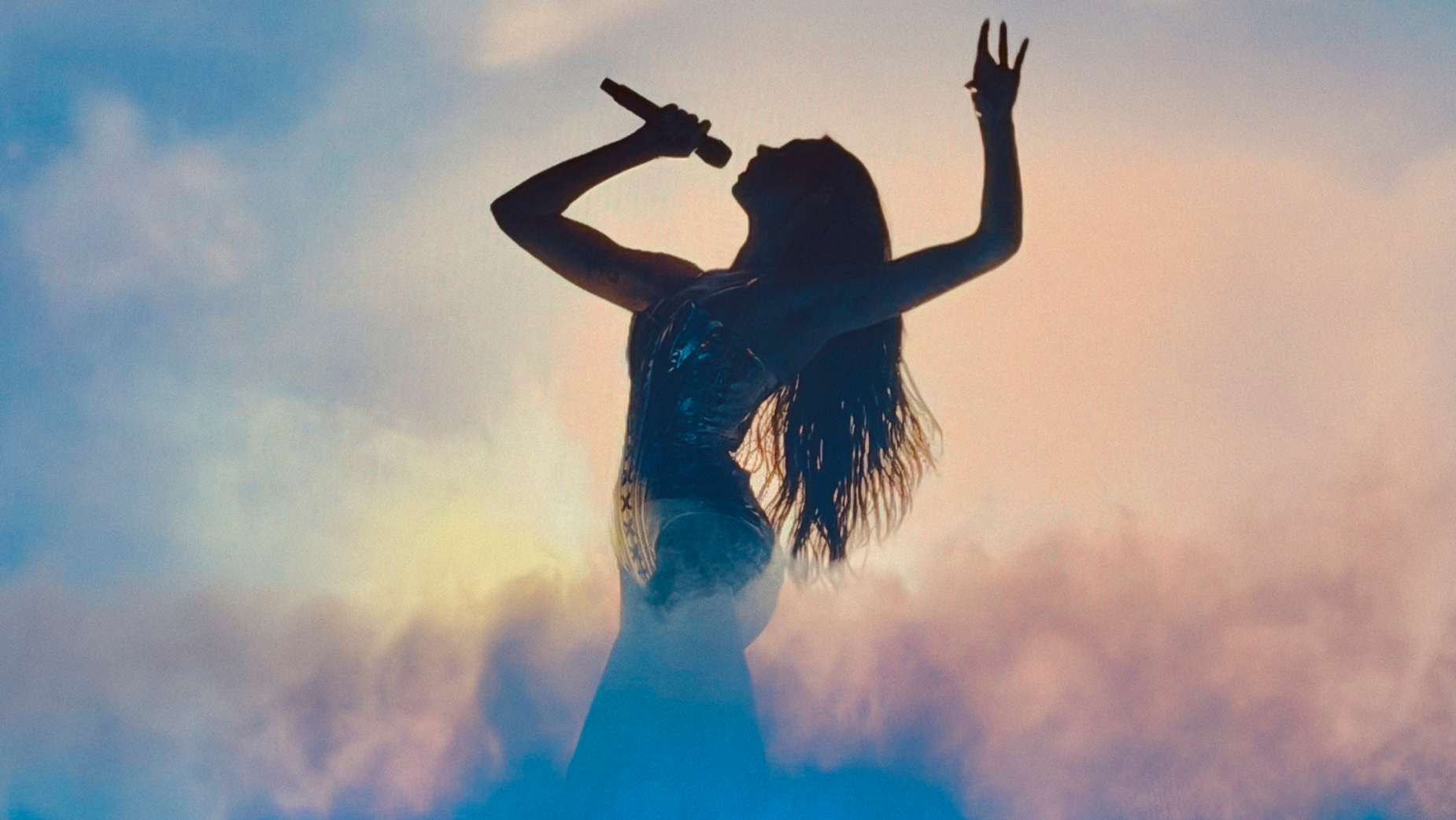
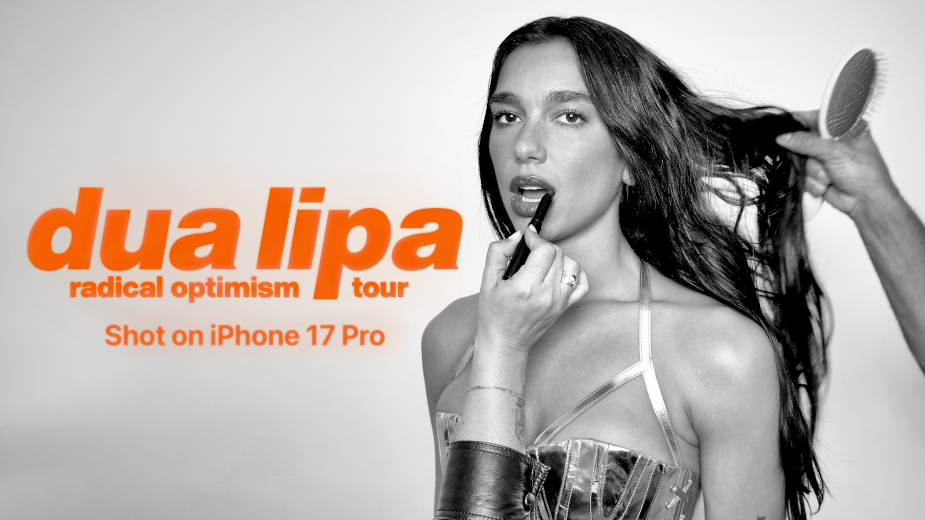
Third, it connects directly to the September campaign in which Dua Lipa used the iPhone 17 Pro during her ‘Radical Optimism’ tour to capture backstage content. That earlier activation positioned the device in live performance environments. The new executions translate that narrative into static, large-scale validation.
The result is a continuum: from backstage intimacy to citywide visibility.

Creative Execution: Minimalism as Authority
Visually, the billboards maintain Apple’s characteristic restraint. The images lead. Branding is controlled and deliberate. Copy does not compete with photography.
This restraint reinforces a key brand code: confidence. Apple does not explain technical specifications in OOH. It demonstrates them.
The choice of Dua Lipa is strategic beyond star power. Her visual identity is distinctive yet adaptable, allowing the imagery to feel both personal and universal. In urban contexts where attention spans are limited, recognizability accelerates engagement.
Importantly, the campaign avoids overproduction aesthetics. The narrative remains consistent: this is mobile creativity at professional scale.
Technology Marketing Trend: From Feature to Cultural Artifact
The campaign reflects a broader shift in tech advertising. Instead of focusing on megapixels, aperture numbers, or processor benchmarks, brands increasingly contextualize features within cultural use cases.
Apple’s approach positions the iPhone Air as an enabler of artistry. The product becomes secondary to the creative output it enables.
This strategy also bridges hardware cycles. While the September activation highlighted the iPhone 17 Pro in a live-tour environment, the Air now inherits that creative halo. The message is cohesive: regardless of model, the iPhone is a cultural tool.
In OOH, this translates into an implicit statement about mobile storytelling. Creativity is no longer confined to studios. It travels. It scales. It integrates with the rhythm of cities.
Ultimately, the billboards are less about celebrity and more about validation. They demonstrate how brand, artist, and medium can align to turn a smartphone feature into public cultural presence.
Summary
Apple expanded its mobile-first storytelling with billboards across North America and Latin America featuring images of Dua Lipa captured on the iPhone Air. Developed by TBWA\Media Arts Lab, the campaign reinforces Apple’s strategy of using cultural figures to validate product capabilities in real-world creative contexts.
Sources
FAQs
What is the campaign about?
Apple launched billboards featuring Dua Lipa photographed with the iPhone Air to showcase the device’s imaging capabilities at large scale.
Where did it launch?
The campaign rolled out across North America and Latin America in high-impact urban OOH locations.
What makes it innovative?
It uses large-format outdoor media to validate smartphone camera performance, transforming billboards into proof-of-quality demonstrations.
FAQs about this campaign
What is the campaign about?
Apple launched billboards featuring Dua Lipa photographed with the iPhone Air to showcase the device’s imaging capabilities at large scale.
Where did it launch?
The campaign rolled out across North America and Latin America in high-impact urban OOH locations.
What makes it innovative?
It uses large-format outdoor media to validate smartphone camera performance, transforming billboards into proof-of-quality demonstrations.
Bring your idea to breakfast-time OOH
Explore formats that meet audiences in morning routines and commuter corridors.



Comments
Be the first to comment.